


Propolis Supportive
$7.14 $0.11 per serving
Product analysis
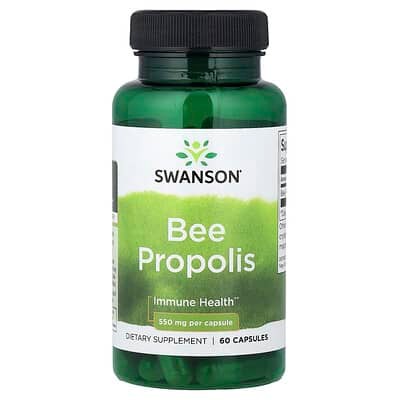
Swanson Bee Propolis is a simple, good-value supplement intended to support immune health, with 550 mg of propolis per capsule. Its polyphenol content is not specified, and findings for a standardized propolis spray do not establish the same benefits for these swallowed capsules.
AI assessment of the formula, label and price. How scoring works
Nutrient Quality20
The amount of propolis is clear, but the preparation is not described in enough detail to judge its quality. Its natural polyphenol content may vary.
Ingredient Transparency63
The label clearly states the amount of propolis per capsule. It does not identify the preparation in detail.
Value For Money100
The capsules offer good value based on their declared propolis weight. The comparison does not establish how much active polyphenol content each serving provides.
Customer Satisfaction78
Customer feedback is very positive. Nearly a thousand ratings provide a reasonably broad picture of customer satisfaction.
Product Focus90
The single-ingredient formula is focused on immune and inflammation support. Both uses have a plausible connection to propolis, but benefits from the particular capsule preparation are uncertain.
- Format
Capsule - Container
- 60 Capsule(s)
- Per serving
- $0.11
- Also available
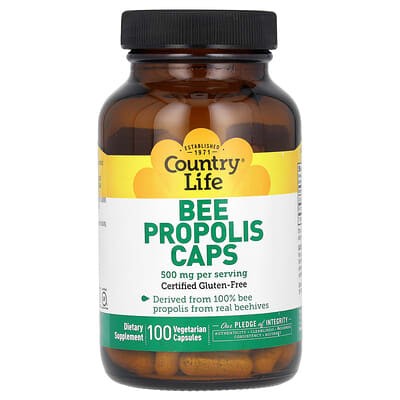 Bee Propolis Caps 500 mg$21.19
- Customer rating
- 4.6 · 983 ratings
Goals

Impact
Highest effect
Propolis · 550 mg
Bee Propolis 550 mg is a focused propolis capsule, but its practical immunity benefit is uncertain for this swallowed preparation. The 550 mg amount is clearly declared; the supplied human symptom findings concern a standardized oral spray with measured polyphenols, which cannot be transferred to capsule mass. The comparison uses one capsule rather than multiplying the optional daily frequency.

Impact
Highest effect
Propolis · 550 mg
Bee Propolis 550 mg is a focused single-ingredient option with a limited connection to broad inflammation support. Its 550 mg of propolis provides the full amount contribution in the supplied assessment. Botanical origin and extraction can change its polyphenol content, so the declared propolis weight alone does not establish a consistent effect throughout the body.
Propolis Supportive
Ingredients
| Ingredient | Amount per serving | Score |
|---|---|---|
Bee Propolis | 550 mg |
Propolis · 550 mg OverallScore50
Swanson Bee Propolis 550 mg offers good value for propolis, at an estimated $0.020 per 100 mg of preparation. The serving lists 550 mg of propolis preparation. A serving costs $0.11; no quantified flavonoid or polyphenol marker is available. Dry propolis yield is unclear.
Alternative products
Report alternatives
Sources
Published studies used for the product analysis and the top-ranked studies for each ingredient and goal.
- Propolis increases Foxp3 expression and lymphocyte proliferation in HIV-infected people: A randomized, double blind, parallel-group and placebo-controlled study.
- Immune Responses in Broiler Chicks Fed Propolis Extraction Residue-supplemented Diets.
- Integrative Therapies in Wound Healing in Small Animals: An Approach Beyond Traditional Medicine.
- Propolis does not significantly modulate immune function in an older population: A preliminary study.
- A standardized polyphenol mixture extracted from poplar-type propolis for remission of symptoms of uncomplicated upper respiratory tract infection (URTI): A monocentric, randomized, double-blind, placebo-controlled clinical trial.
- Effect of Propolis Intake on Serum C-Reactive Protein (CRP) and Tumor Necrosis Factor-alpha (TNF-α) Levels in Adults: A Systematic Review and Meta-Analysis of Clinical Trials.
- Propolis supplementation can reduce serum level of interleukin-6, C-reactive protein, and tumor necrosis factor-α: an updated systematic review and dose-response meta-analysis on randomized clinical trials.
- Effects of propolis supplementation on glycemic status, lipid profiles, inflammation and oxidative stress, liver enzymes, and body weight: a systematic review and meta-analysis of randomized controlled clinical trials.
- Brazilian organic propolis for prevention and treatment of radiation-related oral acute toxicities in head and neck cancer patients: A double-blind randomized clinical trial.
- The effect of Brazilian Green Propolis extract on inflammation in patients with chronic kidney disease on peritoneal dialysis: A randomised double-blind controlled clinical trial.