


Propolis Supportive
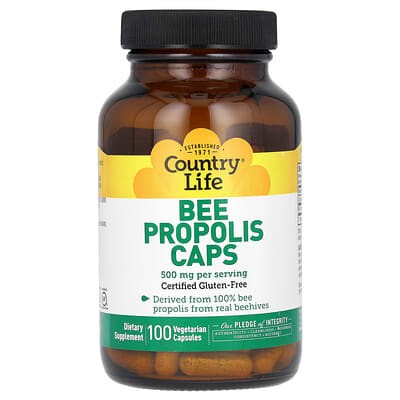
$21.19 $0.42 per serving
Product analysis
Country Life Bee Propolis Caps offer a comparatively inexpensive source of propolis extract, providing 500 mg per two capsules for immune support. The amount of active marker compounds and the extraction ratio are not stated, and swallowing the capsules is not equivalent to using a standardized local oral propolis preparation, so everyday immune benefits are uncertain.
AI assessment of the formula, label and price. How scoring works
Nutrient Quality26
The propolis is identified as a bee-derived extract, but its active compound content is not specified. The small calcium contribution comes from calcium carbonate.
Ingredient Transparency81
Both propolis and calcium amounts are clearly declared. The calcium form is identified, but the concentration of the propolis extract is unclear.
Value For Money70
The propolis preparation is inexpensive compared with similar products. The calcium is relatively costly by weight, although both comparisons reflect the full formula price.
Customer Satisfaction78
Customer feedback is favorable, averaging 4.57 out of 5. The 984 ratings provide a useful picture of customer experience.
Product Focus79
The formula centers on propolis, with a smaller contribution from calcium. Its proposed immune, inflammation and skin benefits are context-dependent and not well established for this swallowed extract.
- Format
Capsule - Container
- 100 Capsule(s)
- Per serving
- $0.42
- Also available
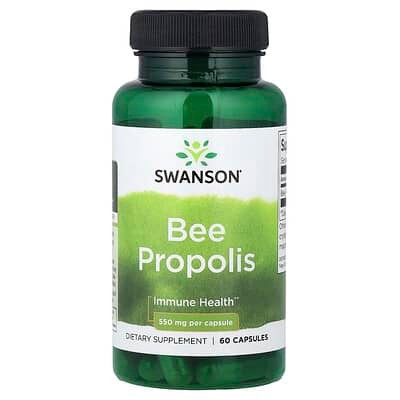 Bee Propolis 550 mg$7.14
- Customer rating
- 4.6 · 984 ratings
Goals

Impact
Highest effect
Propolis · 500 mg
Bee Propolis Caps 500 mg has an uncertain fit for routine adult immune support. Its 500 mg swallowed propolis dose cannot be equated with a standardized local oral spray used for short-term respiratory symptoms.

Impact
Highest effect
Propolis · 500 mg
Bee Propolis Caps 500 mg offers a limited, context-specific fit for inflammation support. Its 500 mg propolis extract contributes through inflammatory signalling, but botanical source and extraction can change its composition and the relevance of the available findings.
Propolis Supportive
Impact
High effect
Propolis · 500 mg
Bee Propolis Caps 500 mg has a weak direct fit for routine oral skin support. Its 500 mg propolis extract is linked to antioxidant activity, but the supplied skin facts concern topical combinations and do not establish a useful oral skin benefit.
Propolis Supportive
Ingredients
| Ingredient | Amount per serving | Score |
|---|---|---|
Calcium (Calcium Carbonate) | 148 mg | |
Bee Propolis Extract | 500 mg |
Propolis · 500 mg OverallScore46
Country Life Bee Propolis Caps 500 mg leaves propolis quality uncertain because marker content is unspecified. The serving lists 500 mg of propolis extract; no extract ratio is specified. The Other Ingredients include a flow agent. At $0.085 per 100 mg of declared propolis preparation; the full formula costs $0.42 per serving, it is comparatively inexpensive. The estimate compares preparation weight, not active marker yield.
Alternative products
Report alternatives
Sources
Published studies used for the product analysis and the top-ranked studies for each ingredient and goal.
- Propolis increases Foxp3 expression and lymphocyte proliferation in HIV-infected people: A randomized, double blind, parallel-group and placebo-controlled study.
- Immune Responses in Broiler Chicks Fed Propolis Extraction Residue-supplemented Diets.
- Integrative Therapies in Wound Healing in Small Animals: An Approach Beyond Traditional Medicine.
- Propolis does not significantly modulate immune function in an older population: A preliminary study.
- A standardized polyphenol mixture extracted from poplar-type propolis for remission of symptoms of uncomplicated upper respiratory tract infection (URTI): A monocentric, randomized, double-blind, placebo-controlled clinical trial.
- Effect of Propolis Intake on Serum C-Reactive Protein (CRP) and Tumor Necrosis Factor-alpha (TNF-α) Levels in Adults: A Systematic Review and Meta-Analysis of Clinical Trials.
- Propolis supplementation can reduce serum level of interleukin-6, C-reactive protein, and tumor necrosis factor-α: an updated systematic review and dose-response meta-analysis on randomized clinical trials.
- Effects of propolis supplementation on glycemic status, lipid profiles, inflammation and oxidative stress, liver enzymes, and body weight: a systematic review and meta-analysis of randomized controlled clinical trials.
- Brazilian organic propolis for prevention and treatment of radiation-related oral acute toxicities in head and neck cancer patients: A double-blind randomized clinical trial.
- The effect of Brazilian Green Propolis extract on inflammation in patients with chronic kidney disease on peritoneal dialysis: A randomised double-blind controlled clinical trial.
- Thermoresponsive propolis gel for gingival wound healing post-depigmentation: A prospective clinical study.
- Bee products and the treatment of blister-like lesions around the mouth, skin and genitalia caused by herpes viruses-A systematic review.
- Topical propolis improves wound healing in patients with diabetic foot ulcer: a randomized controlled trial.
- Effect of propolis on wound healing in sacrococcygeal pilonidal disease: A randomized controlled clinical trial.
- Historical and modern research on propolis and its application in wound healing and other fields of medicine and contributions by Polish studies.