
Nutrient quality
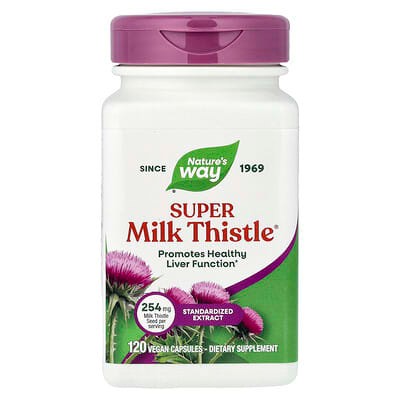
Substantial, clearly named milk thistle actives and relevant artichoke support give the formula good depth. Small supporting botanicals and glycyrrhizic acid safety concerns modestly limit quality.
.
 Pure Formulas Pure Formulas | $ 38.19 | |
 iHerb iHerb | $ 40.99 | |
 Vitacost Vitacost | $ 40.99 | |
| Vitacost | $ 40.99 | |
 Amazon Amazon | $ 28.64 |
Milk thistle seed extract names both silymarin and silybin at substantial listed amounts. Artichoke adds a related digestive and bile-support angle, while smaller dandelion and licorice extracts broaden the botanical profile.
The label offers more active detail than most competitors, although paired entries with identical weights may describe constituents rather than separate quantities. That presentation can make the true total serving less clear.
Glycyrrhizic acid is the key limitation because it can raise blood pressure, promote fluid retention, or lower potassium in susceptible users. People with hypertension, kidney or heart concerns, or relevant medicines should not use it regularly without professional guidance.
Substantial, clearly named milk thistle actives and relevant artichoke support give the formula good depth. Small supporting botanicals and glycyrrhizic acid safety concerns modestly limit quality.
.Full individual dosing and specific active names make the formula easy to assess. Missing usage and excipient information are the main transparency gaps.
.The average rating is positive, and the available feedback volume provides useful confidence. No specific experience details are supplied to assess recurring complaints or purpose fit.
.Substantial disclosed actives and modest serving cost support excellent value. Only the small supporting doses slightly reduce formula efficiency.
.
Milk thistle provides a well-disclosed liver-protection core, while artichoke adds bile support and the smaller dandelion and licorice extracts broaden the botanical approach. Silymarin and silybin are both named, giving the formula stronger active detail than most milk thistle products.
The major milk thistle actives are supplied in substantial amounts, while the supporting botanicals are much smaller. Glycyrrhizic acid from licorice can raise blood pressure or lower potassium in susceptible users, so people with hypertension or low potassium should avoid unsupervised regular use.
| Ingredient | Amount per serving |
|---|---|
Milk Thistle seed extract (Silybin, Silymarin) | 254 mg |
Artichoke leaf extract (Caffeoylquinic Acids, Chlorogenic Acids) | 40 mg |
Dandelion root extract | 10 mg |
Licorice root/rhizome extract (Glycyrrhizic Acid) | 10 mg |
The seed extract clearly identifies silymarin and silybin amounts, but it does not state a benchmark standardization percentage. The active amount falls within the preferred range, while the dry capsule lacks absorption technology. Its low serving cost and strong disclosure support good value.
Published studies used for the product analysis and the top-ranked studies for each ingredient and goal.