
Nutrient quality
Cranberry and hibiscus provide the clearest urinary-support rationale. Unstandardized forms, an unusable probiotic amount, and several low-dose additions weaken dose quality.
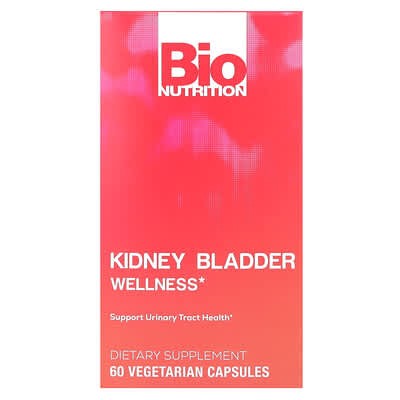
 iHerb iHerb | $ 18.87 |
Cranberry and hibiscus anchor a kidney-and-bladder themed blend, while celery seed adds a mild diuretic angle. L-methionine, choline, and inositol appear in small supporting amounts rather than as central actives.
Cranberry and hibiscus weights are disclosed, but no active-marker standardization is provided. The acidophilus entry has no usable organism count, making the probiotic contribution impossible to judge.
A simple two-capsule serving and accessible cost may suit users wanting a broad herbal blend. It is not a dependable high-potency methionine or probiotic product.
Cranberry and hibiscus provide the clearest urinary-support rationale. Unstandardized forms, an unusable probiotic amount, and several low-dose additions weaken dose quality.
Every listed active has a specific amount, and no proprietary blend hides key doses. The serving count is clear, but intake directions and non-active ingredients are not supplied.
Customer sentiment is favorable, and the small review volume limits confidence. No review excerpts are supplied, so repeated complaints and purpose fit cannot be verified.
Accessible serving economics and two substantial botanical amounts support fair value. Several weakly characterized or low-dose additions keep it from standing out.
| Ingredient | Amount per serving |
|---|---|
Cranberry extract | 500 mg |
Hibiscus extract | 300 mg |
Acidophilus (L. Bacillus acidophilus) | 0 NP |
Celery seed extract | 100 mg |
Vitamin B6 (Pyridoxine) | 10 mg |
L-Methionine | 50 mg |
Choline | 50 mg |
Inositol | 50 mg |
L-methionine is clearly named and independently listed, but no premium grade or source standard is stated. The 50 mg amount is at the bottom of the useful multi-ingredient range. Low serving cost helps affordability but does not overcome the limited dose.