

$18.39 $0.38 per serving


Product analysis
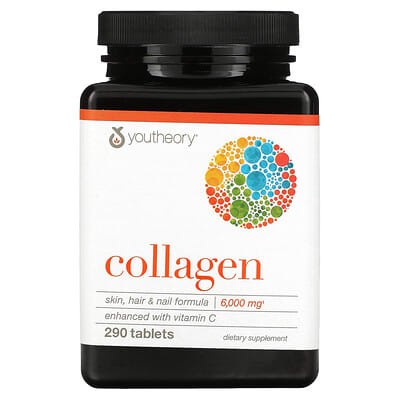
Collagen 6000 mg combines collagen with vitamin C for normal connective-tissue formation and a possible contribution to joint comfort. Benefits for skin, hair and nails remain dependent on the particular collagen preparation, which is unidentified.
AI assessment of the formula, label and price. How scoring works
Nutrient Quality28
The vitamin C source is named, but the specific collagen peptide preparation is unidentified. Generic hydrolyzed collagen cannot automatically be treated as equivalent to a particular tested peptide.
Ingredient Transparency81
Both ingredient amounts are stated, and the vitamin C form is named. The exact collagen preparation is unclear, limiting comparisons with specific peptide products.
Value For Money77
The collagen amount offers very good value at the serving cost. A separate value advantage for vitamin C cannot be established.
Customer Satisfaction91
Customers give very positive feedback across a very large number of ratings. That broad satisfaction history does not establish specific skin or joint benefits.
Product Focus62
Collagen and vitamin C share a clear connection to connective-tissue structure. Benefits across skin, joints, hair and nails vary by preparation and remain uncertain for a generic collagen source.
- Format
Tablet - Container
- 290 Tablet(s)
- Per serving
- $0.38
- Customer rating
- 4.6 · 94,963 ratings
Goals

Impact
Moderate effect
Vitamin C · 90 mgCollagen · 6000 mg
The serving provides 6 g hydrolyzed collagen, giving it a plausible connection to skin structure. Oral peptide findings are uncertain and depend on the specific preparation; generic hydrolyzed collagen cannot automatically inherit the results of a named tested peptide. Vitamin C at 90 mg supports normal collagen formation without an assumed combination bonus.
How this product is rated for Skin Health
Ingredient fit90
The assessed ingredients are closely focused on skin-related functions. The assessed amounts align closely with the full saved exposure comparisons, without guaranteeing a skin benefit.
Goal fit
The assessed ingredients are closely focused on skin-related functions.
Dose adequacy
The assessed amounts align closely with the full saved exposure comparisons, without guaranteeing a skin benefit.
Pathways19
The strongest assessed connection is dermal collagen matrix, with limited coverage. None of the assessed mechanisms reaches the saved coverage threshold.
Depth
The strongest assessed connection is dermal collagen matrix, with limited coverage.
Breadth
None of the assessed mechanisms reaches the saved coverage threshold.
Evidence33
Collagen supplies the strongest saved evidence connection at the assessed amounts, without promising a cosmetic improvement for every user. The preparation comparison is limited by Collagen, which is not matched to the relevant studied preparation.
Evidence strength
Collagen supplies the strongest saved evidence connection at the assessed amounts, without promising a cosmetic improvement for every user.
Studied preparation
The preparation comparison is limited by Collagen, which is not matched to the relevant studied preparation.
Formulation logic100
The assessed ingredients can stand alone or have the required partner present; this does not establish an added combination benefit. No configured ingredient conflicts were identified in the supplied findings. 1 of 1 assessed ingredients meet the saved minimum exposure comparison, which does not guarantee an effect.
Partner coverage
The assessed ingredients can stand alone or have the required partner present; this does not establish an added combination benefit.
Conflicts
No configured ingredient conflicts were identified in the supplied findings.
Effective doses
1 of 1 assessed ingredients meet the saved minimum exposure comparison, which does not guarantee an effect.

Impact
Moderate effect
Collagen · 6000 mg
Collagen at 6,000 mg supplies structural-protein material, but the limited nail-brittleness findings involved specifically identified VERISOL peptides. A larger generic collagen amount does not establish a greater nail benefit. Vitamin C supports normal collagen formation.
How this product is rated for Nail Health
Ingredient fit92
The saved review finds a focused ingredient mix, although its ingredients also serve other goals. The declared amounts provide high exposure compared with the saved reference amounts; undisclosed amounts contribute no exposure.
Goal fit
The saved review finds a focused ingredient mix, although its ingredients also serve other goals.
Dose adequacy
The declared amounts provide high exposure compared with the saved reference amounts; undisclosed amounts contribute no exposure.
Pathways50
The strongest recorded area is structural protein supply. One of the two target areas reaches the saved coverage threshold.
Depth
The strongest recorded area is structural protein supply.
Breadth
One of the two target areas reaches the saved coverage threshold.
Evidence21
Collagen supplies the strongest saved evidence contribution at sufficient exposure; this does not predict personal benefit. The saved preparation check is incomplete for Collagen.
Evidence strength
Collagen supplies the strongest saved evidence contribution at sufficient exposure; this does not predict personal benefit.
Studied preparation
The saved preparation check is incomplete for Collagen.
Formulation logic100
The saved review records no missing required partner. No conflict was matched in the saved checks.
Partner coverage
The saved review records no missing required partner.
Conflicts
No conflict was matched in the saved checks.
Effective doses
1 of 1 contributing ingredients reach the saved minimum exposure threshold.

Impact
Moderate effect
Collagen · 6000 mg
Collagen may support joint comfort through its relationship to cartilage structure, although findings vary by preparation. The 6 g serving provides a substantial collagen amount; vitamin C supports normal collagen formation, with a smaller contribution in the saved assessment.
How this product is rated for Joint Health
Ingredient fit78
The relevant ingredients are closely joint healthed on the goal. The assessed quantities provide a meaningful but incomplete match to the saved benchmarks.
Goal fit
The relevant ingredients are closely joint healthed on the goal.
Dose adequacy
The assessed quantities provide a meaningful but incomplete match to the saved benchmarks.
Pathways17
The recorded contribution relates to cartilage structure, with limited coverage. The saved findings show limited breadth across the assessed joint mechanisms.
Depth
The recorded contribution relates to cartilage structure, with limited coverage.
Breadth
The saved findings show limited breadth across the assessed joint mechanisms.
Evidence47
Collagen provides the strongest evidence contribution among the assessed ingredients. The collagen is not recorded as matching a studied preparation.
Evidence strength
Collagen provides the strongest evidence contribution among the assessed ingredients.
Studied preparation
The collagen is not recorded as matching a studied preparation.
Formulation logic100
The assessed ingredients can contribute independently or have their required partners. No ingredient conflict was flagged by the saved checks.
Partner coverage
The assessed ingredients can contribute independently or have their required partners.
Conflicts
No ingredient conflict was flagged by the saved checks.
Effective doses
All counted ingredients meet the saved minimum amount threshold.

Impact
High effect
Vitamin C · 90 mgCollagen · 6000 mg
Collagen is relevant to hair-shaft condition, with limited preparation-specific findings for gloss, elasticity and diameter in adults with damaged hair. This product's 6000 mg serving receives an amount contribution, but its collagen is not established as the studied preparation. Vitamin C supports normal collagen synthesis; neither that function nor combining it with collagen establishes follicular regrowth.
How this product is rated for Hair Health
Ingredient fit92
Hair-shaft ingredients contribute, but the preparation and amount determine how closely the product relates to the supplied findings.
Goal fit
The formula includes ingredients related to hair-shaft condition, with preparation-specific limitations.
Dose adequacy
The selected serving reaches the saved amount comparison; this does not establish additional hair benefit from higher intake.
Pathways40
The contribution centers on hair-fibre support, with limited preparation-specific implications for hair-shaft condition.
Depth
Hair-fibre support is the strongest assigned route, without establishing follicular regrowth.
Breadth
Coverage is concentrated in hair-fibre support.
Evidence35
Preparation-specific hair-shaft findings limit how confidently the collagen can be linked to this product.
Evidence strength
Collagen findings concern damaged hair shafts and are limited to a specific preparation, not established regrowth.
Studied preparation
The collagen is not established as the preparation used in the hair-shaft trial.
Formulation logic100
The counted ingredients have their required partners or work independently, and no configured conflict was recorded.
Partner coverage
No required partner is missing for the counted ingredients; this does not establish added benefit from combining them.
Conflicts
No configured ingredient conflict was recorded.
Effective doses
The counted ingredients meet the saved minimum amount threshold; that threshold does not prove a clinically effective hair dose.

Impact
Moderate effect
Collagen · 6000 mg
The 6 g of hydrolyzed collagen relates mainly to skin structure and visible skin aging. Vitamin C at 90 mg supports normal collagen formation, giving the two ingredients a complementary nutritional role. Evidence for particular collagen peptides concerns skin appearance rather than longer life.
How this product is rated for Longevity
Ingredient fit90
1 ingredients contribute to the saved healthy-aging assessment, with no other active ingredients reducing its focus. The contributing amounts align closely with the saved dose benchmarks.
Goal fit
1 ingredients contribute to the saved healthy-aging assessment, with no other active ingredients reducing its focus.
Dose adequacy
The contributing amounts align closely with the saved dose benchmarks.
Pathways19
The strongest recorded contribution concerns dermal matrix renewal. No functional area reaches the saved coverage threshold.
Depth
The strongest recorded contribution concerns dermal matrix renewal.
Breadth
No functional area reaches the saved coverage threshold.
Evidence30
Collagen provides the strongest qualifying evidence in the saved assessment; the relevant benefit remains limited to its reviewed outcome. The saved preparation review is limited by Collagen, which was not matched to the studied preparation.
Evidence strength
Collagen provides the strongest qualifying evidence in the saved assessment; the relevant benefit remains limited to its reviewed outcome.
Studied preparation
The saved preparation review is limited by Collagen, which was not matched to the studied preparation.
Formulation logic100
The contributing ingredients can work alone or have their required partner present. No ingredient conflicts were recorded in the saved assessment. All contributing ingredients reach the saved meaningful-dose threshold.
Partner coverage
The contributing ingredients can work alone or have their required partner present.
Conflicts
No ingredient conflicts were recorded in the saved assessment.
Effective doses
All contributing ingredients reach the saved meaningful-dose threshold.

Impact
Moderate effect
Vitamin C · 90 mgCollagen · 6000 mg
Collagen at 6 g relates to bone-matrix support, and vitamin C contributes to normal collagen formation. The supplied bone-density evidence concerns a specific peptide preparation, making expectations for generic hydrolyzed collagen more uncertain; fracture reduction is not established.
How this product is rated for Bone Health
Ingredient fit92
The assessed ingredients are closely centered on bone support. The included amount fully meets the saved dose benchmark.
Goal fit
The assessed ingredients are closely centered on bone support.
Dose adequacy
The included amount fully meets the saved dose benchmark.
Pathways19
Collagen matrix formation is the strongest mechanism in the saved findings. None of the three target mechanisms reaches the saved coverage threshold.
Depth
Collagen matrix formation is the strongest mechanism in the saved findings.
Breadth
None of the three target mechanisms reaches the saved coverage threshold.
Evidence33
Collagen provides the strongest saved evidence rating here; the finding does not establish fracture prevention. The generic collagen is not matched to a studied preparation in the saved assessment.
Evidence strength
Collagen provides the strongest saved evidence rating here; the finding does not establish fracture prevention.
Studied preparation
The generic collagen is not matched to a studied preparation in the saved assessment.
Formulation logic100
No required ingredient partner is missing in the saved findings. No configured ingredient conflict was found in the saved assessment. All ingredients included in this finding reach the saved minimum dose threshold.
Partner coverage
No required ingredient partner is missing in the saved findings.
Conflicts
No configured ingredient conflict was found in the saved assessment.
Effective doses
All ingredients included in this finding reach the saved minimum dose threshold.
Ingredients
| Ingredient | Amount per serving | Score |
|---|---|---|
Vitamin C (Calcium Ascorbate) | 90 mg | |
Collagen, Hydrolyzed | 6000 mg |
Collagen · 6000 mg OverallScore76
Alternative products
Report alternatives
Sources
Published studies used for the product analysis and the top-ranked studies for each ingredient and goal.
- Effect of Calcium and Vitamin D Supplementation With and Without Collagen Peptides on Volumetric and Areal Bone Mineral Density, Bone Geometry and Bone Turnover in Postmenopausal Women With Osteopenia.
- Bone turnover and bone collagen maturation in osteoporosis: effects of antiresorptive therapies.
- A calcium-collagen chelate dietary supplement attenuates bone loss in postmenopausal women with osteopenia: a randomized controlled trial.
- Assessment of Osteoporosis in Lumbar Spine: In Vivo Quantitative MR Imaging of Collagen Bound Water in Trabecular Bone.
- Effect of calcium and vitamin D supplementation with and without collagen peptides on bone turnover in postmenopausal women with osteopenia.
- Can Dietary Intake of Vitamin C-Oriented Foods Reduce the Risk of Osteoporosis, Fracture, and BMD Loss? Systematic Review With Meta-Analyses of Recent Studies.
- Dietary vitamin C intake and the risk of hip fracture: a dose-response meta-analysis.
- Smoking, antioxidant vitamins, and the risk of hip fracture.
- Micronutrients and the risk of hip fracture: Case-control study.
- Favorable effect of dietary vitamin C on bone mineral density in postmenopausal women (KNHANES IV, 2009): discrepancies regarding skeletal sites, age, and vitamin D status.
- A double-blind, placebo-controlled, randomised, clinical study on the effectiveness of collagen peptide on osteoarthritis.
- Efficacy and safety of native type II collagen in modulating knee osteoarthritis symptoms: a randomised, double-blind, placebo-controlled trial.
- Healing Process, Pain, and Health-Related Quality of Life in Patients with Venous Leg Ulcers Treated with Fish Collagen Gel: A 12-Week Randomized Single-Center Study.
- Efficacy and Safety of Dietary Undenatured Type II Collagen on Joint and Motor Function in Healthy Volunteers: A Randomized, Double-Blind, Placebo-Controlled, Parallel-Group Study.
- The use of a collagen matrix in hard-to-heal venous leg ulcers.
- Dietary intake and blood concentrations of antioxidants and the risk of cardiovascular disease, total cancer, and all-cause mortality: a systematic review and dose-response meta-analysis of prospective studies.
- Scientific Opinion on the substantiation of a health claim related to vitamin C and increasing non haem iron absorption pursuant to Article 14 of Regulation (EC) No 1924/2006.
- Vitamin C Depletion and All-Cause Mortality in Renal Transplant Recipients.
- Associations of Serum Biomarkers of Fruit and Vegetable Intake With the Risk of Cause-Specific Mortality and All-Cause Mortality: A National Prospective Cohort Study.
- Relation between plasma ascorbic acid and mortality in men and women in EPIC-Norfolk prospective study: a prospective population study. European Prospective Investigation into Cancer and Nutrition.