


Omega-3 Supportive
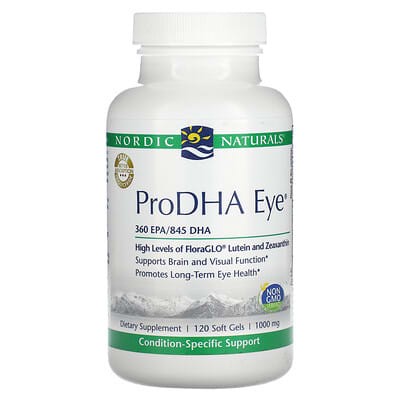
$105.93 $1.76 per serving
Product analysis
AI assessment of the formula, label and price. How scoring works
Nutrient Quality20
Ingredient Transparency63
Value For Money31
Customer Satisfaction78
Product Focus72
- Format
Softgel - Container
- 120 Softgel(s)
- Per serving
- $1.76
- Customer rating
- 4.8 · 408 ratings
Goals

Impact
High effect
Omega-3 · 1460 mg
ProDHA Eye 360 EPA/845 DHA has a narrower skin-barrier and antioxidant fit than a targeted hydration formula. Its 1,460 mg omega-3 serving supplies fats linked to barrier function, although the broad declaration does not identify a preparation that predicts a routine skin benefit. The 24 mg carotenoid declaration may contribute to antioxidant roles, but its unidentified composition limits matching to specific lutein and zeaxanthin preparations.

Impact
High effect
Omega-3 · 1460 mg
ProDHA Eye 360 EPA/845 DHA offers a modest, context-dependent option for joint comfort. Its two-softgel serving declares 1460 mg of total omega-3, including 360 mg EPA and 845 mg DHA; these fatty acids explain the connection to inflammatory joint discomfort with sustained use.
Omega-3 Supportive

Impact
High effect
Omega-3 · 1460 mg
ProDHA Eye 360 EPA/845 DHA has a limited fit for metabolism support because the supplied omega-3 findings do not support a general-user increase in metabolic rate. Its declared 1,460 mg omega-3 serving provides the main relevant ingredient, but the metabolic-rate findings vary by population and cannot be generalized to this serving.
Omega-3 Supportive
Ingredients
| Ingredient | Amount per serving | Score |
|---|---|---|
Calories | 20 Calorie(s) | |
Total Fat | 2 Gram(s) | |
FloraGlo Lutein | 20 mg | |
Zeaxanthin | 4 mg | |
Total Omega-3 Fatty Acids | 1460 mg |
Omega-3 · 1460 mg OverallScore69
Nordic Naturals ProDHA Eye 360 EPA/845 DHA supplies 1460 mg omega-3 per serving at a high price of $1.33 per 1,000 mg EPA plus DHA. The omega-3 is in triglyceride form. The serving lists 360 mg EPA and 845 mg DHA separately. Third-party testing and a certificate of analysis are claimed; their contents have not been independently verified here. The full formula costs $1.60 per serving.
Alternative products
Report alternatives
Sources
Published studies used for the product analysis and the top-ranked studies for each ingredient and goal.
- Supplementation of fish oil and olive oil in patients with rheumatoid arthritis.
- Krill oil improved osteoarthritic knee pain in adults with mild to moderate knee osteoarthritis: a 6-month multicenter, randomized, double-blind, placebo-controlled trial.
- Effects of omega-3 supplementation on lipid metabolism, inflammation, and disease activity in rheumatoid arthritis: a meta-analysis of randomized controlled trials.
- Impact of type and dose of oral polyunsaturated fatty acid supplementation on disease activity in inflammatory rheumatic diseases: a systematic literature review and meta-analysis.
- A meta-analysis of the analgesic effects of omega-3 polyunsaturated fatty acid supplementation for inflammatory joint pain.
- Effects of omega-3 supplementation on glucose and lipid metabolism in patients with gestational diabetes: A meta-analysis of randomized controlled trials.
- Hepatic de novo lipogenesis is suppressed and fat oxidation is increased by omega-3 fatty acids at the expense of glucose metabolism.
- Clinical and metabolic response to flaxseed oil omega-3 fatty acids supplementation in patients with diabetic foot ulcer: A randomized, double-blind, placebo-controlled trial.
- The Effects of Flaxseed Oil Omega-3 Fatty Acids Supplementation on Metabolic Status of Patients with Polycystic Ovary Syndrome: A Randomized, Double-Blind, Placebo-Controlled Trial.
- A combination of omega-3 and plant sterols regulate glucose and lipid metabolism in individuals with impaired glucose regulation: a randomized and controlled clinical trial.
- Dietetic intervention in psoriatic arthritis: the DIETA trial.
- Omega-3 fatty acid supplement skin cancer prophylaxis in lung transplant recipients: A randomized, controlled pilot trial.
- Treatment of hard-to-heal wounds in ischaemic lower extremities with a novel fish skin-derived matrix.
- Effect of eicosapentaenoic acid, an omega-3 polyunsaturated fatty acid, on UVR-related cancer risk in humans. An assessment of early genotoxic markers.