


Vitamin C Supportive
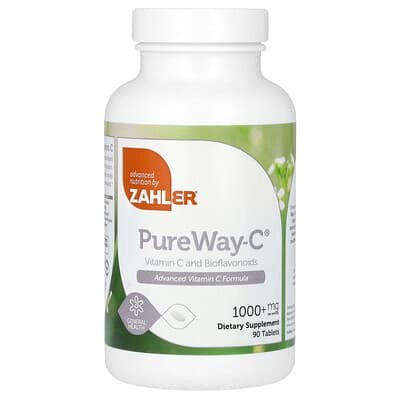
PureWay C 1000+ mg
Goals
$19.47 $0.21 per serving
Product analysis
Advanced Nutrition by Zahler PureWay C 1000+ is a good-value vitamin C formula for normal immune and antioxidant support, supplying 1,050 mg of vitamin C and 200 mg of citrus bioflavonoid complex per tablet. The substantial vitamin C amount drives its nutritional benefits, with no established extra immune advantage from its PureWay-C preparation.
AI assessment of the formula, label and price. How scoring works
Nutrient Quality42
The tablet supplies a substantial vitamin C amount alongside a citrus mixture. The vitamin C preparations are named, but their individual contributions are not specified.
Ingredient Transparency70
All three ingredient quantities are given per tablet. The vitamin C preparations are identified, although their individual proportions remain unclear.
Value For Money69
The amount of vitamin C is inexpensive, making it a good-value option for that nutrient. The small calcium quantity is not a useful reason to buy it on price.
Customer Satisfaction75
Customer feedback is very positive. More than two hundred ratings provide a useful sample of experiences.
Product Focus73
Vitamin C is the central nutritional ingredient, supporting several related health functions. The formula remains a targeted vitamin C supplement rather than broad nutritional coverage.
- Format
Tablet - Container
- 90 Tablet(s)
- Per serving
- $0.21
- Customer rating
- 4.8 · 214 ratings
Goals

Impact
High effect
Vitamin C · 1050 mg
PureWay C 1000+ mg offers focused vitamin C nutrition for filling a dietary gap. Its 1050 mg vitamin C serving supports normal antioxidant and immune functions. The supplied facts do not give the PureWay-C preparation an extra everyday-health advantage.

Impact
High effect
Vitamin C · 1050 mg
PureWay C 1000+ mg offers a narrow eye-health fit through vitamin C’s antioxidant role. Its 1,050 mg of vitamin C, declared as calcium ascorbate and Pureway-C, supports antioxidant protection in eye tissues.
Vitamin C Disputed

Impact
High effect
Vitamin C · 1050 mg
PureWay C 1000+ mg offers a substantial declared vitamin C amount for normal immune-function support. Its 1,050 mg per serving supports immune-cell activity and may modestly shorten colds with regular use. The named PureWay-C and calcium ascorbate forms do not add a demonstrated immunity advantage here.
Vitamin C Supportive

Impact
High effect
Vitamin C · 1050 mg
PureWay C 1000+ mg offers antioxidant support with a limited connection to broad inflammation goals. Its 1,050 mg vitamin C serving provides the main relevant contribution. Calcium ascorbate does not have an established inflammation-specific advantage, and the supplied inflammation-marker benefit is confined to people with elevated starting levels.
Vitamin C Supportive

Impact
High effect
Vitamin C · 1050 mg
PureWay C 1000+ mg is a nutrient-support choice for skin health when vitamin C intake is inadequate. Its 1,050 mg vitamin C serving supports the enzymes needed for collagen production and normal wound healing. The buffered form does not establish an extra cosmetic advantage.
Vitamin C Supportive
Ingredients
| Ingredient | Amount per serving | Score |
|---|---|---|
Vitamin C (Calcium Ascorbate, Pureway-C) | 1050 mg | |
Calcium (Calcium Ascorbate) | 6 mg | |
Citrus Bioflavonoid Peel Powder Complex | 200 mg |
Vitamin C (Calcium Ascorbate, Pureway-C) · 1050 mg OverallScore85
Advanced Nutrition by Zahler PureWay C 1000+ mg is a reasonable vitamin C choice with 1,050 mg per serving. PureWay-C is a lipid-metabolite delivery system; calcium ascorbate is named, but another source and their proportions are unknown. Good value at $0.21 per 1,000 mg of vitamin C and $0.22 per serving.
Alternative products
Report alternatives
Sources
Published studies used for the product analysis and the top-ranked studies for each ingredient and goal.
- Dietary intake and blood concentrations of antioxidants and the risk of cardiovascular disease, total cancer, and all-cause mortality: a systematic review and dose-response meta-analysis of prospective studies.
- Scientific Opinion on the substantiation of a health claim related to vitamin C and increasing non haem iron absorption pursuant to Article 14 of Regulation (EC) No 1924/2006.
- Vitamin C Depletion and All-Cause Mortality in Renal Transplant Recipients.
- Associations of Serum Biomarkers of Fruit and Vegetable Intake With the Risk of Cause-Specific Mortality and All-Cause Mortality: A National Prospective Cohort Study.
- Relation between plasma ascorbic acid and mortality in men and women in EPIC-Norfolk prospective study: a prospective population study. European Prospective Investigation into Cancer and Nutrition.
- Role of Oral Vitamin 'C' on Astigmatic Errors in Phacoemulsification.
- Ascorbic acid metabolites are involved in intraocular pressure control in the general population.
- Nutritional modulation of cataract.
- Dietary n-3 Fatty Acid, α-Tocopherol, Zinc, vitamin D, vitamin C, and β-carotene are Associated with Age-Related Macular Degeneration in Japan.
- Adherence to a Mediterranean diet, lifestyle and age-related macular degeneration: the Coimbra Eye Study - report 3.
- Vitamin C and contribution to the normal function of the immune system: evaluation of a health claim pursuant to Article 14 of Regulation (EC) No 1924/2006.
- Therapeutic effects of high-dose vitamin C supplementation in patients with COVID-19: a meta-analysis.
- Effect of micronutrient supplements on influenza and other respiratory tract infections among adults: a systematic review and meta-analysis.
- New evidence for antioxidant properties of vitamin C.
- Enhanced Vitamin C Delivery: A Systematic Literature Review Assessing the Efficacy and Safety of Alternative Supplement Forms in Healthy Adults.
- Efficacy of Vitamin C as Glucocorticoid Substitute for Reducing Pain and Inflammation After Total Hip Arthroplasty: A Randomized Controlled Trial.
- The Impact of Vitamin C on Analgesic, Anti-inflammatory, and Hemostatic Outcomes After Total Hip and Knee Arthroplasty: A Systematic Review and Meta-Analysis.
- The impact of vitamin C supplementation on the perioperative outcomes after total hip and knee arthroplasty: a systematic review and meta-analysis.
- Therapeutic Impact of Ascorbic Acid on Oral and Periodontal Tissues: A Systematic Literature Review.
- Oral vitamin C administration reduces early recurrence rates after electrical cardioversion of persistent atrial fibrillation and attenuates associated inflammation.