
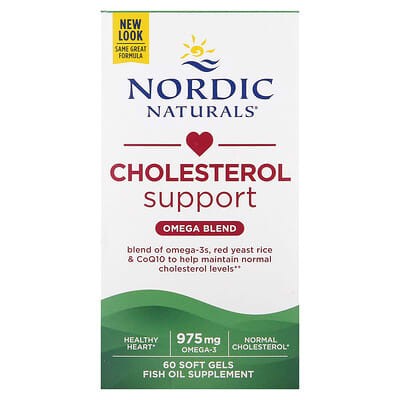

$27.16 $1.35 per serving


Product analysis
Omega LDL combines omega-3 with red yeast rice and CoQ10, but is relatively costly for its omega-3 and CoQ10 content.
AI assessment of the formula, label and price. How scoring works
Nutrient Quality26
The oil description identifies triglycerides, a favorable molecular form. The main omega-3 listing and red yeast rice preparation are less clear, limiting a confident comparison of the complete formula.
Ingredient Transparency70
Amounts are listed, making the declared serving easy to see. Only CoQ10 has a clearly named preparation in the main ingredient list, leaving most form details unclear.
Value For Money23
The full product cost is relatively high for the declared omega-3 and CoQ10. Red yeast rice value remains uncertain, limiting a firm conclusion about the combination.
Customer Satisfaction78
Customer ratings are positive across several hundred reviews. The feedback gives a useful view of satisfaction without proving the proposed health benefits.
Product Focus73
The formula combines oil, red yeast rice and CoQ10 rather than staying with one ingredient. The described skin and metabolic findings do not establish predictable routine benefits from this mixture.
- Format
Softgel - Container
- 60 Softgel(s)
- Per serving
- $1.35
- Customer rating
- 4.8 · 475 ratings
Goals

Impact
High effect
Omega-3 · 1152 mgCoenzyme Q-10 · 30 mg

Impact
High effect
Omega-3 · 1152 mg
Ingredients
| Ingredient | Amount per serving | Score |
|---|---|---|
Calories | 30 Calorie(s) | |
Total Fat | 2 Gram(s) | |
Red Yeast Rice powder | 1200 mg | |
Coenzyme Q10 (Ubiquinone) | 30 mg | |
Total Omega-3 Fatty Acids | 1152 mg |
Coenzyme Q-10 (Ubiquinone) · 30 mg OverallScore42
Omega-3 · 1152 mg OverallScore68
Omega LDL provides 585 mg EPA and 405 mg DHA per serving at a high cost for that amount. The omega-3 is in triglyceride form. The proportion of EPA and DHA in the total oil remains unclear.
How this ingredient is rated
Active Ingredient Quality & Bioavailability100
The omega-3 is in triglyceride form. A preferred oil source and an antioxidant are listed.
Molecular Form & Absorption Potential
The omega-3 is in triglyceride form.
Source Purity & Oxidative Protection
A preferred oil source and an antioxidant are listed.
Dose, Safety & Label Transparency61
The serving lists 585 mg EPA and 405 mg DHA separately. The oil concentration cannot be established from the available amounts. Third-party testing is claimed, with certificates of analysis available.
EPA & DHA Label Specificity
The serving lists 585 mg EPA and 405 mg DHA separately.
Active Ingredient Concentration
The EPA and DHA share of the oil is unclear because a compatible total oil amount is unavailable.
Third-Party Purity Verification
Third-party testing is claimed, with certificates of analysis available.
Value20
The cost per gram of EPA and DHA is high.
Price per 1000mg of EPA+DHA
The cost per gram of EPA and DHA is high.
Alternative products
Report alternatives
Sources
Published studies used for the product analysis and the top-ranked studies for each ingredient and goal.
- Coenzyme Q10 supplementation improves adipokine profile in dyslipidemic individuals: a randomized controlled trial.
- Comparison of nutritional supplements in improving glycolipid metabolism and endocrine function in polycystic ovary syndrome: a systematic review and network meta-analysis.
- Ubiquinol supplementation modulates energy metabolism and bone turnover during high intensity exercise.
- Effects of Coenzyme Q10 on Lipid, Glycemic, and Inflammatory Markers in Metabolic Disorders: A Systematic Review and Meta-Analysis.
- The effect of coenzyme Q10 intake on metabolic profiles in women candidates for in-vitro fertilization: a randomised trial.
- Effects of omega-3 supplementation on glucose and lipid metabolism in patients with gestational diabetes: A meta-analysis of randomized controlled trials.
- Hepatic de novo lipogenesis is suppressed and fat oxidation is increased by omega-3 fatty acids at the expense of glucose metabolism.
- Clinical and metabolic response to flaxseed oil omega-3 fatty acids supplementation in patients with diabetic foot ulcer: A randomized, double-blind, placebo-controlled trial.
- The Effects of Flaxseed Oil Omega-3 Fatty Acids Supplementation on Metabolic Status of Patients with Polycystic Ovary Syndrome: A Randomized, Double-Blind, Placebo-Controlled Trial.
- A combination of omega-3 and plant sterols regulate glucose and lipid metabolism in individuals with impaired glucose regulation: a randomized and controlled clinical trial.
- Dietetic intervention in psoriatic arthritis: the DIETA trial.
- Omega-3 fatty acid supplement skin cancer prophylaxis in lung transplant recipients: A randomized, controlled pilot trial.
- Treatment of hard-to-heal wounds in ischaemic lower extremities with a novel fish skin-derived matrix.
- Effect of eicosapentaenoic acid, an omega-3 polyunsaturated fatty acid, on UVR-related cancer risk in humans. An assessment of early genotoxic markers.