
Nutrient quality
Potassium chloride is an effective electrolyte form at a meaningful amount. The focused dose is appropriate for many healthy users, but impaired clearance or potassium-retaining medicines can create a serious excess risk.
 iHerb iHerb | $ 23.95 | |
 Walmart Walmart | $ 23.95 |
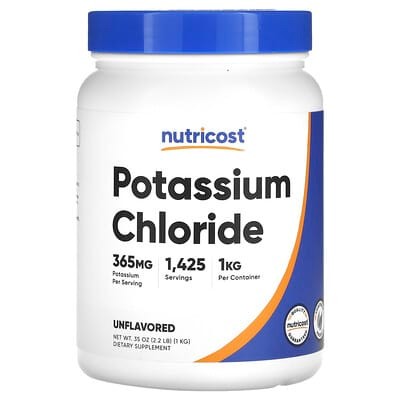
Potassium chloride is a conventional, effective electrolyte form, and the serving supplies a useful amount. The label clearly names the source and potassium content, even though it does not separately show compound weight and elemental yield.
The concentrated powder is economical and allows small adjustments when measured accurately. Chloride makes it more suited to straightforward electrolyte replacement than to people specifically seeking an alkalizing mineral form.
Someone with an identified need for added potassium may find it practical under appropriate guidance. The single-mineral design does not address lipids, vascular nitric oxide, or other heart-related areas.
Potassium chloride is an effective electrolyte form at a meaningful amount. The focused dose is appropriate for many healthy users, but impaired clearance or potassium-retaining medicines can create a serious excess risk.
The active form and elemental amount are clear without a hidden blend. Complete measuring and intake directions are not supplied in the available information.
The strong average rating and solid review count make the aggregate satisfaction signal reasonably dependable. No detailed review text was provided, so recurring complaints and purpose alignment cannot be assessed.
A meaningful amount at an exceptionally low serving cost provides excellent value. The basic chloride form is less versatile than bicarbonate, but the powder remains highly competitive for electrolyte use.

Potassium supports vascular tone and normal electrical function, and the 365 mg amount provides a meaningful dietary contribution. Potassium chloride is effective for electrolyte replacement but lacks the buffering benefits of bicarbonate or citrate.
The focused powder offers good depth for one mineral pathway but does not cover lipids, cardiac energy, or homocysteine regulation. People with impaired kidney function or those using ACE inhibitors, ARBs, or potassium-sparing diuretics should avoid added potassium without medical guidance because blood potassium can rise too far.
| Ingredient | Amount per serving |
|---|---|
Potassium (Potassium Chloride) | 365 mg |
Potassium chloride delivers an effective electrolyte dose, but it lacks the alkalizing benefits of citrate, bicarbonate, or other organic forms. The label identifies the source and potassium amount without separately stating compound weight and elemental yield. Cost efficiency is excellent, while the potassium load requires caution for people with impaired kidney function or those using potassium-sparing diuretics, ACE inhibitors, or ARBs.
Published studies used for the product analysis and the top-ranked studies for each ingredient and goal.