
Nutrient quality
Several relevant botanicals provide a coherent situational formula. Missing enzyme activity, extract standardization, and an absorption strategy limit potency confidence.
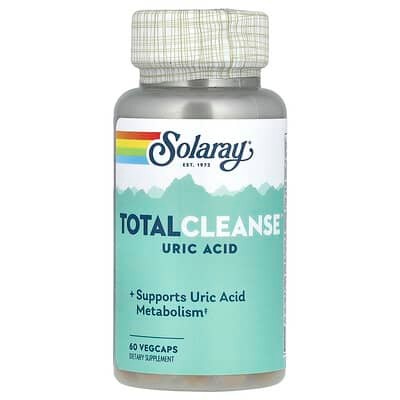
 Vitacost Vitacost | $ 29.59 | |
 Pure Formulas Pure Formulas | $ 29.59 | |
 Amazon Amazon | $ 26.45 | |
| Vitacost | $ 29.59 | |
 iHerb iHerb | $ 29.59 |
Tart cherry, quercetin, bromelain, turmeric, and celery seed provide complementary antioxidant and botanical coverage. Vitamin C and folic acid add modest nutritional support.
Bromelain is present at a useful weight, but enzyme activity and timing guidance are missing. Turmeric and celery extracts also lack active-marker standardization, so their practical potency is uncertain.
The blend is most coherent for its named uric-acid concept rather than hair or digestive support. A 30-serving supply and higher serving cost reduce long-term value.
Several relevant botanicals provide a coherent situational formula. Missing enzyme activity, extract standardization, and an absorption strategy limit potency confidence.
All listed actives have specific amounts without a proprietary blend. Enzyme activity, extract standardization, directions, and capsule excipients remain incomplete.
The supplied satisfaction metric is strong and response volume is very large. Specific firsthand feedback was not supplied, so recurring complaints and purpose alignment remain uncertain.
Useful botanical weights partly support the cost. Missing potency markers make the product only weakly competitive at its elevated serving cost.

Folate and vitamin C provide some foundational nutrient support within a formula aimed mainly at uric-acid management. Tart cherry, bromelain, quercetin, turmeric, and celery create a coherent situational theme.
The narrow use case is less aligned with broad daily resilience than a balanced nutrient formula. Missing bromelain activity units and extract standardization leave several botanical contributions uncertain.

Bromelain can help break down dietary protein, but the formula is designed mainly around uric-acid and inflammatory pathways. A 250 mg amount is useful by weight, yet missing enzyme activity units prevent confirmation of digestive potency.
Tart cherry, quercetin, turmeric, celery, vitamin C, and folate add little direct digestive breadth. Bromelain, turmeric, and quercetin may increase bleeding tendency when combined with anticoagulant or antiplatelet medicines.
| Ingredient | Amount per serving |
|---|---|
Vitamin C (Ascorbic Acid) | 100 mg |
Folate (Folic Acid) | 400 mcg |
Tart Cherry (Prunus cerasus) (fruit) concentrate | 400 mg |
Bromelain (Pineapple) | 250 mg |
Quercetin | 250 mg |
Turmeric (Curcuma longa) (root) extract | 200 mg |
Celery (Apium graveolens) (seed) extract | 100 mg |
The formula provides a solid bromelain amount, but weight-only labeling leaves enzyme activity uncertain. A standard capsule and missing timing guidance limit confidence for systemic use, while pineapple is named without the stem source. The cost per equivalent bromelain amount is high, and the added quercetin and turmeric lack the standardization needed to improve the value tier.
The 400 mcg serving uses synthetic folic acid, which requires more conversion than active folate forms. Missing DFE conversion weakens label transparency. No vitamin B12 is listed, though the moderate folate amount limits masking concern compared with a high-dose product.
The turmeric extract lacks curcuminoid standardization and appears secondary within a broader formula. No active yield or absorption enhancer is disclosed. The high serving cost offers weak value for turmeric-focused use.
Published studies used for the product analysis and the top-ranked studies for each ingredient and goal.