Product Image

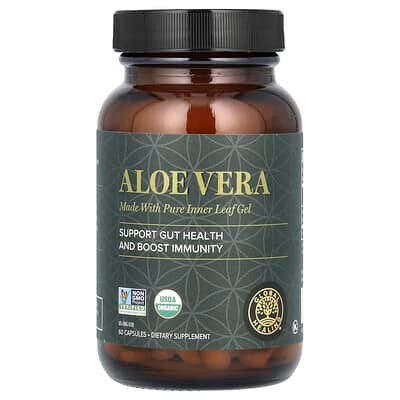
Aloe Fuzion

Global Healing Center
4.7
★ ★ ★ ★ ★
(78 ratings)
Aloe 180 mg
Product Image
Score77
A clean organic inner-leaf aloe capsule with better source identity than generic products. Modest potency and unconfirmed aloin removal keep it below stronger concentrates.
How scoring works
Quantity:60 Capsule(s) • (60 servings)
Goals:
Digestive Health

Score 77

A clean organic inner-leaf aloe capsule with better source identity than generic products. Modest potency and unconfirmed aloin removal keep it below stronger concentrates.
How scoring works
$37.95($0.63 per serving)
iHerb
$ 37.95
Vitacost
$ 40.15
Pure Formulas
$ 37.95
Report prices

Analysis

Certified organic inner-leaf aloe is the only active at 180 mg. Naming the inner leaf is a useful step because it narrows the source compared with generic whole-plant labels.

No concentration ratio or active polysaccharide amount is provided, so the dose appears modest for a nonconcentrated powder. Purification and aloin removal are also not explicitly confirmed.

The capsule is simple but offers limited digestive breadth and uncertain potency. Users should verify decolorization or aloin testing before choosing it for regular oral use.

Who is it for
  • Adults seeking organic inner-leaf aloe
  • People who prefer a one-ingredient capsule
  • Users who can verify purification details
Best for
  • Simple organic aloe intake
  • Light digestive-soothing support
  • A capsule without added botanicals

Pros

  • Uses certified organic aloe
  • Specifies inner-leaf sourcing
  • Single-ingredient formula

Cons

  • Amount is modest for nonconcentrated aloe
  • No concentration ratio
  • Aloin removal is not confirmed
  • Narrow digestive support

Warnings

  • Use only if the physical label confirms decolorized or purified aloe with aloin removed
  • Stop use if cramping, urgent diarrhea, or persistent loose stools occurs
  • Oral aloe is generally unsuitable during pregnancy unless a clinician specifically recommends it

Nutrient quality

81 Highest impact

Organic inner-leaf aloe provides a focused and appropriately sourced formula. No concentration ratio or active-polysaccharide content is disclosed.

.
Ingredient transparency

85 Highest impact

Individual active weights are clearly disclosed. Some extract percentages, enzyme activity, or non-active label details remain incomplete.

.

Customer satisfaction

64 Moderate impact

The supplied rating is favorable, but the feedback base is comparatively small. No complaint-level evidence was supplied to assess recurring issues or purpose-specific experiences.

.

Value for money

73 High impact

The serving cost is moderate relative to the formula. Incomplete potency details keep the quality-to-cost balance from standing out.

.

Report analysis

Goals

Digestive Health
Impact
Moderate effect
C- Goal FitD Strength of SupportD- CoverageA+ Formula Quality

Inner-leaf aloe may provide mucosal soothing, but evidence for oral digestive outcomes is limited and the amount is below a robust nonconcentrated serving. The product does not cover fiber, enzymes, probiotics, or stool bulking.

Inner-leaf sourcing is disclosed, while purification, extract ratio, and aloin removal are not confirmed. Residual aloin can cause cramping and diarrhea, so verified purification is an important missing detail.

Study evidence
Aloe Supportive 7 studies

Ingredients

IngredientAmount per serving
organic inner leaf Aloe
180 mg
Gluten Free Adults 18–50 Vegan Organic Vegetarian
Report overview
Aloe · 180 mg OverallScore59
F Active Ingredient Quality & BioavailabilityA- Dose, Safety & Label TransparencyB Value

Inner-leaf sourcing is useful, but the label does not confirm purification or aloin removal; no extract ratio or active-marker standardization is provided. The 180 mg inner-leaf serving is meaningful but below the target for nonconcentrated aloe. Cost per serving falls in the favorable middle tier; the simple single-ingredient formula keeps the value judgment focused on aloe quality.

Loading alternative details
Report alternatives

Sources

Published studies used for the product analysis and the top-ranked studies for each ingredient and goal.

  1. Prevention of acute radiation-induced Proctitis by Aloe vera: a prospective randomized, double-blind, placebo controlled clinical trial in Pelvic Cancer patients.
    Sahebnasagh A; Ghasemi A; Akbari J; Alipour A; Lashkardoost H; Ala S; Hosseinimehr SJ; Salehifar E · BMC complementary medicine and therapies · 2020
    Randomized trial42 participantsDigestive Health forAloe
  2. Successful Treatment of Acute Radiation Proctitis with Aloe Vera: A Preliminary Randomized Controlled Clinical Trial.
    Sahebnasagh A; Ghasemi A; Akbari J; Alipour A; Lashkardoost H; Ala S; Salehifar E · Journal of alternative and complementary medicine (New York, N.Y.) · 2017
    Randomized trial20 participantsDigestive Health forAloe
  3. Aloe vera for Prevention of Acute Radiation Proctitis in Colorectal Cancer a Preliminary Randomized, Placebo-Controlled Clinical Trial.
    Sahebnasagh A; Saghafi F; Ghasemi A; Akbari J; Alipour A; Habtemariam S; Safdari M; Ghaleno HR; Salehifar E · Journal of gastrointestinal cancer · 2022
    Randomized trial20 participantsDigestive Health forAloe
  4. A Pilot Study of the Effect of Aloe barbadensis Mill. Extract (AVH200®) in Patients with Irritable Bowel Syndrome: a Randomized, Double-Blind, Placebo-Controlled Study.
    Størsrud S; Pontén I; Simrén M · Journal of gastrointestinal and liver diseases : JGLD · 2016
    Randomized trial68 participantsDigestive Health forAloe
  5. A Randomised, Cross-Over, Placebo-Controlled Study of Aloe vera in Patients with Irritable Bowel Syndrome: Effects on Patient Quality of Life.
    Hutchings HA; Wareham K; Baxter JN; Atherton P; Kingham JG; Duane P; Thomas L; Thomas M; Ch'ng CL; Williams JG · ISRN gastroenterology · 2011
    Randomized trial110 participantsDigestive Health forAloe