
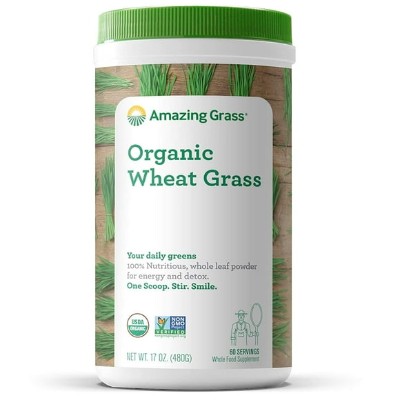
Nutrient quality
The whole-food source is straightforward, though most nutrient forms are not separately identified. Wheat grass and potassium provide modest nutritional amounts rather than concentrated supplementation.
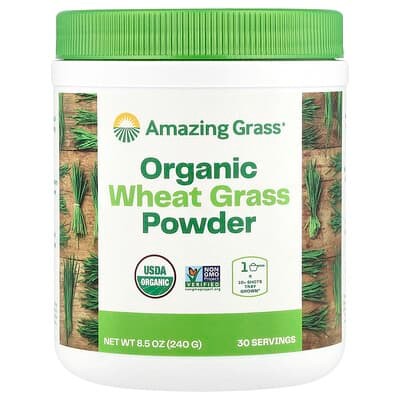
 Vitacost Vitacost | $ 26.67 | |
 Amazon Amazon | $ 24.16 | |
 iHerb iHerb | $ 24.16 | |
| Vitacost | $ 26.67 | |
 Walmart Walmart | $ 24.16 |
The short ingredient profile is easier to understand than a multi-blend greens formula. Wheat grass provides some protein, potassium, beta-carotene, vitamin K, and small amounts of other nutrients.
Potassium is moderate for a greens powder but still low for focused mineral support. The vitamin K form is not identified, and vitamin C and iron are modest.
Its appeal lies in simple plant-food supplementation rather than specialized heart support. Users seeking meaningful protein, vitamins, or minerals will need more concentrated sources.
The whole-food source is straightforward, though most nutrient forms are not separately identified. Wheat grass and potassium provide modest nutritional amounts rather than concentrated supplementation.
The food ingredient and measured nutrients are clearly presented. No proprietary blend hides the main ingredient amount.
The average rating is strong and provides a positive customer signal. A large review base adds reliability, but no specific complaint or experience themes were provided.
The simple formula and moderate serving cost offer fair value, though it is not a concentrated nutrient supplement. The product is reasonably competitive but does not clearly lead its category.
| Ingredient | Amount per serving |
|---|---|
Calories | 35 Calorie(s) |
Total Carbohydrates | 4 Gram(s) |
Protein | 2 Gram(s) |
Vitamin A (Beta-Carotene) | 1640 IU |
Vitamin C | 4 mg |
Vitamin K | 80 mcg |
Calcium | 44 mg |
Iron | 1.6 mg |
Sodium | 0 mg |
Potassium | 240 mg |
Wheat grass provides naturally associated beta-carotene, giving the vitamin A source a useful plant-based profile. The amount is modest and the powder lacks a lipid carrier, so it works better as a food-based contribution than a focused supplement. Form disclosure is clear, but the standardized value for vitamin A is weak.
The wheat-grass serving contributes a moderate potassium amount, but its chemical form is unknown. The label likely reports elemental potassium without connecting that value to a defined compound. Low serving cost supports reasonable value, while vitamin K may require consistent intake for people using warfarin.
The wheat grass powder supplies vitamin K without identifying its form. It provides no disclosed MK-7 dose or lipid carrier, so it is poorly suited to targeted K2 use. The elevated serving cost reflects a whole-food powder rather than a transparent, effective MK-7 formula.