Zinc 100 mg

Zinc 100 mg

Mason Natural4.7 (762 ratings)
Format:Tablet Quantity: 100 Tablet(s) · 100 servings
Goals
$7.42 $0.07 per serving

About this product

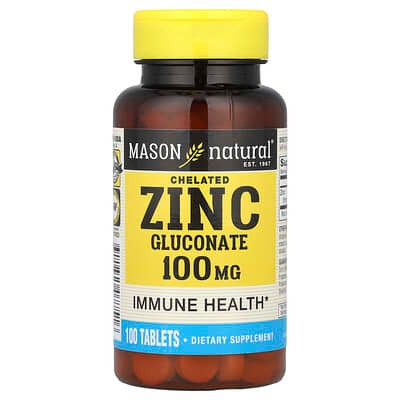
The 100 mg zinc serving raises a substantial suitability concern despite the low cost. It exceeds the stated adult upper intake level and carries concerns about copper depletion and stomach upset. A routine dietary gap does not establish a need for an amount this high.

Zinc gluconate is a clearly identified source with favorable support for supplying zinc. Zinc can support normal immune function and skin repair when intake is low. More zinc does not establish stronger immunity, additional hair growth or a testosterone increase once intake is adequate.

The focused formula is easy to understand, but its simple composition does not resolve the high-dose concern. Copper content remains unquantified, so it cannot be assumed to offset the zinc exposure. Low purchase cost therefore has limited value for someone seeking ordinary daily nutritional support.

Who is it for
  • Adults whose clinician has established a specific reason for a high zinc amount and a suitable duration.
Best for
  • A specific supervised high-zinc use rather than routine dietary-gap support.

Pros

  • Zinc gluconate and its amount are clearly identified.
  • A single active ingredient makes the source of the high exposure easy to recognize.
  • Purchase cost is low.

Cons

  • The serving is much higher than needed to establish an ordinary nutritional contribution.
  • Copper content is unresolved.
  • The larger amount does not establish added hair, skin, immune or hormone benefits.

Warnings

  • The 100 mg zinc serving exceeds the stated adult upper intake level and should not be adopted as a routine daily amount without specific professional direction.
  • High zinc exposure can deplete copper; the available copper details do not establish protection against that risk.
  • The 100 mg serving is associated in the supplied findings with stomach upset.

Product analysis

87 out of 100

Zinc 100 mg provides 100 mg of zinc as zinc gluconate in a simple single-ingredient formula. It offers favorable value and may help cover zinc needs when intake is inadequate.

AI assessment of the formula, label and price. How scoring works

Nutrient Quality80

Zinc gluconate is a favorable form of zinc. The serving contains a high amount of zinc, which does not necessarily provide greater benefit than meeting nutritional needs.

Ingredient Transparency100

Both the amount and the gluconate form are identified. A single active ingredient makes the composition straightforward to understand.

Value For Money99

The cost per amount of zinc is considerably lower than that of comparable products. It offers favorable value for someone who specifically needs zinc.

Customer Satisfaction79

Customer ratings are very positive across a substantial number of responses. The large sample makes the general satisfaction trend more informative, although ratings do not prove effectiveness.

Product Focus79

Zinc supports normal immune and skin functions and may help when intake is inadequate. The high 100 mg serving without copper can disrupt copper balance with continuing use, and there is no established extra benefit from such a high amount once needs are met.

Format
Tablet
Container
100 Tablet(s)
Per serving
$0.07
Customer rating
4.7 · 762 ratings
Report analysis

Goals

Skin Health
Impact
High effect
A Ingredient FitF PathwaysB+ EvidenceA+ Formulation Logic
Zinc · 100 mg

Zinc 100 mg is a focused nutritional option for skin repair when zinc intake is inadequate. It supplies 100 mg of zinc as zinc gluconate, a clearly declared nutrient used by epidermal repair and antioxidant enzymes. The large amount does not imply a greater skin benefit once nutritional needs are met.

Study evidence
Zinc Supportive
Everyday Health
Impact
High effect
A Ingredient FitD+ PathwaysB- EvidenceA Formulation Logic
Zinc · 100 mg

Zinc 100 mg supplies zinc for normal immune function, but its high amount and lack of copper make it a less straightforward everyday choice. Continued high zinc intake without copper can disrupt copper balance. The 100 mg serving provides a substantial zinc amount for filling a dietary gap.

Study evidence
Zinc Supportive
Immunity
Impact
Highest effect
A Ingredient FitB+ PathwaysA+ EvidenceA Formulation Logic
Zinc · 100 mg

Zinc 100 mg supplies zinc for normal immune-cell function, but its high amount without copper raises a practical concern about copper balance. The 100 mg serving does not offer an established extra immune advantage over adequate zinc intake.

Study evidence
Zinc Supportive
Testosterone Support
Impact
High effect
A Ingredient FitF PathwaysA EvidenceA Formulation Logic
Zinc · 100 mg

Zinc 100 mg is relevant to testosterone support chiefly when zinc intake is inadequate, but its high zinc content without copper creates a mineral-balance concern. The 100 mg elemental zinc serving is supplied as gluconate. A larger amount does not provide an established extra testosterone benefit after zinc needs are met.

Study evidence
Zinc Disputed
Eye Health
Impact
Highest effect
A Ingredient FitC PathwaysB+ EvidenceA Formulation Logic
Zinc · 100 mg

Zinc 100 mg has a narrow eye-health role with a zinc-balance concern. Zinc at 100 mg as gluconate is supplied without copper, which counterbalances high-dose zinc. The relevant eye-health evidence concerns a defined combination for selected people with age-related macular degeneration.

Study evidence
Zinc Supportive

Ingredients

IngredientAmount per servingScore
Zinc (Zinc Gluconate)
100 mg 67
Adults 18–50
Report overview
B+ Active Ingredient Quality & BioavailabilityF Dose, Safety & Label TransparencyA+ Value
Mason Natural Zinc 100 mg offers good zinc value at $0.007 per 10 mg zinc and $0.071 per serving, with 100 mg zinc per serving as Zinc Gluconate. The amount is high and can increase the risk of copper depletion and digestive upset.
Report alternatives

Sources

Published studies used for the product analysis and the top-ranked studies for each ingredient and goal.

  1. Effectiveness of sodium bicarbonate and zinc chloride mouthwashes in the treatment of oral mucositis and quality of life in patients with cancer under chemotherapy.
    Mohammadi F; Oshvandi K; Kamallan SR; Khazaei S; Ranjbar H; Ahmadi-Motamayel F; Gillespie M; Jenabi E; Vafaei SY · Nursing open · 2022
    Randomized trial144 participantsEveryday Health forZinc
  2. Zinc supplementation in young children with acute diarrhea in India.
    Sazawal S; Black RE; Bhan MK; Bhandari N; Sinha A; Jalla S · The New England journal of medicine · 1995
    Randomized trial937 participantsEveryday Health forZinc
  3. Associations of mortality with ocular disorders and an intervention of high-dose antioxidants and zinc in the Age-Related Eye Disease Study: AREDS Report No. 13.
    Clemons TE; Kurinij N; Sperduto RD; AREDS Research Group · Archives of ophthalmology (Chicago, Ill. : 1960) · 2004
    Randomized trial4,753 participantsEveryday Health forZinc
  4. Effects of zinc and probiotic co-supplementation on inflammation, gastrointestinal symptoms, quality of life, and mood in irritable bowel syndrome patients.
    Rezazadegan M; Soheilipour M; Amani R · Scientific reports · 2026
    Randomized trial84 participantsEveryday Health forZinc
  5. Effect of zinc sulfate supplementation on premenstrual syndrome and health-related quality of life: Clinical randomized controlled trial.
    Siahbazi S; Behboudi-Gandevani S; Moghaddam-Banaem L; Montazeri A · The journal of obstetrics and gynaecology research · 2018
    Randomized trial142 participantsEveryday Health forZinc
  6. Antioxidant vitamin and mineral supplements for age-related macular degeneration.
    Evans JR · The Cochrane database of systematic reviews · 2002
    Systematic review170 participants7 studies pooledEye Health forZinc
  7. Antioxidant vitamin and mineral supplements for slowing the progression of age-related macular degeneration.
    Evans JR; Lawrenson JG · The Cochrane database of systematic reviews · 2023
    Meta-analysis3,790 participants5 studies pooledEye Health forZinc
  8. Oral zinc in macular degeneration.
    Newsome DA; Swartz M; Leone NC; Elston RC; Miller E · Archives of ophthalmology (Chicago, Ill. : 1960) · 1988
    Randomized trial151 participantsEye Health forZinc
  9. A randomized, placebo-controlled, clinical trial of high-dose supplementation with vitamins C and E, beta carotene, and zinc for age-related macular degeneration and vision loss: AREDS report no. 8.
    Age-Related Eye Disease Study Research Group · Archives of ophthalmology (Chicago, Ill. : 1960) · 2001
    Randomized trial3,640 participantsEye Health forZinc
  10. Effect of vitamin A and zinc supplementation on the nutriture of children in Northeast Thailand.
    Udomkesmalee E; Dhanamitta S; Sirisinha S; Charoenkiatkul S; Tuntipopipat S; Banjong O; Rojroongwasinkul N; Kramer TR; Smith JC · The American journal of clinical nutrition · 1992
    Randomized trial133 participantsEye Health forZinc
  11. Nutrient supplementation for prevention of viral respiratory tract infections in healthy subjects: A systematic review and meta-analysis.
    Vlieg-Boerstra B; de Jong N; Meyer R; Agostoni C; De Cosmi V; Grimshaw K; Milani GP; Muraro A; Oude Elberink H; Pali-Schöll I; Roduit C; Sasaki M; Skypala I; Sokolowska M; van Splunter M; Untersmayr E; Venter C; O'Mahony L; Nwaru BI · Allergy · 2022
    Meta-analysis199,055 participants115 studies pooledImmunity forZinc
  12. Zinc supplementation reduces the incidence of acute lower respiratory infections in infants and preschool children: a double-blind, controlled trial.
    Sazawal S; Black RE; Jalla S; Mazumdar S; Sinha A; Bhan MK · Pediatrics · 1998
    Randomized trial609 participantsImmunity forZinc
  13. A randomized controlled trial of zinc supplementation in the treatment of acute respiratory tract infection in Thai children.
    Rerksuppaphol S; Rerksuppaphol L · Pediatric reports · 2020
    Randomized trial64 participantsImmunity forZinc
  14. The effect of zinc and vitamin A supplementation on immune response in an older population.
    Fortes C; Forastiere F; Agabiti N; Fano V; Pacifici R; Virgili F; Piras G; Guidi L; Bartoloni C; Tricerri A; Zuccaro P; Ebrahim S; Perucci CA · Journal of the American Geriatrics Society · 1998
    Randomized trial136 participantsImmunity forZinc
  15. The role of specific nutrients in preventing immune system and blood cell disorders: an umbrella review.
    Vecchietti A; Strano P; Minutolo G; Grieco V; Cappuccio G; Granvillano G; Confalonieri L; Briganti GL; Raso E; Chimienti M; Pellegrini M; Mercogliano M; Spatari G; Lugli C; Urbano T; Lorenzon A · Journal of preventive medicine and hygiene · 2026
    Systematic review13 studies pooledImmunity forZinc
  16. Sex-related differences in response to zinc pyrithione shampoo vs. non-anti-dandruff shampoo.
    Collins LZ; Baines FL; Matheson JR; Turner GA; Diao Y; Li Y; Pi Y · International journal of cosmetic science · 2019
    Meta-analysis2,088 participants20 studies pooledSkin Health forZinc
  17. Maintenance of an Acidic Skin Surface with a Novel Zinc Lactobionate Emollient Preparation Improves Skin Barrier Function in Patients with Atopic Dermatitis.
    Andrew PV; Pinnock A; Poyner A; Brown K; Chittock J; Kay LJ; Cork MJ; Danby SG · Dermatology and therapy · 2024
    Cohort study23 participantsSkin Health forZinc
  18. Spatial expression of metallothionein, matrix metalloproteinase-1 and Ki-67 in human epidermal wounds treated with zinc and determined by quantitative immunohistochemistry: A randomised double-blind trial.
    Ågren MS; Chafranska L; Eriksen JO; Forman JL; Bjerrum MJ; Schjerling P; Larsen HF; Cottarelli E; Jorgensen LN; Gjerdrum LMR · European journal of cell biology · 2021
    Randomized trial30 participantsSkin Health forZinc
  19. A pilot trial using topical regular crystalline insulin vs. aqueous zinc solution for uncomplicated cutaneous wound healing: Impact on quality of life.
    Attia EA; Belal DM; El Samahy MH; El Hamamsy MH · Wound repair and regeneration : official publication of the Wound Healing Society [and] the European Tissue Repair Society · 2014
    Randomized trial90 participantsSkin Health forZinc
  20. Evidence-Based Nutritional Interventions in Wound Care.
    Saeg F; Orazi R; Bowers GM; Janis JE · Plastic and reconstructive surgery · 2021
    Systematic review2,339 participants36 studies pooledSkin Health forZinc