




Vitamin C Supportive
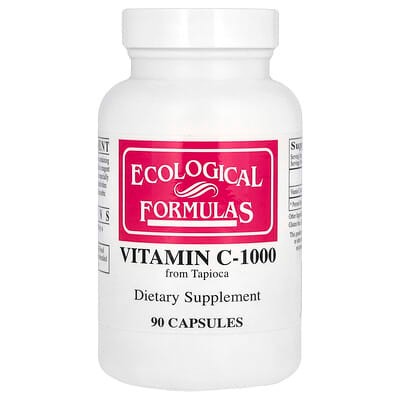
Vitamin C-1000 from Tapioca
Goals
$17.56 $0.19 per serving
Product analysis
Ecological Formulas Vitamin C-1000 from Tapioca offers an inexpensive, single-nutrient approach to immune and antioxidant support, providing 1,000 mg of vitamin C in one capsule. The label presents the tapioca-sourced ascorbic acid as an option for people with food sensitivities, but it is still ordinary unbuffered vitamin C.
AI assessment of the formula, label and price. How scoring works
Nutrient Quality40
The formula uses ascorbic acid made from tapioca. The source is identified, but a separate nutritional advantage from tapioca is not established.
Ingredient Transparency100
The label clearly identifies the vitamin C amount and source. Its single-ingredient format makes it easy to compare.
Value For Money92
The vitamin C dose is inexpensive compared with similar products. The single-nutrient formula is good value for vitamin C supplementation.
Customer Satisfaction77
Customer feedback is very favorable. Several hundred ratings provide a useful basis for that impression.
Product Focus79
The single nutrient has a focused role in normal immune and antioxidant function. Its other relevant uses, such as skin nutrition, also relate to vitamin C's normal biological roles.
- Format
Capsule - Container
- 90 Capsule(s)
- Per serving
- $0.19
- Customer rating
- 4.7 · 493 ratings
Goals

Impact
High effect
Vitamin C · 1000 mg
Vitamin C-1000 from Tapioca is a focused option for supplementing vitamin C intake. Its 1000 mg vitamin C declaration supports normal antioxidant and immune functions. The tapioca source does not add a separate everyday-health advantage in the supplied facts.

Impact
Highest effect
Vitamin C · 1000 mg
Vitamin C-1000 from Tapioca is a focused option for modest regular-use support of cold duration. Its 1000 mg of vitamin C supplies the sole active contribution, with support concentrated on innate immune-cell activity.
Vitamin C Supportive

Impact
High effect
Vitamin C · 1000 mg
Vitamin C-1000 from Tapioca is a focused vitamin C option for supporting normal collagen production when intake is insufficient, with a limited case for extra cosmetic benefit at adequate intake. Each serving supplies 1,000 mg vitamin C, which helps the enzymes that build collagen.
Vitamin C Supportive

Impact
Highest effect
Vitamin C · 1000 mg
Vitamin C-1000 from Tapioca is a simple option whose inflammation relevance is strongest when inflammatory markers are elevated. Its 1,000 mg vitamin C provides antioxidant support, with the supplied facts connecting this amount to a marker reduction in that context. The single-ingredient format keeps the contribution clear.
Vitamin C Supportive

Impact
High effect
Vitamin C · 1000 mg
Vitamin C-1000 from Tapioca is a limited fit for routine eye support, supplying 1000 mg of vitamin C. Vitamin C contributes to retinal and lens antioxidant defense, while the supplied eye-outcome benefit concerns a defined combination used by selected people with AMD.
Vitamin C Disputed
Ingredients
| Ingredient | Amount per serving | Score |
|---|---|---|
Vitamin C (Tapioca) | 1000 mg |
Vitamin C (Tapioca) · 1000 mg OverallScore67
Ecological Formulas Vitamin C-1000 from Tapioca is a vitamin C choice with low cost, providing 1000 mg per serving. The vitamin C is ascorbic acid. Ascorbic acid is unbuffered. The vitamin C cost is low at $0.20 per serving and per 1,000 mg vitamin C; the serving price covers the full formula.
Alternative products
Report alternatives
Sources
Published studies used for the product analysis and the top-ranked studies for each ingredient and goal.
- Dietary intake and blood concentrations of antioxidants and the risk of cardiovascular disease, total cancer, and all-cause mortality: a systematic review and dose-response meta-analysis of prospective studies.
- Scientific Opinion on the substantiation of a health claim related to vitamin C and increasing non haem iron absorption pursuant to Article 14 of Regulation (EC) No 1924/2006.
- Vitamin C Depletion and All-Cause Mortality in Renal Transplant Recipients.
- Associations of Serum Biomarkers of Fruit and Vegetable Intake With the Risk of Cause-Specific Mortality and All-Cause Mortality: A National Prospective Cohort Study.
- Relation between plasma ascorbic acid and mortality in men and women in EPIC-Norfolk prospective study: a prospective population study. European Prospective Investigation into Cancer and Nutrition.
- Role of Oral Vitamin 'C' on Astigmatic Errors in Phacoemulsification.
- Ascorbic acid metabolites are involved in intraocular pressure control in the general population.
- Nutritional modulation of cataract.
- Dietary n-3 Fatty Acid, α-Tocopherol, Zinc, vitamin D, vitamin C, and β-carotene are Associated with Age-Related Macular Degeneration in Japan.
- Adherence to a Mediterranean diet, lifestyle and age-related macular degeneration: the Coimbra Eye Study - report 3.
- Vitamin C and contribution to the normal function of the immune system: evaluation of a health claim pursuant to Article 14 of Regulation (EC) No 1924/2006.
- Therapeutic effects of high-dose vitamin C supplementation in patients with COVID-19: a meta-analysis.
- Effect of micronutrient supplements on influenza and other respiratory tract infections among adults: a systematic review and meta-analysis.
- New evidence for antioxidant properties of vitamin C.
- Enhanced Vitamin C Delivery: A Systematic Literature Review Assessing the Efficacy and Safety of Alternative Supplement Forms in Healthy Adults.
- Efficacy of Vitamin C as Glucocorticoid Substitute for Reducing Pain and Inflammation After Total Hip Arthroplasty: A Randomized Controlled Trial.
- The Impact of Vitamin C on Analgesic, Anti-inflammatory, and Hemostatic Outcomes After Total Hip and Knee Arthroplasty: A Systematic Review and Meta-Analysis.
- The impact of vitamin C supplementation on the perioperative outcomes after total hip and knee arthroplasty: a systematic review and meta-analysis.
- Therapeutic Impact of Ascorbic Acid on Oral and Periodontal Tissues: A Systematic Literature Review.
- Oral vitamin C administration reduces early recurrence rates after electrical cardioversion of persistent atrial fibrillation and attenuates associated inflammation.