
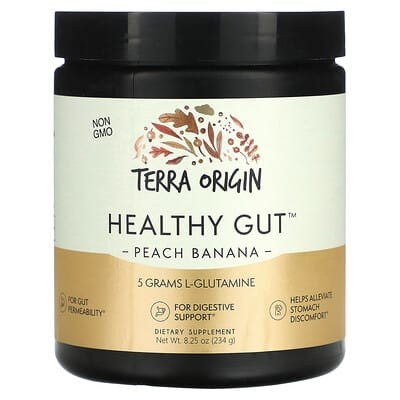

$35.99 $1.19 per serving

Product analysis
Healthy Gut Peach Banana contains N-acetyl glucosamine, which may modestly support skin hydration. Its copper oxide is a poorly absorbed source of copper.
AI assessment of the formula, label and price. How scoring works
Nutrient Quality18
Copper oxide is a weak point because its absorption is poor. Most other ingredient forms are not identified clearly enough for confident quality comparisons.
Ingredient Transparency71
All listed amounts are disclosed, making serving comparisons possible. Most forms are omitted, leaving the ingredient preparations less clear.
Value For Money32
Value is limited for the copper and N-acetyl glucosamine at the serving cost. Several other ingredient comparisons remain uncertain, so the broad list does not establish good value.
Customer Satisfaction87
Customer feedback is very positive across a substantial number of ratings. Those ratings support satisfaction without establishing skin or gut benefits.
Product Focus51
The clearest supported connection is a modest possible skin-hydration benefit from N-acetyl glucosamine. The large ingredient mix does not establish broader benefits from the combination.
- Format
Powder - Container
- 8 Ounce(s)
- Per serving
- $1.19
- Also available
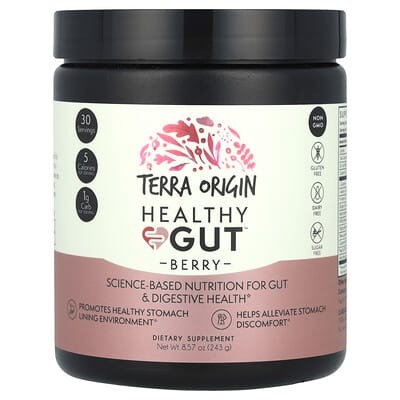 Healthy Gut Berry$35.99
- Customer rating
- 4.9 · 1,344 ratings
Goals

Impact
Moderate effect
Zinc · 2.15 mgCopper · 1 mgN-Acetyl Glucosamine · 500 mg
N-acetyl glucosamine at 500 mg matches the amount used in a small trial that found a limited cheek-hydration improvement. Copper contributes to connective-tissue enzymes. The main saved contribution concerns skin water binding, while evidence for broader visible changes is limited.
How this product is rated for Skin Health
Ingredient fit51
The relevant skin nutrients sit within a formula that also serves other purposes. The assessed amounts provide partial dose coverage.
Goal fit
The relevant skin nutrients sit within a formula that also serves other purposes.
Dose adequacy
The assessed amounts provide partial dose coverage.
Pathways19
The strongest saved contribution concerns antioxidant defence related to UV exposure, with partial coverage. The saved findings do not show broad coverage of the reviewed skin pathways.
Depth
The strongest saved contribution concerns antioxidant defence related to UV exposure, with partial coverage.
Breadth
The saved findings do not show broad coverage of the reviewed skin pathways.
Evidence95
N-Acetyl Glucosamine provides the strongest evidence contribution among the assessed ingredients, within the reviewed outcome limits. The assessed ingredients at meaningful amounts match preparations included in the supplied evidence.
Evidence strength
N-Acetyl Glucosamine provides the strongest evidence contribution among the assessed ingredients, within the reviewed outcome limits.
Studied preparation
The assessed ingredients at meaningful amounts match preparations included in the supplied evidence.
Formulation logic100
2 of 2 assessed ingredients reach meaningful amounts in the saved assessment. No ingredient conflict was identified in the saved assessment.
Partner coverage
The assessed ingredients can contribute alone or have the relevant partner present.
Conflicts
No ingredient conflict was identified in the saved assessment.
Effective doses
2 of 2 assessed ingredients reach meaningful amounts in the saved assessment.
Ingredients
| Ingredient | Amount per serving | Score |
|---|---|---|
Calories | 20 Calorie(s) | |
Zinc (PepZinGI) | 2.15 mg | |
Copper (Copper Oxide) | 1 mg | |
L-Glutamine | 5 Gram(s) | |
Sustamine L-Alanyl-L-Glutamine | 500 mg | |
N-Acetyl-D-Glucosamine | 500 mg | |
Slippery Elm bark powder | 200 mg | |
Marshmallow root powder | 200 mg | |
MSM | 200 mg | |
Deglycerrhizinated (DGL) Licorice root powder | 100 mg | |
Stevia leaf extract | 100 mg | |
Quercetin Dihydrate | 50 mg | |
PepZinGI (Zinc Carnosine) | 10 mg | |
Aloe vera leaf extract | 10 mg |
N-Acetyl Glucosamine · 500 mg OverallScore79
Each serving provides 500 mg of N-acetyl-D-glucosamine, and the product declares shellfish. The whole-product cost works out to about $1.20 per 500 mg of the ingredient.
How this ingredient is rated
Active Ingredient Quality & Bioavailability93
The recorded name specifies N-acetyl-D-glucosamine. The product declares shellfish; that declaration alone does not establish the N-acetyl glucosamine source.
N-Acetyl-D-Glucosamine Isomer Specificity
The recorded name specifies N-acetyl-D-glucosamine.
Source and Allergen Disclosure
The product declares shellfish; that declaration alone does not establish the N-acetyl glucosamine source.
Dose, Safety & Label Transparency90
The amount of N-acetyl-D-glucosamine is separately disclosed at 500 mg per serving.
NAG Potency per Serving
A serving supplies 500 mg of N-acetyl-D-glucosamine.
Label Transparency and Blend Clarity
The amount of N-acetyl-D-glucosamine is separately disclosed at 500 mg per serving.
Value30
The whole-product cost corresponds to about $1.20 per 500 mg of N-acetyl glucosamine, based on the labeled amount per serving.
Price per 500mg of N-Acetyl Glucosamine
The whole-product cost corresponds to about $1.20 per 500 mg of N-acetyl glucosamine, based on the labeled amount per serving.
Aloe · 10 mg OverallScore57
Each serving lists 10 mg of aloe extract. Its plant part is not established in the saved facts, which limits comparison between preparations.
How this ingredient is rated
Composition and Label Disclosure22
An aloe extract is recorded; a specific marker concentration is not established in the saved facts. The saved facts do not establish the aloe plant part or a purification process.
Aloe Part and Processing Disclosure
The saved facts do not establish the aloe plant part or a purification process.
Marker and Preparation Disclosure
An aloe extract is recorded; a specific marker concentration is not established in the saved facts.
Composition and Label Disclosure100
The aloe amount is individually disclosed as 10 mg per serving.
Individual Preparation Amount Disclosure
The aloe amount is individually disclosed as 10 mg per serving.
Commercial Price and Usability40
The whole-product serving costs about $1.20; that is not a separate price for aloe.
Commercial Price per Labeled Serving
The whole-product serving costs about $1.20; that is not a separate price for aloe.
Copper (Copper Oxide) · 1 mg OverallScore44
A serving provides 1 mg of copper as copper oxide, which the evaluation considers poorly absorbed. The zinc-to-copper balance is below the level favored in the evaluation.
How this ingredient is rated
Active Ingredient Quality & Bioavailability30
The copper amount and its source, copper oxide, are identified. The evaluation considers this form poorly absorbed.
Copper Form Bioavailability
Copper oxide is the named form; the evaluation considers it poorly absorbed.
Elemental Copper Labeling Clarity
The copper row identifies both the 1 mg amount per serving and the source, copper oxide.
Dose, Safety & Label Transparency71
The selected serving provides 1 mg of copper, assessed favorably by the evaluation. The serving’s 2.15 mg of zinc compared with 1 mg of copper is below the balance favored by the evaluation.
Copper Dosage Safety & Efficacy
The selected serving provides 1 mg of copper, assessed favorably by the evaluation.
Zinc-to-Copper Balance
The serving’s 2.15 mg of zinc compared with 1 mg of copper is below the balance favored by the evaluation.
Value20
A whole-product serving costs about $1.20; the price covers the entire product serving, not copper alone.
Price Per Serving Efficiency
A whole-product serving costs about $1.20; the price covers the entire product serving, not copper alone.
Alternative products
Report alternatives
Sources
Published studies used for the product analysis and the top-ranked studies for each ingredient and goal.
- Noninferiority of Copper Dressings Than Negative Pressure Wound Therapy in Healing Diabetic Wounds: A Randomized Clinical Trial.
- Improvement of facial skin characteristics using copper oxide containing pillowcases: a double-blind, placebo-controlled, parallel, randomized study.
- Radially Electrospun Fibrous Membrane Incorporated with Copper Peroxide Nanodots Capable of Self-Catalyzed Chemodynamic Therapy for Angiogenesis and Healing Acceleration of Diabetic Wounds.
- Engineering copper nanoparticle/polysaccharide-immobilized cotton gauze for accelerated healing of Staphylococcus aureus-infected dermal wounds.
- Stimulation of Healing of Non-Infected Stagnated Diabetic Wounds by Copper Oxide-Impregnated Wound Dressings.
- A randomized, investigator-blinded, controlled pilot study to evaluate the safety and efficacy of a poly-N-acetyl glucosamine-derived membrane material in patients with venous leg ulcers.
- Poly-N-acetyl glucosamine nanofibers for negative-pressure wound therapies.
- Preparation, characterization, and moisturizing effect of liposomes containing glucosamine and N-acetyl glucosamine.
- The effect of N-acetyl-glucosamine on stratum corneum desquamation and water content in human skin.
- Reduction in the appearance of facial hyperpigmentation by topical N-acetyl glucosamine.
- Sex-related differences in response to zinc pyrithione shampoo vs. non-anti-dandruff shampoo.
- Maintenance of an Acidic Skin Surface with a Novel Zinc Lactobionate Emollient Preparation Improves Skin Barrier Function in Patients with Atopic Dermatitis.
- Spatial expression of metallothionein, matrix metalloproteinase-1 and Ki-67 in human epidermal wounds treated with zinc and determined by quantitative immunohistochemistry: A randomised double-blind trial.
- A pilot trial using topical regular crystalline insulin vs. aqueous zinc solution for uncomplicated cutaneous wound healing: Impact on quality of life.
- Evidence-Based Nutritional Interventions in Wound Care.