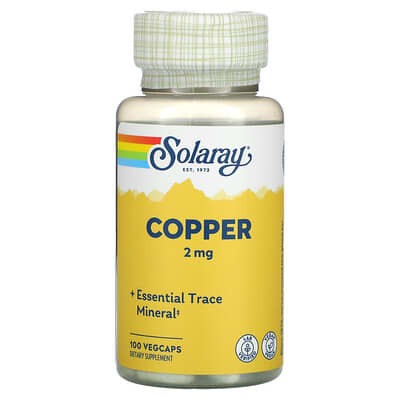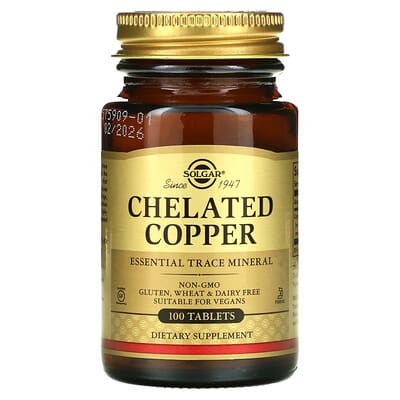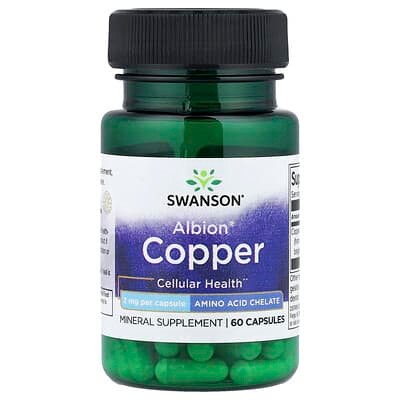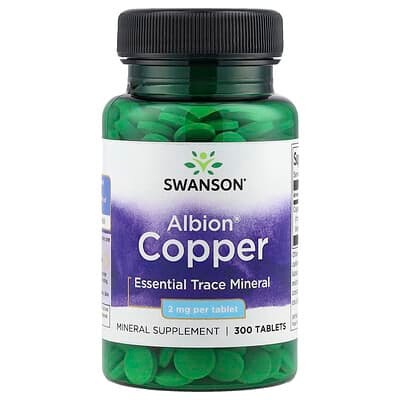
Copper

Description

Copper plays a critical role in maintaining healthy connective tissues, bone, and blood vessels, and is crucial for the formation of red blood cells. It's a key component of several enzymes, including those vital for energy production and the cross-linking of collagen and elastin, contributing to structural integrity throughout the body. It contributes to the proper functioning of the immune system and acts as an antioxidant by being a co-factor for superoxide dismutase (SOD), an enzyme that helps protect cells from damage by free radicals. Copper also supports brain health, nerve function, and is involved in the synthesis of neurotransmitters, impacting cognitive function and mood. Furthermore, copper is essential for iron metabolism, enabling the body to absorb and utilize iron effectively. It helps transport iron to bone marrow for red blood cell formation and ensures its proper release from storage, making it integral to preventing certain types of anemia and maintaining overall vitality.

Sources
Shellfish (oysters, crab, lobster)Nuts (cashews, almonds, peanuts)Seeds (sesame, sunflower)Whole grainsLegumes (lentils, beans)Dark chocolateOrgan meats (liver)MushroomsAvocado
Cheapest Copper supplements
Discover the cheapest Copper supplements to support your Bone Health, Skin Health, Hair Health, and Vision Support needs without breaking the bank.
Best Copper supplements
Discover the best copper supplements for supporting bone, skin, hair, and vision health.
Value Copper supplements
Explore top-rated Copper supplements offering essential support for bone, skin, hair, and vision health, helping you make an informed choice for overall well-being.
Timing & Intake
AnytimeWith food
Best taken with food to minimize the risk of gastrointestinal upset.
Daily Intake
RDA (Men)1 mg
RDA (Women)1 mg
RDI1 mg
Optimal Dosage
Minimum1 mg
Maximum3 mg
Safety & Toxicity
Upper Limit (UL)10 mg
Toxicity Threshold60 mg
Toxicity EffectLiver damage, kidney failure
Goals
Bone Health
Bone Health
Impact
High effect
Typical dose:1–3 mg
Copper's role via the enzyme lysyl oxidase is not just decent, but very effective and critical for creating a strong, flexible collagen framework in bone. Proper cross-linking is essential to prevent brittleness, making Copper's contribution high-impact for bone quality.
View goal ->
Skin Health
Skin Health
Impact
High effect
Typical dose:1–3 mg
Copper is required by the enzyme lysyl oxidase, which cross-links collagen and elastin fibers, giving skin its strength and elasticity. It also functions as a cofactor for the antioxidant enzyme superoxide dismutase. As a trace mineral, it is foundational but needed in small, balanced amounts, often alongside zinc.
View goal ->
Vision Support
Vision Support
Impact
High effect
Typical dose:1–2 mg
High-dose zinc supplementation, as recommended in the AREDS2 formula for vision support, can interfere with copper absorption and lead to a deficiency. Including a small amount of copper is not for direct vision benefits but is a crucial safety and efficacy measure to balance the zinc intake.
View goal ->
Hair Health
Hair Health
Impact
Moderate effect
Typical dose:1–3 mg
Copper is a cofactor for enzymes involved in cross-linking collagen for hair follicle strength and producing melanin for hair color. While important, deficiency is uncommon and it must be carefully balanced with zinc intake, making it a supportive rather than a primary supplement for most people.
View goal ->
Price per product
Average$26.34
Median$22.22
Price per serving
Average$0.71
Median$0.48
Price per 1 mg
Average$0.52
Median$0.28
Price distribution
Price per serving distribution
Price per 1 mg
Reference amount: 1 mg
Forms
Paired ingredients
Copper Gluconate (117)80
Copper gluconate is a chelate of copper with gluconic acid, a mild organic acid. It is one of the most common forms of copper found in dietary supplements due to its relatively good solubility and absorption in the digestive tract. It provides a stable source of elemental copper and is generally well-tolerated.
Pros
  • Good bioavailability
  • Widely available and commonly used
  • Generally well-tolerated
Cons
  • May contain a lower percentage of elemental copper by weight compared to some other forms
  • Higher doses can cause digestive upset
Per product
Avg$29.31
Med$26.89
Per serving
Avg$0.61
Med$0.54
Per 1 mg
Avg$1.42
Med$0.58
Price distribution
Copper Bisglycinate (69)92
Copper bisglycinate is a chelated form where a copper ion is bound to two glycine molecules. This chelation helps protect the copper from interacting with other compounds in the gut, enhancing its absorption and bioavailability. It's often preferred for its superior absorption profile and gentle action on the digestive system.
Pros
  • Excellent bioavailability and absorption
  • Less likely to cause digestive upset compared to inorganic forms
  • Reduced interference with other minerals
Cons
  • May be more expensive than some simpler forms
Per product
Avg$32.10
Med$29.49
Per serving
Avg$0.65
Med$0.60
Per 0.1 mg
Avg$0.34
Med$0.17
Price distribution
Copper Citrate (60)78
Copper citrate is a complex of copper with citric acid, a common organic acid found naturally in citrus fruits. It is considered to have good bioavailability, often comparable to or slightly better than copper gluconate, making it a suitable form for dietary supplementation. It is generally well-tolerated.
Pros
  • Good bioavailability
  • Generally well-tolerated
  • Organic form
Cons
  • May be less absorbed than amino acid chelates in some individuals
  • Higher doses can still lead to gastrointestinal upset
Per product
Avg$39.01
Med$33.55
Per serving
Avg$1.00
Med$0.85
Per 1 mg
Avg$2.27
Med$1.45
Price distribution
Copper Amino Acid Chelate (59)88
Copper amino acid chelate refers to a copper ion that is chemically bonded with one or more amino acids (e.g., glycine, aspartic acid, methionine). This chelation process mimics how minerals are absorbed in food, making these forms generally more bioavailable and better tolerated than inorganic salts. Copper bisglycinate is a specific type of amino acid chelate.
Pros
  • Improved bioavailability compared to inorganic salts
  • Good digestive tolerance
  • Mimics natural absorption pathways
Cons
  • The specific amino acid(s) used can vary, potentially affecting exact absorption rates
  • Generally more expensive than inorganic salts
Per product
Avg$27.01
Med$24.98
Per serving
Avg$0.65
Med$0.53
Per 1 mg
Avg$0.92
Med$0.48
Price distribution
Copper Sulfate (51)45
Copper sulfate is an inorganic salt of copper. While it provides elemental copper, its bioavailability is generally considered lower than chelated or organic forms, and it can be more irritating to the digestive system, potentially leading to nausea or upset stomach. It is less common in modern, high-quality dietary supplements for human consumption.
Pros
  • Inexpensive and readily available
Cons
  • Lower bioavailability compared to chelated forms
  • Higher potential for gastrointestinal irritation and upset stomach
  • Less preferred for human supplementation
Per product
Avg$22.50
Med$17.95
Per serving
Avg$0.36
Med$0.23
Per 1 mg
Avg$0.31
Med$0.16
Price distribution
Copper Bisglycinate Chelate (47)92
Copper bisglycinate chelate is a specific and highly regarded form of copper where the copper ion is covalently bound to two glycine molecules. This forms a stable chelate that passes through the digestive tract largely intact, leading to superior absorption and reduced interference with other minerals compared to inorganic forms. It is designed for optimal bioavailability.
Pros
  • Excellent bioavailability and absorption
  • Superior digestive tolerance, gentle on the stomach
  • Minimizes interactions with other dietary components for better absorption
Cons
  • Can be more expensive to produce and purchase
Per product
Avg$27.85
Med$25.99
Per serving
Avg$0.68
Med$0.54
Per 1 mg
Avg$0.66
Med$0.54
Price distribution
Copper Sebacate (24)35
Copper sebacate is a salt formed between copper and sebacic acid. While sebacic acid is a naturally occurring dicarboxylic acid, copper sebacate is not a widely recognized or commonly used form of copper for oral dietary supplementation. Its bioavailability and efficacy compared to other established forms are less studied in the context of general nutritional support, and it is more typically found in cosmetic or niche formulations.
Pros
  • Potential for specific topical or niche applications (not for general oral use)
Cons
  • Limited research on oral bioavailability and efficacy in humans
  • Not commonly used in general dietary supplements
  • May not be readily absorbed orally
Per product
Avg$37.17
Med$34.22
Per serving
Avg$1.03
Med$0.79
Per 1 mg
Avg$1.02
Med$0.79
Price distribution
Copper Aminoate Complex (21)85
Copper aminoate complex is a broader term similar to 'amino acid chelate,' indicating that copper is bound to one or more amino acids to form a stable complex. This binding helps protect the copper from stomach acid and other compounds in the gut, facilitating its absorption across the intestinal wall. It aims to mimic natural absorption processes for enhanced bioavailability.
Pros
  • Improved bioavailability compared to inorganic salts
  • Generally well-tolerated and less likely to cause digestive upset
  • Mimics natural absorption
Cons
  • Specific amino acids and chelation strength can vary between products, potentially influencing exact efficacy
  • May be more expensive than inorganic forms
Per product
Avg$37.19
Med$29.28
Per serving
Avg$0.86
Med$0.99
Per 0.1 mg
Avg$0.38
Med$0.26
Price distribution
Cupric Oxide (18)15
Cupric oxide (CuO) is an inorganic compound of copper. While it contains a high percentage of elemental copper by weight, numerous studies have consistently shown that its bioavailability in humans is extremely low, rendering it largely ineffective as a source of dietary copper. It is often used in animal feed but is not recommended for human supplements due to its limited absorption.
Pros
  • High elemental copper content by weight (though poorly absorbed)
  • Inexpensive
Cons
  • Extremely poor bioavailability in humans
  • Virtually ineffective as a human dietary supplement
  • Limited absorption means most of the copper passes through the digestive system unutilized
Per product
Avg$22.08
Med$21.39
Per serving
Avg$0.60
Med$0.65
Per 1 mg
Avg$0.26
Med$0.26
Price distribution