
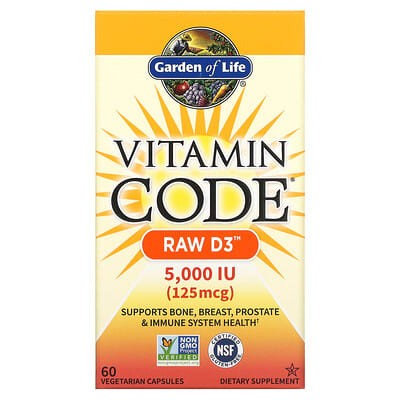

$20.99 $0.34 per serving


Product analysis
Raw D3 5000 IU supports normal bone, mineral and immune functions when vitamin D intake is low. The added blends are not fully described, making their contribution harder to judge.
AI assessment of the formula, label and price. How scoring works
Nutrient Quality84
Vitamin D3 is clearly identified, supporting confidence in the main nutrient form. Chlorella and the added blends lack enough preparation detail for a complete quality comparison.
Ingredient Transparency58
Vitamin D and the other ingredient amounts are disclosed, helping with serving comparisons. The added blends lack individual component details, leaving their contents less clear.
Value For Money56
The serving price is moderate for the vitamin D provided. Value for chlorella remains uncertain.
Customer Satisfaction94
Customer ratings are strongly positive across a large number of reviews. That gives a broad picture of satisfaction without establishing health effects.
Product Focus40
Vitamin D provides the clearest purpose, especially when intake is low. Its high serving amount does not establish greater benefit, and the added blends have uncertain contributions.
- Format
Capsule - Container
- 60 Capsule(s)
- Per serving
- $0.34
- Also available
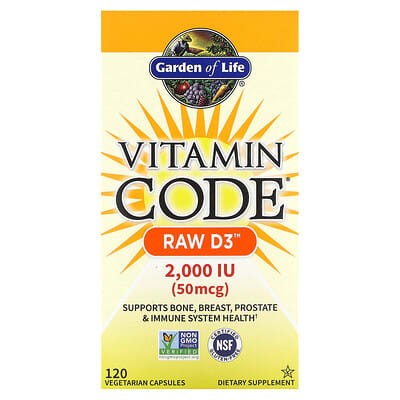 Raw D3 2000 IU (50 mcg)$28.69
- Customer rating
- 4.8 · 14,997 ratings
Goals

Impact
High effect
Vitamin D · 5000 IU
Vitamin D supplies a nutrient relevant to normal bone and mineral functions when intake is low. The selected serving's 125 mcg does not establish greater benefit than meeting nutritional needs. Ginger and bromelain presence remain unresolved in the supplied facts, and the other ingredients do not establish a broader general health contribution.
How this product is rated for Everyday Health
Ingredient fit79
The formula's supported contribution comes from its relevant declared ingredients. Their amounts and the presence of other actives determine how concentrated that contribution is.
Goal fit
The relevant ingredients share the formula with ingredients whose broader general health contribution is not established here.
Dose adequacy
The relevant declared amounts reach the supplied comparison endpoints; this does not establish additional benefit above nutritional adequacy.
Pathways57
The strongest represented area is bone and mineral metabolism, with partial coverage from the relevant ingredients. One area reaches substantial coverage, so the support remains concentrated rather than broad.
Depth
The strongest represented area is bone and mineral metabolism, with partial coverage from the relevant ingredients.
Breadth
One area reaches substantial coverage, so the support remains concentrated rather than broad.
Evidence82
The supplied findings support specific nutrient roles or narrower ingredient uses. Preparation matching does not by itself establish broad health benefit.
Evidence strength
Vitamin D provides the strongest supported contribution in the saved findings; nutrient availability or narrower findings do not prove broad health improvement.
Studied preparation
The relevant ingredients meet the supplied preparation criteria, without establishing superiority of every listed form.
Formulation logic100
The relevant ingredients have no unmet partner requirement and trigger none of the evaluated conflicts. Their declared amounts meet the supplied minimum comparison level.
Partner coverage
The relevant ingredients can contribute independently or have their required partner present; this does not establish added combination benefit.
Conflicts
None of the evaluated ingredient conflicts was triggered; this is not a comprehensive safety assessment.
Effective doses
The relevant amounts meet the supplied minimum comparison level, which is not a proven clinical response threshold.

Impact
Highest effect
Vitamin D · 5000 IU
Vitamin D contributes to normal immune function, without establishing extra protection when intake is adequate. The serving amount is compared with the saved reference, which does not establish an optimal dose or greater benefit at higher exposure.
How this product is rated for Immunity
Ingredient fit79
The counted amounts reach the saved comparison levels, without establishing an optimal intake or additional benefit above them.
Goal fit
The formula includes immunity-related ingredients alongside ingredients directed at other goals.
Dose adequacy
The counted amounts reach the saved comparison levels, without establishing an optimal intake or additional benefit above them.
Pathways60
The strongest saved connection is lymphocyte function and immune regulation, rather than a direct measure of infection protection.
Depth
The strongest saved connection is lymphocyte function and immune regulation, rather than a direct measure of infection protection.
Breadth
The saved findings cover lymphocyte function and immune regulation.
Evidence100
Vitamin D provides the leading saved contribution; its supported role does not establish infection prevention.
Evidence strength
Vitamin D provides the leading saved contribution; its supported role does not establish infection prevention.
Studied preparation
The saved findings accept the preparations with sufficient amounts; this does not establish testing of the complete formula.
Formulation logic100
All counted ingredients reach the saved minimum amount threshold, which is not proof of clinical effectiveness.
Partner coverage
The counted ingredients can contribute without an additional partner; this does not establish synergy.
Conflicts
No configured ingredient conflict was identified.
Effective doses
All counted ingredients reach the saved minimum amount threshold, which is not proof of clinical effectiveness.

Impact
High effect
Vitamin D · 5000 IU
Vitamin D has a limited testosterone-related signal in initially deficient overweight men, while a healthy-men trial found no total-testosterone effect. Its presence therefore does not establish a testosterone increase when vitamin D status is adequate. The declared 125 mcg per serving exceeds the saved comparison range without proving greater benefit or suitability; ginger presence remains unresolved.
How this product is rated for Testosterone Support
Ingredient fit79
Vitamin D is retained, while ginger presence cannot be confirmed from the supplied inventory.
Goal fit
Vitamin D is retained, while ginger presence cannot be confirmed from the supplied inventory.
Dose adequacy
Vitamin D exceeds the comparison endpoint; the larger amount does not establish added benefit or suitability.
Pathways0
Nutritional contributions remain separate from the evaluated hormone categories; none receives coverage.
Depth
No evaluated hormone category receives coverage.
Breadth
No evaluated hormone category reaches the coverage threshold.
Evidence81
Vitamin D leads the retained evidence finding, but the supplied testosterone results are mixed and population-dependent.
Evidence strength
Vitamin D leads the retained evidence finding, but the supplied testosterone results are mixed and population-dependent.
Studied preparation
Retained preparations are accepted in the saved finding without establishing a superior hormonal effect from their forms.
Formulation logic100
No required partner is missing. No configured conflict is triggered; this does not establish overall safety.
Partner coverage
No required partner is missing for retained ingredients; this does not establish added benefit from combining them.
Conflicts
No configured conflict is triggered; this does not establish overall safety.
Effective doses
All 1 retained ingredient meets the comparison amount threshold, which is not proof of an effective testosterone dose.

Impact
Highest effect
Vitamin D · 5000 IU
Vitamin D relates to immune signalling, but its inflammatory-marker findings include a transient CRP change without established broad clinical anti-inflammatory benefit. Stored label declarations mention ginger, garlic, bromelain and papain, but their matching imported facts leave presence and amounts unresolved. The retained tart-cherry and protease declarations do not establish reviewed standalone contributions.
How this product is rated for Inflammation
Ingredient fit79
The formula includes ingredients for other purposes, which reduces its focus on inflammation-related support. The counted amount reaches the saved exposure comparison; this does not establish a proven effective daily regimen.
Goal fit
The formula includes ingredients for other purposes, which reduces its focus on inflammation-related support.
Dose adequacy
The counted amount reaches the saved exposure comparison; this does not establish a proven effective daily regimen.
Pathways57
The strongest recorded connection is inflammatory gene signalling, with substantial coverage in the saved comparison. Coverage remains concentrated in one route.
Depth
The strongest recorded connection is inflammatory gene signalling, with substantial coverage in the saved comparison.
Breadth
One pathway reaches the saved coverage threshold; the formula does not provide broad coverage across the inflammation-related routes.
Evidence93
Vitamin D supplies the strongest recorded evidence contribution; its assigned strength does not establish a clinical benefit. The supplied scientific context limits how these recorded contributions translate into routine clinical benefit.
Evidence strength
Vitamin D supplies the strongest recorded evidence contribution; its assigned strength does not establish a clinical benefit.
Studied preparation
The counted preparations match those recognized in the saved comparison; this does not establish equivalent clinical results.
Formulation logic100
Partner requirements are met and no configured conflict was recorded. The counted ingredients reach the saved amount threshold.
Partner coverage
The counted ingredients can stand alone or have the partners required by the saved comparison; no added benefit from combining them is established.
Conflicts
No configured ingredient conflict was recorded; this finding is limited to the interactions checked.
Effective doses
The counted ingredients meet the saved minimum amount threshold; that threshold is not a proven effective dose.

Impact
Moderate effect
Vitamin D · 5000 IU
Vitamin D3 supports muscle and bone function when vitamin D supply is inadequate. The 125 mcg serving is above the nutritional intake used in the supplied deficiency discussion; higher intake does not imply a greater longevity benefit.
How this product is rated for Longevity
Ingredient fit72
1 ingredients contribute to the saved healthy-aging assessment, alongside a broader set of active ingredients that makes the focus less specific. The contributing amounts align closely with the saved dose benchmarks.
Goal fit
1 ingredients contribute to the saved healthy-aging assessment, alongside a broader set of active ingredients that makes the focus less specific.
Dose adequacy
The contributing amounts align closely with the saved dose benchmarks.
Pathways0
No reviewed functional area has a recorded contribution. No functional area reaches the saved coverage threshold.
Depth
No reviewed functional area has a recorded contribution.
Breadth
No functional area reaches the saved coverage threshold.
Evidence83
Vitamin D provides the strongest qualifying evidence in the saved assessment; the relevant benefit remains limited to its reviewed outcome. The qualifying ingredients match the preparations used in the saved evidence review.
Evidence strength
Vitamin D provides the strongest qualifying evidence in the saved assessment; the relevant benefit remains limited to its reviewed outcome.
Studied preparation
The qualifying ingredients match the preparations used in the saved evidence review.
Formulation logic100
The contributing ingredients can work alone or have their required partner present. No ingredient conflicts were recorded in the saved assessment. All contributing ingredients reach the saved meaningful-dose threshold.
Partner coverage
The contributing ingredients can work alone or have their required partner present.
Conflicts
No ingredient conflicts were recorded in the saved assessment.
Effective doses
All contributing ingredients reach the saved meaningful-dose threshold.

Impact
High effect
Vitamin D · 5000 IU
Vitamin D has a limited connection to fatigue from research in vitamin-D-deficient adults. That trial used a single large treatment dose, so this 125 mcg serving cannot establish the same result or a routine fatigue regimen. The saved amount finding does not demonstrate increased energy in replete adults.
How this product is rated for Energy
Ingredient fit79
Vitamin D is the single included ingredient. The vitamin D amount meets the saved comparison, without establishing a fatigue-treatment dose.
Goal fit
Vitamin D is the single included ingredient.
Dose adequacy
The vitamin D amount meets the saved comparison, without establishing a fatigue-treatment dose.
Pathways0
The saved findings identify no covered direct energy mechanism; the relevant contribution concerns nutrition and deficiency-related fatigue.
Depth
No direct energy mechanism is covered in the saved findings.
Breadth
No direct energy area reaches the saved coverage comparison.
Evidence95
Vitamin D evidence is population- and regimen-specific. The vitamin D declaration meets the saved preparation comparison.
Evidence strength
Vitamin D evidence is population- and regimen-specific.
Studied preparation
The vitamin D declaration meets the saved preparation comparison.
Formulation logic100
Included ingredients have no missing required partner or configured conflict and meet the saved minimum amount comparison.
Partner coverage
Included ingredients work without an additional required partner, or have their required partner; this does not establish an extra combination benefit.
Conflicts
No configured ingredient conflict was found in the supplied facts.
Effective doses
All included ingredients meet the saved minimum amount comparison; this is not a proven minimum effective dose.
Ingredients
| Ingredient | Amount per serving | Score |
|---|---|---|
Vitamin D (Vitamin D3) | 5000 IU | |
cracked-wall Chlorella | 250 mg | |
Raw Organic Fruit & Vegetable Blend | 150 mg | |
Raw Probiotic & Enzyme Blend | 60 mg |
Vitamin D (Vitamin D3) · 5000 IU OverallScore74
The serving provides 5000 IU of vitamin D3, an amount the evaluation considers aligned with its general-support range. The cost is about $0.07 per 1,000 IU, based on the whole-product serving price.
How this ingredient is rated
Active Ingredient Quality & Bioavailability87
The ingredient is vitamin D3; its raw source is not established in the saved facts.
Vitamin D3 vs. D2 Superiority
The vitamin D is D3 (cholecalciferol), which generally raises and maintains vitamin D levels more effectively than D2.
Sourcing and Active Marker Disclosure
The saved facts do not establish the raw material source.
Dose, Safety & Label Transparency68
The serving provides 5000 IU, an amount the evaluation considers aligned with its general-support range. Independent verification is not established in the saved facts.
Daily Dosage Appropriateness
The serving provides 5000 IU, an amount the evaluation considers aligned with its general-support range.
Excipient and Additive Purity
The evaluated ingredient facts do not indicate titanium dioxide, artificial colors, or hydrogenated oils.
Purity and Quality Certification
The saved facts do not establish a recognized testing seal, batch certificate, or GMP claim.
Value60
The cost is about $0.07 per 1,000 IU of vitamin D, based on the whole-product serving price.
Price per 1,000 IU Efficiency
The cost is about $0.07 per 1,000 IU of vitamin D, based on the whole-product serving price.
Alternative products
Report alternatives
Sources
Published studies used for the product analysis and the top-ranked studies for each ingredient and goal.
- Effect of Vitamin D Supplementation on Fatigue in Multiple Sclerosis: A Systematic Review and Meta-Analysis.
- Vitamin D Supplementation in Adolescents and Young Adults With Juvenile Systemic Lupus Erythematosus for Improvement in Disease Activity and Fatigue Scores: A Randomized, Double-Blind, Placebo-Controlled Trial.
- Vitamin D in Myalgic Encephalomyelitis/Chronic Fatigue Syndrome After COVID-19 or Vaccination: A Randomized Controlled Trial.
- The effects of vitamin D supplementation on disease activity and fatigue in Libyan rheumatoid arthritis patients.
- The effect of home-based aerobic training and vitamin D supplementation on fatigue and quality of life in patients with multiple sclerosis during COVID-19 outbreak.
- Vitamin D supplementation for prevention of mortality in adults.
- Effect of vitamin D on gastrointestinal symptoms and health-related quality of life in irritable bowel syndrome patients: a randomized double-blind clinical trial.
- The impact of vitamin D administration on mortality in COVID-19 patients: a systematic review and meta-analysis of randomized controlled trials.
- Vitamin D Status and Mortality: A Systematic Review of Observational Studies.
- Meta-analysis of long-term vitamin D supplementation on overall mortality.
- Vitamin D supplementation to prevent acute respiratory infections: individual participant data meta-analysis.
- Association Between Vitamin D and Influenza: Meta-Analysis and Systematic Review of Randomized Controlled Trials.
- Vitamin D3 and deconvoluting a rash.
- Effect of vitamin D3 supplementation on cellular immunity and inflammatory markers in COVID-19 patients admitted to the ICU.
- Current opinion on the role of vitamin D supplementation in respiratory infections and asthma/COPD exacerbations: A need to establish publication guidelines for overcoming the unpublished data.
- Vitamin D deficiency and C-reactive protein: a bidirectional Mendelian randomization study.
- Vitamin D in Children With Inflammatory Bowel Disease: A Randomized Controlled Clinical Trial.
- Vitamin D supplementation reduces infection rate and promotes wound healing in patients with diabetic foot ulcers.
- Associations of C-reactive Protein with 25-hydroxyvitamin D in 24 Specific Diseases: A Cross-sectional Study from NHANES.
- Combined effects of vitamin D deficiency and systemic inflammation on all-cause mortality and cause-specific mortality in older adults.