


Vitamin C Supportive
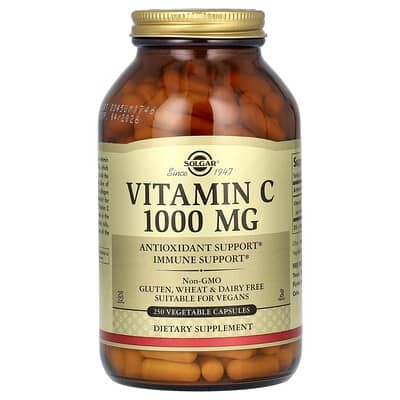
$31.51 $0.12 per serving
Product analysis
Vitamin C 1000 mg offers a straightforward way to fill a vitamin C gap and support normal immune function and collagen formation. Its low cost for the amount supplied adds practical appeal.
AI assessment of the formula, label and price. How scoring works
Nutrient Quality40
The vitamin C form is clearly named. Whether it offers an absorption advantage over alternatives remains uncertain.
Ingredient Transparency100
Both the vitamin C amount and form are clearly stated. That makes the serving easy to check against other vitamin C supplements.
Value For Money80
The amount of vitamin C supplied compares favorably with its cost. It offers good value for someone specifically seeking vitamin C.
Customer Satisfaction89
Customers report high satisfaction across several thousand ratings. The volume gives a broad picture of buyer approval, without proving effectiveness.
Product Focus79
The formula has a clear purpose: supplying vitamin C for normal immune, antioxidant and collagen functions. Extra benefits are less certain when dietary intake is already adequate.
- Format
Capsule - Container
- 250 Capsule(s)
- Per serving
- $0.12
- Customer rating
- 4.8 · 3,320 ratings
Goals

Impact
High effect
Vitamin C · 1000 mg
Vitamin C 1000 mg offers targeted nutritional support for normal antioxidant and immune functions. It provides 1,000 mg of L-ascorbic acid, which supplies vitamin C and can help fill a dietary gap. Its role is nutrient provision, with no further nutritional advantage assigned to amounts above the assessed endpoint.

Impact
High effect
Vitamin C · 1000 mg
Vitamin C 1000 mg is a nutritional option for skin when vitamin C intake is low, rather than a targeted cosmetic supplement. Each selected serving supplies 1,000 mg of L-ascorbic acid for normal collagen formation and wound healing. The directions allow one capsule up to twice daily, so the selected amount is one serving rather than a mandatory repeated regimen.
Vitamin C Supportive


Impact
Highest effect
Vitamin C · 1000 mg
Vitamin C 1000 mg has a limited inflammation fit, with the supplied evidence pointing to people with elevated baseline inflammation rather than an unconditional benefit. The 1000 mg of L-ascorbic acid provides antioxidant activity. Directions allow up to two daily servings; they do not require two, so the selected serving remains the basis of comparison.
Vitamin C Supportive

Impact
High effect
Vitamin C · 1000 mg
Vitamin C 1000 mg has a qualified eye-health role as a source of vitamin c used in defined multi-ingredient eye-health combinations. The 1,000 mg of vitamin C supplies an antioxidant nutrient, with limited support for routine vision improvement when taken alone.
Vitamin C Disputed
Ingredients
| Ingredient | Amount per serving | Score |
|---|---|---|
Vitamin C (L-Ascorbic Acid) | 1000 mg |
Vitamin C (L-Ascorbic Acid) · 1000 mg OverallScore66
Solgar Vitamin C 1000 mg offers good value for vitamin C, with 1000 mg per serving. The vitamin C source is l-ascorbic acid. Ascorbic acid is unbuffered. No listed additive triggers a specific concern in the available ingredient information. At $0.13 per 1,000 mg of vitamin C, the price is good for the vitamin C amount. The full formula costs $0.13 per serving.
Alternative products
Report alternatives
Sources
Published studies used for the product analysis and the top-ranked studies for each ingredient and goal.
- Dietary intake and blood concentrations of antioxidants and the risk of cardiovascular disease, total cancer, and all-cause mortality: a systematic review and dose-response meta-analysis of prospective studies.
- Scientific Opinion on the substantiation of a health claim related to vitamin C and increasing non haem iron absorption pursuant to Article 14 of Regulation (EC) No 1924/2006.
- Vitamin C Depletion and All-Cause Mortality in Renal Transplant Recipients.
- Associations of Serum Biomarkers of Fruit and Vegetable Intake With the Risk of Cause-Specific Mortality and All-Cause Mortality: A National Prospective Cohort Study.
- Relation between plasma ascorbic acid and mortality in men and women in EPIC-Norfolk prospective study: a prospective population study. European Prospective Investigation into Cancer and Nutrition.
- Role of Oral Vitamin 'C' on Astigmatic Errors in Phacoemulsification.
- Ascorbic acid metabolites are involved in intraocular pressure control in the general population.
- Nutritional modulation of cataract.
- Dietary n-3 Fatty Acid, α-Tocopherol, Zinc, vitamin D, vitamin C, and β-carotene are Associated with Age-Related Macular Degeneration in Japan.
- Adherence to a Mediterranean diet, lifestyle and age-related macular degeneration: the Coimbra Eye Study - report 3.
- Vitamin C and contribution to the normal function of the immune system: evaluation of a health claim pursuant to Article 14 of Regulation (EC) No 1924/2006.
- Therapeutic effects of high-dose vitamin C supplementation in patients with COVID-19: a meta-analysis.
- Effect of micronutrient supplements on influenza and other respiratory tract infections among adults: a systematic review and meta-analysis.
- New evidence for antioxidant properties of vitamin C.
- Enhanced Vitamin C Delivery: A Systematic Literature Review Assessing the Efficacy and Safety of Alternative Supplement Forms in Healthy Adults.
- Efficacy of Vitamin C as Glucocorticoid Substitute for Reducing Pain and Inflammation After Total Hip Arthroplasty: A Randomized Controlled Trial.
- The Impact of Vitamin C on Analgesic, Anti-inflammatory, and Hemostatic Outcomes After Total Hip and Knee Arthroplasty: A Systematic Review and Meta-Analysis.
- The impact of vitamin C supplementation on the perioperative outcomes after total hip and knee arthroplasty: a systematic review and meta-analysis.
- Therapeutic Impact of Ascorbic Acid on Oral and Periodontal Tissues: A Systematic Literature Review.
- Oral vitamin C administration reduces early recurrence rates after electrical cardioversion of persistent atrial fibrillation and attenuates associated inflammation.