
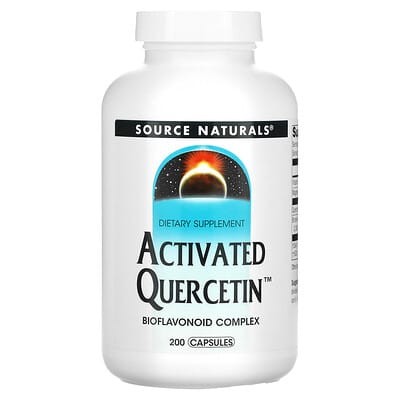

$52.98 $0.80 per serving


Product analysis
Activated Quercetin’s clearest contribution is vitamin C for normal immune function, particularly when intake is low. Its vitamin C and bromelain are expensive for what they provide.
AI assessment of the formula, label and price. How scoring works
Nutrient Quality31
The ingredient quality cannot be confidently compared. Several precise preparations are unspecified, including quercetin and bromelain.
Ingredient Transparency78
Amounts are stated for all listed ingredients. Several forms are missing, making close preparation comparisons difficult.
Value For Money28
Vitamin C and bromelain are costly for the amounts supplied. The value of the remaining ingredients is uncertain.
Customer Satisfaction84
Customer feedback is very positive across a substantial review history. The reviews show satisfaction without establishing immune or inflammation benefits.
Product Focus70
The clearest role is vitamin C nutrition, supporting normal immune function and collagen formation. Quercetin and bromelain have more limited or context-specific support for the wider health aims.
- Format
Capsule - Container
- 200 Capsule(s)
- Per serving
- $0.80
- Also available
 Activated Quercetin$25.05
- Customer rating
- 4.7 · 1,774 ratings
Goals

Impact
High effect
Vitamin C · 788 mg
Vitamin C supports antioxidant defenses, with a CRP signal confined to people with elevated starting levels in an otherwise null trial. Magnesium may help when intake is low, but this serving supplies a small amount. Bromelain has limited, context-specific symptom findings, while a large quercetin trial was mostly null; combining them does not establish an added anti-inflammatory benefit.
How this product is rated for Inflammation
Ingredient fit82
Vitamin C provide the main connection to this goal. The included amounts provide only part of the supplied comparison range, limiting the amount-based contribution.
Goal fit
The formula centers on vitamin C, although its relevance extends beyond inflammation.
Dose adequacy
The included amounts provide only part of the supplied comparison range, limiting the amount-based contribution.
Pathways47
The strongest saved connection is to oxidative stress; this describes a mechanism-related finding rather than established symptom relief. Coverage is concentrated in one mechanism, leaving the other inflammation-related mechanisms unsupported in the saved findings.
Depth
The strongest saved connection is to oxidative stress; this describes a mechanism-related finding rather than established symptom relief.
Breadth
Coverage is concentrated in one mechanism, leaving the other inflammation-related mechanisms unsupported in the saved findings.
Evidence87
Vitamin C’s strongest relevant finding concerns elevated starting CRP, with no overall trial benefit.
Evidence strength
Vitamin C’s strongest relevant finding concerns elevated starting CRP, with no overall trial benefit.
Studied preparation
The saved findings recognize the included preparation, but matching a preparation does not remove the limits of its clinical evidence.
Formulation logic100
The supplied findings identify no missing required partner or matched conflict. The included amounts pass the minimum comparison threshold, which does not prove clinical effectiveness.
Partner coverage
The included ingredients do not require an additional partner in the supplied findings; this does not demonstrate synergy.
Conflicts
No ingredient conflict was identified by the supplied checks; these checks do not establish comprehensive safety.
Effective doses
All ingredients retained in the amount-based findings pass the minimum comparison threshold; that threshold is not a proven effective dose.

Impact
Highest effect
Magnesium · 50 mgVitamin C · 788 mg
Vitamin C supports immune-cell activity and may modestly shorten colds with regular use, without establishing infection prevention or treatment of an established cold. The serving amount is compared with the saved reference, which does not establish an optimal dose or greater benefit at higher exposure.
How this product is rated for Immunity
Ingredient fit83
Lower or unavailable amounts limit the contribution compared with the saved references.
Goal fit
The counted ingredients are focused on immunity, although the product may also relate to other goals.
Dose adequacy
Lower or unavailable amounts limit the contribution compared with the saved references.
Pathways52
The strongest saved connection is innate immune cell activity, rather than a direct measure of infection protection.
Depth
The strongest saved connection is innate immune cell activity, rather than a direct measure of infection protection.
Breadth
The saved findings cover innate immune cell activity.
Evidence95
Vitamin C provides the leading saved contribution; its supported role does not establish infection prevention.
Evidence strength
Vitamin C provides the leading saved contribution; its supported role does not establish infection prevention.
Studied preparation
Only part of the counted formula matches accepted studied preparations, limiting transfer of the evidence to the complete product.
Formulation logic100
All counted ingredients reach the saved minimum amount threshold, which is not proof of clinical effectiveness.
Partner coverage
The counted ingredients can contribute without an additional partner; this does not establish synergy.
Conflicts
No configured ingredient conflict was identified.
Effective doses
All counted ingredients reach the saved minimum amount threshold, which is not proof of clinical effectiveness.

Impact
High effect
Magnesium · 50 mgVitamin C · 788 mg
Vitamin C provides the main nutritional contribution, supporting normal antioxidant and immune functions when intake is low. Magnesium contributes a small amount. Bromelain has limited evidence in specific settings such as surgical swelling, which does not establish routine general wellness benefit.
How this product is rated for Everyday Health
Ingredient fit68
Relevant nutrients contribute to this goal alongside ingredients whose broad-health benefits are not established here. Amounts make unequal contributions under the saved comparison; smaller or undisclosed quantities limit the finding.
Goal fit
Relevant nutrients contribute to this goal alongside ingredients whose broad-health benefits are not established here.
Dose adequacy
Amounts make unequal contributions under the saved comparison; smaller or undisclosed quantities limit the finding.
Pathways47
The strongest saved area is antioxidant and immune defence. Other areas are included only where the supplied amounts and findings support them.
Depth
The strongest saved contribution concerns antioxidant and immune defence, with usefulness bounded by the relevant ingredient evidence.
Breadth
The saved findings cover antioxidant and immune defence; this describes nutritional reach, not proven health improvements.
Evidence74
Vitamin C leads the saved evidence finding. Nutrient availability can help low intake, but does not prove additional outcomes above adequacy.
Evidence strength
Vitamin C provides the strongest supported contribution here, with benefits limited to the populations and nutritional roles described.
Studied preparation
The saved finding accepts the counted preparations as studied; that does not establish superiority or benefits beyond the supported use.
Formulation logic100
The counted ingredients can contribute alone or have the partner required by the saved finding; no extra combination benefit is established. No configured conflict was matched.
Partner coverage
The counted ingredients can contribute alone or have the partner required by the saved finding; no extra combination benefit is established.
Conflicts
No configured ingredient conflict was matched in the supplied facts; this is a limited interaction check.
Effective doses
All ingredients counted in this finding meet its amount threshold; this is not proof of a clinically effective dose.

Impact
High effect
Vitamin C · 788 mg
Vitamin C contributes an antioxidant role, which explains its connection to eye-related nutrition. The supplied human evidence comes from a defined multinutrient regimen for selected people with AMD, rather than vitamin C alone improving everyday vision. Its declared amount receives full amount credit, but this does not establish sharper sight or routine disease prevention.
How this product is rated for Eye Health
Ingredient fit68
Vitamin C is the sole credited ingredient, with a declared amount.
Goal fit
Vitamin C is the sole credited ingredient, with a declared amount.
Dose adequacy
Vitamin C reaches the upper amount range; this is not a validated standalone dose for better vision.
Pathways47
Coverage is concentrated in antioxidant support for the retina and lens; other tracked areas remain limited or uncovered.
Depth
Retinal and lens antioxidant support receives the strongest assigned coverage, without demonstrating improved vision.
Breadth
Only retinal and lens antioxidant support reaches the coverage threshold.
Evidence68
Vitamin C receives the assigned evidence weight, but its relevant clinical evidence concerns selected AMD combinations rather than standalone visual improvement.
Evidence strength
Vitamin C receives the assigned evidence weight, but its relevant clinical evidence concerns selected AMD combinations rather than standalone visual improvement.
Studied preparation
The credited preparations are recognized in the saved findings; this does not establish a complete clinical regimen or universal form equivalence.
Formulation logic100
Credited ingredients have no missing required partner, and no configured ingredient conflict was identified.
Partner coverage
Every credited ingredient works independently or has its required partner in the saved finding.
Conflicts
No configured ingredient conflict was identified.
Effective doses
Every credited ingredient meets the comparison's amount threshold; this is not proof of a clinically effective vision dose.

Impact
High effect
Vitamin C · 788 mg
Vitamin C supports collagen formation and can restore impaired healing caused by low intake. Extra vitamin C has no established skin benefit when intake is adequate. The declared amount does not establish greater hydration, fewer wrinkles or stronger UV protection.
How this product is rated for Skin Health
Ingredient fit68
Vitamin C leads the relevant ingredient finding, alongside other goals where present. The counted amount reaches the supplied exposure reference.
Goal fit
The product combines relevant skin-related ingredients with ingredients linked to other goals.
Dose adequacy
Vitamin C reaches the supplied comparison amount, without establishing extra benefit from that amount.
Pathways0
No skin pathway receives coverage in the supplied findings. Nutritional functions alone do not establish a routine cosmetic effect.
Depth
No skin pathway has a qualifying contribution in the supplied findings.
Breadth
No mechanism reaches the supplied coverage threshold.
Evidence100
Vitamin C leads the supplied evidence finding. Nutritional adequacy or limited surrogate findings do not establish universal cosmetic improvement.
Evidence strength
Vitamin C leads the supplied evidence finding; normal nutrient needs do not prove extra cosmetic benefit when intake is adequate.
Studied preparation
The qualifying ingredients meet the supplied preparation criteria, without establishing superiority of their declared forms.
Formulation logic100
No required partner is missing and no specified formulation conflict was matched. Clearing the exposure threshold does not prove an effective skin dose.
Partner coverage
The counted ingredients work without an additional required partner or have that partner present.
Conflicts
No specified formulation conflict was matched in the supplied facts.
Effective doses
All counted ingredients clear the minimum exposure threshold; this does not establish a clinically effective skin dose.

Impact
Moderate effect
Bromelain · 300 mgMagnesium · 50 mg
Bromelain at 300 mg supplies protein-digesting enzyme activity, though reliable routine symptom relief remains uncertain. Magnesium citrate at 50 mg adds a small stool-water link, while quercetin has no verified digestive-outcome dose in the supplied review.
How this product is rated for Gut Health
Ingredient fit62
Digestive-related ingredients sit within a broader mixture of actives. The assessed amounts provide substantial but incomplete dose support.
Goal fit
Digestive-related ingredients sit within a broader mixture of actives.
Dose adequacy
The assessed amounts provide substantial but incomplete dose support.
Pathways50
The saved findings center on digestive enzyme, acid and bile support, with substantial coverage of that mechanism; this is separate from proven symptom relief. One assessed pathway reaches substantial coverage, leaving a narrow overall range.
Depth
The saved findings center on digestive enzyme, acid and bile support, with substantial coverage of that mechanism; this is separate from proven symptom relief.
Breadth
One assessed pathway reaches substantial coverage, leaving a narrow overall range.
Evidence58
Bromelain supplies the strongest effective-dose evidence in the saved findings, subject to its stated population and outcome limits. The assessed ingredients at effective amounts meet the saved studied-preparation finding.
Evidence strength
Bromelain supplies the strongest effective-dose evidence in the saved findings, subject to its stated population and outcome limits.
Studied preparation
The assessed ingredients at effective amounts meet the saved studied-preparation finding.
Formulation logic100
The assessed ingredients can contribute alone or have their required partner. No configured ingredient conflict was identified. 1 of 1 assessed ingredients reach the saved minimum dose threshold.
Partner coverage
The assessed ingredients can contribute alone or have their required partner.
Conflicts
No configured ingredient conflict was identified.
Effective doses
1 of 1 assessed ingredients reach the saved minimum dose threshold.
Ingredients
| Ingredient | Amount per serving | Score |
|---|---|---|
Protein | 500 mg | |
Vitamin C (Ascorbic Acid) | 788 mg | |
Magnesium (Magnesium Citrate) | 50 mg | |
Quercetin | 1 Gram(s) | |
Bromelain | 300 mg |
Vitamin C (Ascorbic Acid) · 788 mg OverallScore52
Each serving supplies 788 mg of vitamin C as ascorbic acid. The whole product costs about $1.01 per gram of vitamin C.
How this ingredient is rated
Active Ingredient Quality & Bioavailability30
The vitamin C is ascorbic acid. No buffering claim is recorded in the saved facts.
Vitamin C Chemical Form & Delivery System
The vitamin C is identified as ascorbic acid.
Gastric Comfort & pH Balance
The saved facts do not record a buffering or stomach-friendly claim for the ascorbic acid.
Dose, Safety & Label Transparency91
Each serving supplies 788 mg of vitamin C, with its source identified in the saved details.
Optimal Dosage Targeting
Each serving provides 788 mg of vitamin C.
Purity & Excipient Quality
Standard excipients are recorded; the saved evidence does not flag the specified sweeteners, artificial colors or preservatives.
Mineral & Source Transparency
The vitamin C amount and ascorbic acid are identified. A mineral amount is not needed to describe this non-mineral form.
Value20
The whole-product price is about $1.01 per gram of vitamin C.
Price per Gram of Vitamin C
The whole-product price is about $1.01 per gram of vitamin C.
Bromelain · 300 mg OverallScore69
A serving lists 300 mg of bromelain from pineapple, with an activity concentration of 2,000 GDU/g. Based on the whole-product price, the cost is about $1.32 per 500 mg of bromelain.
How this ingredient is rated
Composition and Label Disclosure89
Enzyme activity is reported at 2,000 GDU/g.
Enzyme Activity Disclosure
Enzyme activity is disclosed in the saved information.
Declared GDU per Gram
The declared activity concentration is 2,000 GDU per gram.
Composition and Label Disclosure73
A serving lists 300 mg of bromelain. Pineapple is identified as the source; the saved information does not specify the stem.
Declared Bromelain Mass
The declared amount is 300 mg of bromelain per serving.
Botanical Source Disclosure
Pineapple is identified as the source; the saved information does not specify the stem.
Commercial Price and Usability20
At the whole-product price, 500 mg of declared bromelain works out to about $1.32.
Cost per 500 mg Declared Bromelain
The whole-product price corresponds to about $1.32 per 500 mg of declared bromelain.
Alternative products
Report alternatives
Sources
Published studies used for the product analysis and the top-ranked studies for each ingredient and goal.
- Perioperative bromelain reduces pain and swelling and improves quality of life measures after mandibular third molar surgery: a randomized, double-blind, placebo-controlled clinical trial.
- Efficacy of proteolytic enzyme bromelain on health outcomes after third molar surgery. Systematic review and meta-analysis of randomized clinical trials.
- Bromelain-based enzymatic burn debridement: A systematic review of clinical studies on patient safety, efficacy and long-term outcomes.
- Placebo-controlled randomized clinical trial on the immunomodulating activities of low- and high-dose bromelain after oral administration - new evidence on the antiinflammatory mode of action of bromelain.
- Bromelain reduces mild acute knee pain and improves well-being in a dose-dependent fashion in an open study of otherwise healthy adults.
- Perioperative systemic magnesium to minimize postoperative pain: a meta-analysis of randomized controlled trials.
- Long-term outcome after intravenous magnesium sulphate in suspected acute myocardial infarction: the second Leicester Intravenous Magnesium Intervention Trial (LIMIT-2).
- Association of magnesium sulfate use with mortality in critically ill patients with sepsis: a retrospective propensity score-matched cohort study.
- Hypomagnesemia and Mortality in Incident Hemodialysis Patients.
- The effects of magnesium supplementation on abnormal uterine bleeding, alopecia, quality of life, and acne in women with polycystic ovary syndrome: a randomized clinical trial.
- Dietary intake and blood concentrations of antioxidants and the risk of cardiovascular disease, total cancer, and all-cause mortality: a systematic review and dose-response meta-analysis of prospective studies.
- Scientific Opinion on the substantiation of a health claim related to vitamin C and increasing non haem iron absorption pursuant to Article 14 of Regulation (EC) No 1924/2006.
- Vitamin C Depletion and All-Cause Mortality in Renal Transplant Recipients.
- Associations of Serum Biomarkers of Fruit and Vegetable Intake With the Risk of Cause-Specific Mortality and All-Cause Mortality: A National Prospective Cohort Study.
- Relation between plasma ascorbic acid and mortality in men and women in EPIC-Norfolk prospective study: a prospective population study. European Prospective Investigation into Cancer and Nutrition.
- Role of Oral Vitamin 'C' on Astigmatic Errors in Phacoemulsification.
- Ascorbic acid metabolites are involved in intraocular pressure control in the general population.
- Nutritional modulation of cataract.
- Dietary n-3 Fatty Acid, α-Tocopherol, Zinc, vitamin D, vitamin C, and β-carotene are Associated with Age-Related Macular Degeneration in Japan.
- Adherence to a Mediterranean diet, lifestyle and age-related macular degeneration: the Coimbra Eye Study - report 3.