


Vitamin C Supportive
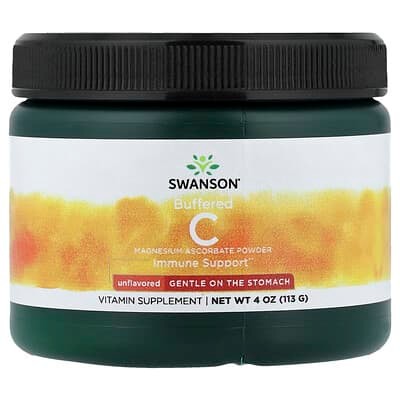
Buffered Magnesium Ascorbate Vitamin C Powder
Goals
$15.29 $0.13 per serving
Product analysis
Swanson Premium Brand Buffered Magnesium Ascorbate Vitamin C Powder provides good-value vitamin C for everyday immune and antioxidant support, with 830 mg in a 1 g scoop. Magnesium buffers the vitamin C to reduce acidity and may make it gentler on the stomach, although the accompanying 65 mg of magnesium is a modest amount for mineral supplementation.
AI assessment of the formula, label and price. How scoring works
Nutrient Quality51
Magnesium ascorbate supplies both nutrients in a buffered form. The magnesium source has reasonable absorption potential, though the vitamin C form's comparative quality is uncertain.
Ingredient Transparency100
Both nutrient amounts and their common source are clear. The scoop size makes each amount easy to interpret.
Value For Money89
The powder offers good value, especially as a vitamin C supplement. Magnesium is also inexpensive for the amount supplied.
Customer Satisfaction70
The customer rating is very positive. Feedback comes from a relatively small group of buyers.
Product Focus76
Vitamin C gives the powder a clear nutritional focus on immune and antioxidant support. The smaller magnesium amount complements rather than dominates the formula.
- Format
Powder - Container
- 4 Liquid(s)
- Per serving
- $0.13
- Customer rating
- 4.7 · 49 ratings
Goals

Impact
High effect
Vitamin C · 830 mg
Buffered Magnesium Ascorbate Vitamin C Powder offers skin support when it fills a vitamin C shortfall. The supplied serving provides 830 mg of vitamin C as magnesium ascorbate, which supports normal collagen formation and correction of deficiency-related impaired wound healing.

Impact
Highest effect
Magnesium · 65 mgVitamin C · 830 mg
Buffered Magnesium Ascorbate Vitamin C Powder is a focused vitamin C option for modest regular-use cold-duration support. Vitamin C provides 830 mg per serving and supports immune-cell activity and may modestly shorten colds with regular use. The ascorbate form does not establish an extra immune benefit.
Vitamin C Supportive
Magnesium Supportive

Impact
High effect
Magnesium · 65 mgVitamin C · 830 mg
Buffered Magnesium Ascorbate Vitamin C Powder is primarily a vitamin C option for antioxidant and immune-related nutritional support. The serving supplies 830 mg vitamin C as magnesium ascorbate, helping fill a dietary gap. Its 65 mg magnesium is a small accompanying mineral amount, so the main reason to choose it is the vitamin C contribution.
Magnesium Supportive
Vitamin C Supportive

Impact
Highest effect
Vitamin C · 830 mg
Buffered Magnesium Ascorbate Vitamin C Powder has a qualified fit for inflammation support, most relevant when baseline inflammation is elevated. Its 830 mg of vitamin C supplies the main antioxidant contribution. Magnesium ascorbate supplies the vitamin in a buffered form, without an established additional anti-inflammatory advantage.
Vitamin C Supportive
Magnesium Supportive

Impact
High effect
Vitamin C · 830 mg
Buffered Magnesium Ascorbate Vitamin C Powder has a limited eye-health fit through vitamin c’s role in antioxidant defense of the retina and lens. Its 830 mg of vitamin c as magnesium ascorbate supplies that nutrient, while the relevant eye-health benefit comes from a defined combination used in selected people with age-related macular degeneration.
Vitamin C Disputed
Ingredients
| Ingredient | Amount per serving | Score |
|---|---|---|
Vitamin C (Magnesium Ascorbate) | 830 mg | |
Magnesium (Magnesium Ascorbate) | 65 mg |
Vitamin C (Magnesium Ascorbate) · 830 mg OverallScore79
Swanson Premium Brand Buffered Magnesium Ascorbate Vitamin C Powder provides 830 mg vitamin C per serving and offers good value at $0.16 per 1,000 mg. Vitamin C comes from Magnesium Ascorbate. Magnesium Ascorbate is a buffered mineral form. The full formula costs $0.14 per serving.
Alternative products
Report alternatives
Sources
Published studies used for the product analysis and the top-ranked studies for each ingredient and goal.
- Perioperative systemic magnesium to minimize postoperative pain: a meta-analysis of randomized controlled trials.
- Long-term outcome after intravenous magnesium sulphate in suspected acute myocardial infarction: the second Leicester Intravenous Magnesium Intervention Trial (LIMIT-2).
- Association of magnesium sulfate use with mortality in critically ill patients with sepsis: a retrospective propensity score-matched cohort study.
- Hypomagnesemia and Mortality in Incident Hemodialysis Patients.
- The effects of magnesium supplementation on abnormal uterine bleeding, alopecia, quality of life, and acne in women with polycystic ovary syndrome: a randomized clinical trial.
- Dietary intake and blood concentrations of antioxidants and the risk of cardiovascular disease, total cancer, and all-cause mortality: a systematic review and dose-response meta-analysis of prospective studies.
- Scientific Opinion on the substantiation of a health claim related to vitamin C and increasing non haem iron absorption pursuant to Article 14 of Regulation (EC) No 1924/2006.
- Vitamin C Depletion and All-Cause Mortality in Renal Transplant Recipients.
- Associations of Serum Biomarkers of Fruit and Vegetable Intake With the Risk of Cause-Specific Mortality and All-Cause Mortality: A National Prospective Cohort Study.
- Relation between plasma ascorbic acid and mortality in men and women in EPIC-Norfolk prospective study: a prospective population study. European Prospective Investigation into Cancer and Nutrition.
- Role of Oral Vitamin 'C' on Astigmatic Errors in Phacoemulsification.
- Ascorbic acid metabolites are involved in intraocular pressure control in the general population.
- Nutritional modulation of cataract.
- Dietary n-3 Fatty Acid, α-Tocopherol, Zinc, vitamin D, vitamin C, and β-carotene are Associated with Age-Related Macular Degeneration in Japan.
- Adherence to a Mediterranean diet, lifestyle and age-related macular degeneration: the Coimbra Eye Study - report 3.
- Hypomagnesemia Is a Risk Factor for Infections after Kidney Transplantation: A Retrospective Cohort Analysis.
- Higher Intake of Dietary Magnesium Is Inversely Associated With COVID-19 Severity and Symptoms in Hospitalized Patients: A Cross-Sectional Study.
- Mg2+ regulates cytotoxic functions of NK and CD8 T cells in chronic EBV infection through NKG2D.
- Effect of magnesium on granulocyte function and on the exercise induced inflammatory response.
- Maternal and neonatal outcomes following magnesium sulfate in the setting of chorioamnionitis: a meta-analysis.