
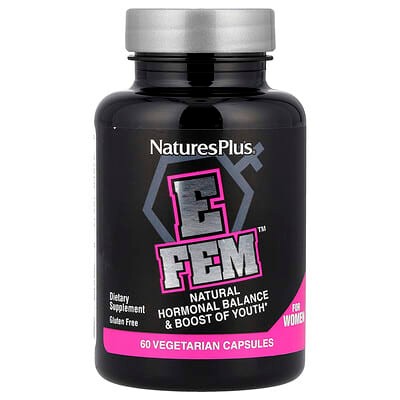

$37.78 $1.25 per serving


Product analysis
E FEM provides zinc for normal immune function and niacin for normal use of food for energy. Undisclosed blend proportions make the additional ingredients harder to compare.
AI assessment of the formula, label and price. How scoring works
Nutrient Quality49
Zinc uses an identified citrate form, and several other sources are named. The less clearly described blends and mixed sources prevent a full account of each ingredient contribution.
Ingredient Transparency69
All declared amounts are listed and several forms are named. Blend and mixed-source proportions are missing, leaving less clarity about their individual contributions.
Value For Money36
The zinc and flax contributions are relatively expensive at the full serving price. Dependable comparisons for the other nutrients are unavailable, leaving the combination’s value uncertain.
Customer Satisfaction71
Customer feedback is generally favorable across 356 ratings. Those opinions describe satisfaction without establishing a particular health outcome.
Product Focus38
The clearest supported roles are zinc’s normal immune function and niacin’s role in energy metabolism. The broader combination does not establish an additional routine benefit from every ingredient.
- Format
Capsule - Container
- 60 Capsule(s)
- Per serving
- $1.25
- Customer rating
- 4.5 · 356 ratings
Goals


Impact
Moderate effect
Magnesium · 50 mgZinc · 15 mg
Ingredients
| Ingredient | Amount per serving | Score |
|---|---|---|
Niacin (Niacinamide) | 10 mg NE | |
Calcium (Brown Rice Calcium Amino Acid Chelate, Calcium Citrate) | 100 mg | |
Magnesium (Magnesium Citrate Complex) | 50 mg | |
Zinc (Zinc Citrate) | 15 mg | |
Maca (Macaenes, Macamides) | 300 mg | |
Alanzeebium Botanical Complex | 100 mg | |
Passion Factors | 100 mg | |
Flax | 25 mg |
Zinc (Zinc Citrate) · 15 mg OverallScore62
The serving provides 15 mg zinc at a high cost per serving. The source is zinc citrate. The copper amount is unknown, so the zinc-to-copper balance is unclear.
How this ingredient is rated
Active Ingredient Quality & Bioavailability80
The source is zinc citrate.
Zinc Form Bioavailability
The source is zinc citrate.
Dose, Safety & Label Transparency61
The serving provides 15 mg zinc. The copper amount is unknown, so the zinc-to-copper balance is unclear.
Elemental Dose Transparency
The label clearly states 15 mg zinc per serving.
Zinc Dosage Safety & Effectiveness
The serving provides 15 mg zinc.
Zinc-to-Copper Mineral Balance
The copper amount is unknown, so the zinc-to-copper balance is unclear.
Value30
The cost per serving is high.
Price Per Serving Efficiency
The cost per serving is high.
Flax · 25 mg OverallScore77
A serving provides 25 mg of flax at a relatively high whole-product cost per serving. It also lists 4 mg of SDG. The specific flax preparation is unclear.
How this ingredient is rated
Composition and Label Disclosure
No additional composition details are available here.
Composition and Label Disclosure100
The SDG amount is listed as 4 mg.
Amount and Label Disclosure
The SDG amount is listed as 4 mg.
Commercial Price and Usability30
The whole-product cost per serving is relatively high.
Commercial Price per Labeled Serving
The cost per labeled serving is relatively high.
Alternative products
Report alternatives
Sources
Published studies used for the product analysis and the top-ranked studies for each ingredient and goal.
- Perioperative systemic magnesium to minimize postoperative pain: a meta-analysis of randomized controlled trials.
- Long-term outcome after intravenous magnesium sulphate in suspected acute myocardial infarction: the second Leicester Intravenous Magnesium Intervention Trial (LIMIT-2).
- Association of magnesium sulfate use with mortality in critically ill patients with sepsis: a retrospective propensity score-matched cohort study.
- Hypomagnesemia and Mortality in Incident Hemodialysis Patients.
- The effects of magnesium supplementation on abnormal uterine bleeding, alopecia, quality of life, and acne in women with polycystic ovary syndrome: a randomized clinical trial.
- Effectiveness of sodium bicarbonate and zinc chloride mouthwashes in the treatment of oral mucositis and quality of life in patients with cancer under chemotherapy.
- Zinc supplementation in young children with acute diarrhea in India.
- Associations of mortality with ocular disorders and an intervention of high-dose antioxidants and zinc in the Age-Related Eye Disease Study: AREDS Report No. 13.
- Effects of zinc and probiotic co-supplementation on inflammation, gastrointestinal symptoms, quality of life, and mood in irritable bowel syndrome patients.
- Effect of zinc sulfate supplementation on premenstrual syndrome and health-related quality of life: Clinical randomized controlled trial.
- Hypomagnesemia Is a Risk Factor for Infections after Kidney Transplantation: A Retrospective Cohort Analysis.
- Higher Intake of Dietary Magnesium Is Inversely Associated With COVID-19 Severity and Symptoms in Hospitalized Patients: A Cross-Sectional Study.
- Mg2+ regulates cytotoxic functions of NK and CD8 T cells in chronic EBV infection through NKG2D.
- Effect of magnesium on granulocyte function and on the exercise induced inflammatory response.
- Maternal and neonatal outcomes following magnesium sulfate in the setting of chorioamnionitis: a meta-analysis.
- Nutrient supplementation for prevention of viral respiratory tract infections in healthy subjects: A systematic review and meta-analysis.
- Zinc supplementation reduces the incidence of acute lower respiratory infections in infants and preschool children: a double-blind, controlled trial.
- A randomized controlled trial of zinc supplementation in the treatment of acute respiratory tract infection in Thai children.
- The effect of zinc and vitamin A supplementation on immune response in an older population.
- The role of specific nutrients in preventing immune system and blood cell disorders: an umbrella review.