Zinc-Copper Balance

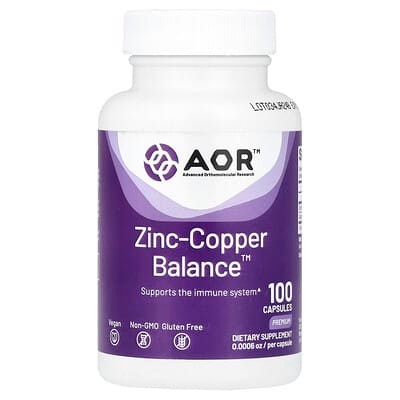
Zinc-Copper Balance

Format:Capsule Quantity: 100 Capsule(s) · 100 servings
Goals

About this product

Pairing zinc with copper gives the formula a focused nutritional purpose. The supplied findings identify 15 mg total zinc and 2 mg copper, nutrients involved in normal immune function and connective tissue. The clearest fit is filling low intake rather than expecting added hair, skin or bone benefits with adequate nutrition.

Citrate and picolinate are favorable zinc forms, and copper citrate provides a usable mineral source. The total mineral amounts are clear, but the split between the two zinc forms is missing. Their names alone do not establish better visible or clinical results.

The serving offers favorable value when both minerals match the user's needs. Including copper helps make the pairing easier to assess than zinc alone, although the fixed amounts cannot suit every diet. Bone relevance concerns the collagen framework rather than broad bone-mineral supply, and extra testosterone benefit with adequate zinc is not established.

Who is it for
  • Adults seeking both zinc and copper to address low intake
  • People who prefer a focused mineral pairing over a broad supplement
Best for
  • Combined zinc and copper nutrition
  • Filling mineral gaps relevant to normal immune and connective-tissue functions

Pros

  • Copper is measured and included alongside zinc
  • Citrate and picolinate are favorable zinc forms
  • Both total mineral amounts are disclosed
  • Favorable cost for the paired minerals

Cons

  • The split between zinc forms is not disclosed
  • Fixed copper and zinc amounts offer little flexibility
  • The pairing does not provide broad bone-mineral support

Product analysis

79 out of 100

Zinc-Copper Balance combines favorable zinc sources with copper at a good serving cost. Missing zinc-source proportions make the blend’s exact makeup less clear.

AI assessment of the formula, label and price. How scoring works

Nutrient Quality78

Zinc citrate and picolinate have favorable absorption characteristics. Copper citrate is also identified, though its comparative information is older.

Ingredient Transparency80

Both mineral amounts and all named sources are disclosed. The proportions of the two zinc sources are missing.

Value For Money80

Both zinc and copper offer favorable serving-cost value. The copper comparison is based on older information and carries more uncertainty.

Customer Satisfaction81

Buyer ratings are very positive. More than a thousand ratings provide a substantial picture of satisfaction.

Product Focus74

The formula keeps a limited focus on zinc and copper across related intended uses. Their combination alone does not establish an added benefit.

Format
Capsule
Container
100 Capsule(s)
Per serving
$0.21
Customer rating
4.7 · 1,054 ratings
Report analysis

Goals

Immunity
Impact
High effect
B Ingredient FitD- PathwaysA+ EvidenceA+ Formulation Logic
Zinc · 15 mg
Study evidence
Zinc Supportive 73 studies
Everyday Health
Impact
High effect
B- Ingredient FitF PathwaysB- EvidenceA+ Formulation Logic
Zinc · 15 mg
Study evidence
Zinc Supportive 60 studies
Impact
Moderate effect
C- Ingredient FitF PathwaysA EvidenceA+ Formulation Logic
Zinc · 15 mg
Study evidence
Zinc Disputed 7 studies
Impact
High effect
B Ingredient FitF PathwaysA+ EvidenceA+ Formulation Logic
Zinc · 15 mg
Study evidence
Copper Adverse 4 studies
Zinc Supportive 22 studies
Bone Health
Impact
Highest effect
A Ingredient FitC PathwaysA+ EvidenceA+ Formulation Logic
Copper · 2 mgZinc · 15 mg
Study evidence
Copper Disputed 20 studies
Zinc Supportive 33 studies
Skin Health
Impact
Highest effect
B+ Ingredient FitC- PathwaysA- EvidenceA+ Formulation Logic
Zinc · 15 mgCopper · 2 mg
Study evidence
Copper Supportive 16 studies
Zinc Supportive 66 studies

Ingredients

IngredientAmount per servingScore
Zinc (Zinc Citrate, Zinc Picolinate)
15 mg 84
Copper (Copper Citrate)
2 mg 82
Gluten Free Adults 18–50 Vegan Dairy Free Vegetarian
Report overview
B Active Ingredient Quality & BioavailabilityA- Dose, Safety & Label TransparencyB+ Value
The serving provides 2 mg of copper and has a moderate cost per serving. It uses Copper Citrate, a named copper source. The serving also provides 15 mg of zinc, alongside its copper.
How this ingredient is rated

Active Ingredient Quality & Bioavailability79

It uses Copper Citrate, a named copper source. The label states 2 mg of elemental copper and names its source.
Copper Form Bioavailability
It uses Copper Citrate, a named copper source.
Elemental Copper Labeling Clarity
The label states 2 mg of elemental copper and names its source.

Dose, Safety & Label Transparency85

The serving supplies 2 mg of copper, a clear amount. The serving also provides 15 mg of zinc, alongside its copper.
Copper Dosage Safety & Efficacy
The selected serving provides 2 mg of copper, a clear amount.
Zinc-to-Copper Balance
The serving also provides 15 mg of zinc, alongside its copper.

Value80

The cost per serving is moderate.
Price Per Serving Efficiency
The cost per serving is moderate.
B+ Active Ingredient Quality & BioavailabilityA- Dose, Safety & Label TransparencyB+ Value
A serving supplies 15 mg zinc at a fairly low cost per serving. It uses Zinc Citrate and Zinc Picolinate, but their proportions are unknown. It also supplies 2 mg copper, making the zinc-to-copper ratio 7.5:1.
How this ingredient is rated

Active Ingredient Quality & Bioavailability84

It uses Zinc Citrate and Zinc Picolinate, but their proportions are unknown.
Zinc Form Bioavailability
It uses Zinc Citrate and Zinc Picolinate, but their proportions are unknown.

Dose, Safety & Label Transparency85

The serving provides 15 mg zinc. It also supplies 2 mg copper, making the zinc-to-copper ratio 7.5:1.
Elemental Dose Transparency
The elemental zinc amount and source are stated.
Zinc Dosage Safety & Effectiveness
The serving provides 15 mg zinc.
Zinc-to-Copper Mineral Balance
It also supplies 2 mg copper, making the zinc-to-copper ratio 7.5:1.

Value80

The cost per serving is fairly low.
Price Per Serving Efficiency
The cost per serving is fairly low.
Report alternatives

Sources

Published studies used for the product analysis and the top-ranked studies for each ingredient and goal.

  1. The Association between Dietary and Circulating Copper Levels and Osteoporosis: a Scoping Review.
    Ju Y; Xiong W; Pang Y; Chen Z; Hou J; Zheng S; Li Z; Liu T; Xia H; Xia M; Zhong Y; Li J; Jiang X · Biological trace element research · 2026
    Scoping review18 studies pooledBone Health forCopper
  2. Association between dietary copper, iron, zinc, selenium intake and osteopenia or osteoporosis in elderly hypertensive patients: a retrospective cohort study.
    Chen M; Jia L; Gao R · Frontiers in nutrition · 2024
    Cohort study5,286 participantsBone Health forCopper
  3. Associations of dietary copper intake with total bone mineral density and lumbar spine bone mineral density in American adults.
    Hu M; Wang Z; Li C; Zheng Y; Hu J · Medicine · 2025
    Cross-sectional studyBone Health forCopper
  4. The association between dietary mineral intake and bone mineral density: a cross-sectional study.
    Wei M; Wei J; Huang S · Journal of health, population, and nutrition · 2025
    Cross-sectional study11,520 participantsBone Health forCopper
  5. Association between dietary copper intake and bone mineral density in children and adolescents aged 8-19 years: A cross-sectional study.
    Cui A; Yan J; Li H; Fan Z; Wei X; Wang H; Zhuang Y · PloS one · 2024
    Cross-sectional study6,965 participantsBone Health forCopper
  6. Increased incidence of fractures in middle-aged and elderly men with low intakes of phosphorus and zinc.
    Elmståhl S; Gullberg B; Janzon L; Johnell O; Elmståhl B · Osteoporosis international : a journal established as result of cooperation between the European Foundation for Osteoporosis and the National Osteoporosis Foundation of the USA · 1999
    Cohort study6,576 participantsBone Health forZinc
  7. Zinc Supplementation Increases Procollagen Type 1 Amino-Terminal Propeptide in Premenarcheal Girls: A Randomized Controlled Trial.
    Berger PK; Pollock NK; Laing EM; Chertin V; Bernard PJ; Grider A; Shapses SA; Ding KH; Isales CM; Lewis RD · The Journal of nutrition · 2016
    Randomized trial147 participantsBone Health forZinc
  8. Randomized controlled trial of prenatal zinc supplementation and fetal bone growth.
    Merialdi M; Caulfield LE; Zavaleta N; Figueroa A; Costigan KA; Dominici F; Dipietro JA · The American journal of clinical nutrition · 2004
    Randomized trial242 participantsBone Health forZinc
  9. The effects of zinc supplementation on serum zinc, alkaline phosphatase activity and fracture healing of bones.
    Sadighi A; Roshan MM; Moradi A; Ostadrahimi A · Saudi medical journal · 2009
    Randomized trial60 participantsBone Health forZinc
  10. Is Zinc an Important Trace Element on Bone-Related Diseases and Complications? A Meta-analysis and Systematic Review from Serum Level, Dietary Intake, and Supplementation Aspects.
    Ceylan MN; Akdas S; Yazihan N · Biological trace element research · 2021
    Meta-analysis40 studies pooledBone Health forZinc
  11. Effectiveness of sodium bicarbonate and zinc chloride mouthwashes in the treatment of oral mucositis and quality of life in patients with cancer under chemotherapy.
    Mohammadi F; Oshvandi K; Kamallan SR; Khazaei S; Ranjbar H; Ahmadi-Motamayel F; Gillespie M; Jenabi E; Vafaei SY · Nursing open · 2022
    Randomized trial144 participantsEveryday Health forZinc
  12. Zinc supplementation in young children with acute diarrhea in India.
    Sazawal S; Black RE; Bhan MK; Bhandari N; Sinha A; Jalla S · The New England journal of medicine · 1995
    Randomized trial937 participantsEveryday Health forZinc
  13. Associations of mortality with ocular disorders and an intervention of high-dose antioxidants and zinc in the Age-Related Eye Disease Study: AREDS Report No. 13.
    Clemons TE; Kurinij N; Sperduto RD; AREDS Research Group · Archives of ophthalmology (Chicago, Ill. : 1960) · 2004
    Randomized trial4,753 participantsEveryday Health forZinc
  14. Effects of zinc and probiotic co-supplementation on inflammation, gastrointestinal symptoms, quality of life, and mood in irritable bowel syndrome patients.
    Rezazadegan M; Soheilipour M; Amani R · Scientific reports · 2026
    Randomized trial84 participantsEveryday Health forZinc
  15. Effect of zinc sulfate supplementation on premenstrual syndrome and health-related quality of life: Clinical randomized controlled trial.
    Siahbazi S; Behboudi-Gandevani S; Moghaddam-Banaem L; Montazeri A · The journal of obstetrics and gynaecology research · 2018
    Randomized trial142 participantsEveryday Health forZinc
  16. Menkes disease and response to copper histidine: An Indian case series.
    Yoganathan S; Sudhakar SV; Arunachal G; Thomas M; Subramanian A; George R; Danda S · Annals of Indian Academy of Neurology · 2022
    Case series4 participantsHair Health forCopper
  17. Trace element levels in alopecia areata.
    Bhat YJ; Manzoor S; Khan AR; Qayoom S · Indian journal of dermatology, venereology and leprology · 2009
    Case-control study100 participantsHair Health forCopper
  18. UV damage to hair and the effect of antioxidants and metal chelators.
    Millington KR; Marsh JM · International journal of cosmetic science · 2021
    In vitro / ex vivo studyHair Health forCopper
  19. Preserving fibre health: reducing oxidative stress throughout the life of the hair fibre.
    Marsh JM; Davis MG; Lucas RL; Reilman R; Styczynski PB; Li C; Mamak M; McComb DW; Williams RE; Godfrey S; Navqi KR; Chechik V · International journal of cosmetic science · 2016
    In vitro / ex vivo studyHair Health forCopper
  20. The effects of minoxidil, 1% pyrithione zinc and a combination of both on hair density: a randomized controlled trial.
    Berger RS; Fu JL; Smiles KA; Turner CB; Schnell BM; Werchowski KM; Lammers KM · The British journal of dermatology · 2003
    Randomized trial200 participantsHair Health forZinc