Nutrient quality
Favorable mineral and vitamin forms give the hydration blend solid quality. Modest potassium and magnesium amounts limit its depth beyond routine electrolyte replacement.
.
 iHerb iHerb | $ 49.97 | |
| iHerb | $ 49.97 | |
 Vitacost Vitacost | $ 49.97 | |
 Pure Formulas Pure Formulas | $ 49.97 |
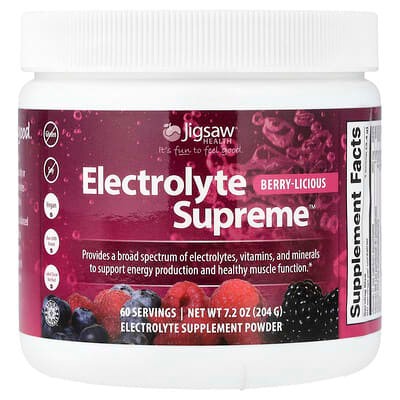
The formula supplies 270 mg sodium, 210 mg potassium, and 200 mg chloride, making it useful for routine exercise hydration. Sea salt, sodium bicarbonate, potassium bicarbonate, and potassium chloride give the blend clear electrolyte roles.
Dimagnesium malate, calcium ascorbate, methylcobalamin, pyridoxal 5-phosphate, and several chelated trace minerals are thoughtful form choices. Magnesium itself remains low, while potassium is moderate rather than a focused replacement dose.
The powder format supports convenient mixing and the label discloses individual mineral amounts. Heart-health relevance is limited mainly to hydration and normal electrolyte function, so it should not be treated as a broad cardiovascular formula.
Favorable mineral and vitamin forms give the hydration blend solid quality. Modest potassium and magnesium amounts limit its depth beyond routine electrolyte replacement.
.Specific active amounts are provided and no proprietary blend hides doses. Repeated mineral amounts across several source forms create ambiguity, while usage directions and non-active ingredients are missing.
.The available satisfaction metric is favorable and the sample provides useful confidence. Specific experience details are absent, so repeated complaints and purpose fit remain uncertain.
.Good forms and a broad electrolyte profile support reasonable value. Moderate core mineral amounts keep it from standing out for focused supplementation.
.The electrolyte powder provides 210 mg of potassium from bicarbonate, chloride, and iodide sources. Its 270 mg sodium amount and modest potassium dose make it more suitable for hydration than targeted cardiovascular support.
Small amounts of magnesium and other micronutrients broaden the label without creating strong heart-health depth. People with impaired kidney function or potassium-retaining medicines need individualized guidance before using supplemental potassium.
| Ingredient | Amount per serving |
|---|---|
Calories | 10 Calorie(s) |
Total Carbohydrates | 4 Gram(s) |
Vitamin C (Calcium Ascorbate) | 260 mg |
Vitamin B6 (Pyridoxal 5-Phosphate) | 1 mg |
Vitamin B12 (Methylcobalamin) | 6 mcg |
Biotin | 75 mcg |
Calcium (Calcium Ascorbate) | 30 mg |
Iodine (Potassium Iodide) | 50 mcg |
Magnesium (DiMagnesium Malate) | 20 mg |
Zinc (Zinc Bisglycinate Chelate) | 3.75 mg |
Selenium (L-Selenomethionine) | 18 mcg |
Copper (Copper Bisglycinate Chelate) | 200 mcg |
Manganese (Magnesium Bisglycinate Chelate) | 0.5 mg |
Chromium (Chromium Nicotinate Glycinate Chelate) | 40 mcg |
Sodium (Sea Salt, Sodium Bicarbonate) | 270 mg |
Potassium (Potassium Chloride, Potassium Iodide, Potassium Bicarbonate) | 210 mg |
Chloride (Potassium Chloride) | 200 mg |
The sea-salt and bicarbonate blend provides a useful near-target sodium serving with well-chosen supporting minerals. Magnesium malate and potassium bicarbonate strengthen mineral quality, while carbohydrate is moderate. The low serving cost makes it a strong practical electrolyte choice.
Potassium chloride supplies a soluble functional salt with an additional useful cation, and the 200 mg amount provides a meaningful electrolyte amount. The drink powder supports ready ionization, while the label clearly identifies both dose and source. Cost efficiency is average for the chloride delivered.
Bicarbonate adds alkalizing potential, while chloride supplies conventional electrolyte support and iodide is a weaker primary potassium form. The moderate elemental-looking amount is useful for hydration but remains below the collection target. A sub-median serving cost provides fair value for the broader electrolyte formula.
Published studies used for the product analysis and the top-ranked studies for each ingredient and goal.