

Nutrient quality
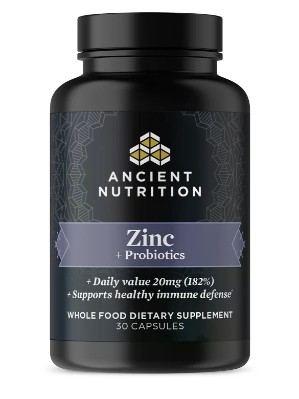
The zinc compound is missing, and probiotic potency is not stated in an appropriate viable-count unit. A useful zinc amount is present, but missing form and viable-count details weaken the formula.
 BodyBuilding.com BodyBuilding.com | $ 24.95 | |
 Pure Formulas Pure Formulas | $ 21.21 | |
 Daily Vita Daily Vita | $ 21.21 | |
 Vitacost Vitacost | $ 23.35 | |
| Vitacost | $ 23.33 |
The capsule supplies 20 mg of zinc, a useful maintenance-range amount for people whose intake is low. Its chemical form is not disclosed, leaving absorption and digestive tolerance uncertain.
Bacillus subtilis adds a potential digestive pathway, but the label information gives weight rather than a live-organism count. No strain identifier or guaranteed potency is supplied, so the probiotic contribution remains unclear.
One capsule is convenient, but the serving is costly compared with focused zinc products. The formula fits users who specifically want a combined concept and accept weaker disclosure, not those seeking precise mineral or probiotic specifications.
The zinc compound is missing, and probiotic potency is not stated in an appropriate viable-count unit. A useful zinc amount is present, but missing form and viable-count details weaken the formula.
Amounts are listed, but the probiotic is measured only by mass rather than viable count. Some combined ingredients lack component-level amounts.
The supplied average is very strong, with moderate response volume. Complaint patterns and purpose-related experiences are not supplied.
The asking price is difficult to justify for the disclosed formula. Serving value is weak relative to the zinc support provided.

Zinc directly supports immune-cell development, and the added Bacillus organism may provide a second gut-related pathway. The zinc amount is meaningful for daily maintenance.
The label does not identify the zinc compound, and the probiotic is listed by weight without a strain code or live-organism count. Those gaps make absorption and probiotic potency difficult to verify.
Zinc supports normal skin repair, immune defense, and inflammatory control, especially when zinc status is low. A mineral-only approach does not address collagen structure, hydration lipids, or photoprotection.
The 20 mg amount is meaningful, and the zinc compound is not disclosed. Prolonged daily use still warrants attention to total zinc and copper balance.

The zinc amount is practical for supporting normal immune and enzyme function when intake is inadequate. Pairing zinc with a probiotic may add digestive relevance, but it does not make the formula broadly comprehensive.
The label does not identify the zinc compound, which limits confidence in absorption quality. The probiotic is stated by weight rather than a live-organism count, so its likely contribution cannot be judged reliably.

The zinc amount can support testosterone synthesis when zinc status is low. Human evidence does not suggest reliable increases when zinc intake is already adequate.
The exact zinc compound is not disclosed, which prevents a good absorption assessment. The probiotic adds little direct endocrine support.

Zinc can support follicle cell division and may reduce shedding when low zinc status is the cause. The product is otherwise narrow for hair because the probiotic does not provide a clear structural, hormonal, or antioxidant pathway.
The zinc amount is suitable for routine maintenance, but the source compound is not identified. That omission prevents a reliable assessment of absorption and makes the label less informative than a chelated zinc product.
| Ingredient | Amount per serving |
|---|---|
Zinc | 20 mg |
Bacillus Subtillis | 20 mg |
The 20 mg zinc serving provides a practical maintenance amount. The missing zinc compound prevents a reliable judgment of absorption quality despite a disclosed dose. Other active ingredients broaden the formula, but they do not resolve zinc-form limitations.
Published studies used for the product analysis and the top-ranked studies for each ingredient and goal.