
Nutrient quality
Flavone standardization supports baseline extract quality for maintenance use. The modest amount and incomplete marker profile limit depth for the stated vision goal.
.
 iHerb iHerb | $ 4.19 | |
 Amazon Amazon | $ 0.00 | |
| iHerb | $ 4.19 |
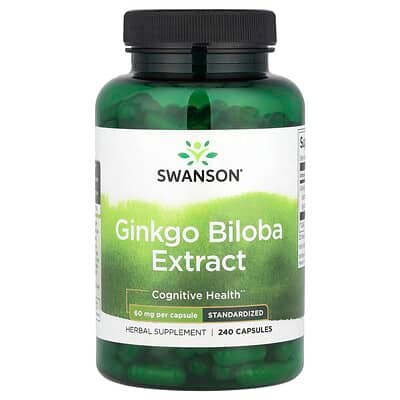
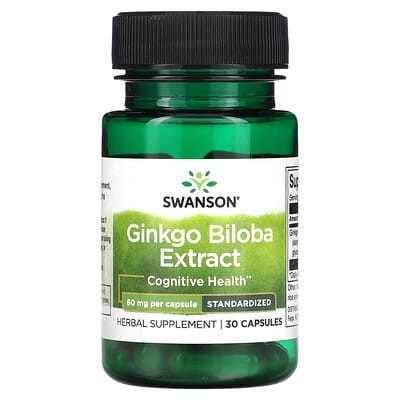
The capsule provides 60 mg ginkgo extract, targeting cerebral and peripheral circulation. The amount is better suited to light maintenance than a strong standalone regimen.
Ginkgo may support selected memory, focus, or circulation-related outcomes, but it is not a broad nootropic. Its vision relevance is also narrow because it does not supply lutein, zeaxanthin, retinal omega-3 fats, or antioxidant minerals.
The product name indicates flavone standardization, but the terpene-lactone percentage and a low-ginkgolic-acid guarantee are missing. The focused format is easy to understand, though extract quality matters more than raw leaf weight or package size.
Flavone standardization supports baseline extract quality for maintenance use. The modest amount and incomplete marker profile limit depth for the stated vision goal.
.Active amounts and marker names are disclosed without a hidden blend. Complete standardization, daily-use directions, and non-active ingredients remain unavailable.
.The available rating is strong and the sample is very large. Detailed feedback was not supplied, so repeated complaints and alignment with the intended use remain uncertain.
.The low purchase cost supports good value for maintenance use. The short supply and incomplete standardization keep it from leading the category.
.
Standardized ginkgo may support ocular blood flow, but it is not a core macular or retinal nutrient. The amount is modest and the full active-marker profile is not established.
The label names flavone glycosides and terpene lactones while omitting a low-ginkgolic-acid guarantee. Ginkgo may increase bleeding risk with anticoagulant or antiplatelet medicines.
| Ingredient | Amount per serving |
|---|---|
Ginkgo biloba leaf extract (Flavone Glycosides, Ginkgolic Acid, Terpene Lactones) | 60 mg |
The label indicates flavone standardization and names terpene lactones, but it does not establish the full target marker profile. The dose is suited to mild maintenance, and no low-ginkgolic-acid guarantee is provided. The standardized cost is favorable. Ginkgo may increase bleeding risk when combined with anticoagulant or antiplatelet medicines.
Published studies used for the product analysis and the top-ranked studies for each ingredient and goal.