
Nutrient quality
Betaine hydrochloride is a clear chemical form, while fenugreek lacks plant-part or active-marker detail. The betaine hydrochloride amount is substantial, but fenugreek is lightly dosed for targeted use.
 iHerb iHerb | $ 16.77 | |
 Amazon Amazon | $ 16.77 | |
 Vitacost Vitacost | $ 18.39 |
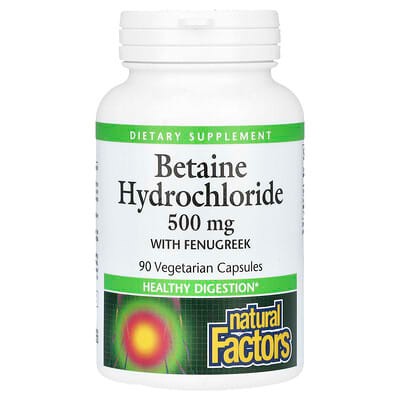
Each capsule supplies 500 mg of betaine hydrochloride with 100 mg of fenugreek. The two active amounts are plainly disclosed.
Fenugreek plays a secondary role and is not standardized to saponins or another marker. Buyers seeking fenugreek alone would be better served by a dedicated product.
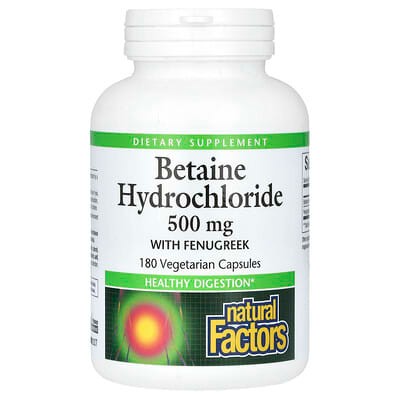
A 180-serving bottle creates excellent long-term convenience and value. The product remains poorly suited to people with reflux, gastritis, or peptic-ulcer symptoms.
Betaine hydrochloride is a clear chemical form, while fenugreek lacks plant-part or active-marker detail. The betaine hydrochloride amount is substantial, but fenugreek is lightly dosed for targeted use.
Specific amounts are disclosed for every listed active ingredient. Non-active ingredients and excipients are not provided.
The supplied average rating is strong. The large rating sample provides strong statistical confidence.
The lead digestive ingredient provides reasonable quality despite the weak fenugreek contribution. The very low serving cost and large supply provide excellent basic value.
| Ingredient | Amount per serving |
|---|---|
Betaine Hydrochloride | 500 mg |
Fenugreek | 100 mg |
Fenugreek is included at a small amount with no stated form or standardization, limiting its fit for testosterone or appetite goals. The dry capsule provides no added absorption support, although the exact fenugreek amount is disclosed. The serving cost is very low, but betaine hydrochloride is the main ingredient and may aggravate reflux or peptic-ulcer symptoms.