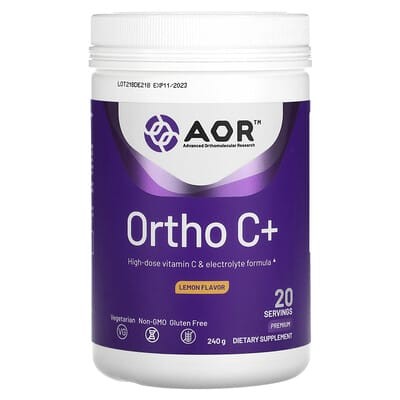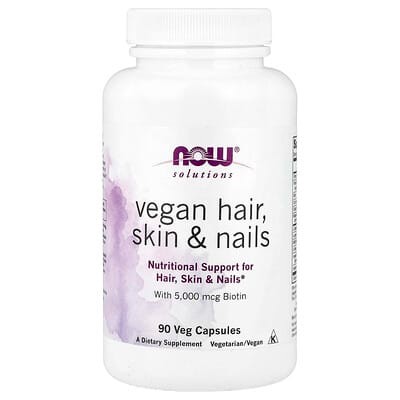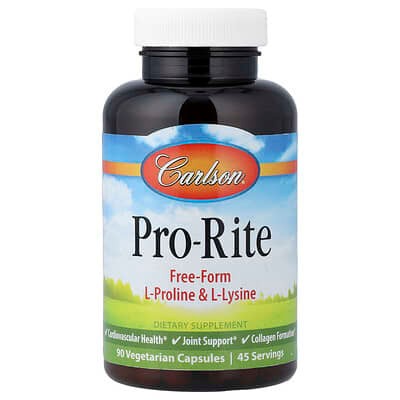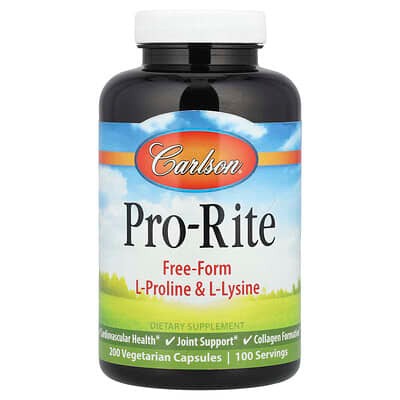
Proline

amino acid

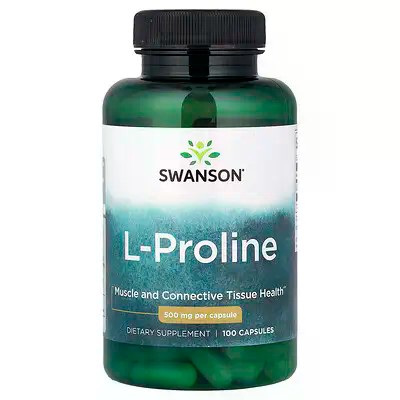
Proline is a cyclic, non-essential amino acid that the body can produce and also obtain from food. Its unique structure is essential for forming the triple helix of collagen, the body’s most abundant protein, which helps maintain the integrity of various tissues. The main function of this amino acid is its involvement in collagen synthesis, which supports the strength and elasticity of the skin, tendons, ligaments, cartilage, and bones. It also contributes to tissue repair and regeneration, supporting the body's natural wound-healing processes. In addition to its structural roles, Proline participates in metabolic processes such as protein synthesis and cellular energy production. It is frequently used to support joint mobility, skin health, and recovery from physical injuries.

Natural sources
Meat (beef, chicken, pork)FishDairy products (milk, cheese, yogurt)EggsBone brothLegumesAsparagusMushrooms

No public comparison lists found.

Optimal Dosage
Minimum500 mg
Maximum1000 mg
Safety & Toxicity
2 safety notes
  • Individuals with kidney or liver conditions should consult a healthcare professional before supplementing with Proline.
  • Pregnant or nursing women should consult a doctor before use.
Goals
Bone Health
Impact
High effect
Typical dose:500–2000 mg
Proline is a critical building block for the collagen that forms about 30% of bone mass. Supplementing with proline supports the synthesis of this flexible framework.

Study evidence

2 studies

Proline is involved in the collagen that supports bone, but the supplied evidence does not show that taking proline strengthens bones. Research on collagen formation and inherited collagen disorders cannot establish benefits from an ordinary oral proline supplement.

View goal

Skin Health
Impact
High effect
Typical dose:500–2000 mg
Proline is one of the primary amino acids that make up the structure of collagen. Supplementing with proline can provide the necessary raw materials to support the body's production of collagen, which is essential for skin firmness and elasticity. Its effect is most pronounced when paired with other cofactors like Vitamin C.

Study evidence

4 studies

Proline is linked to skin collagen biology, but the supplied evidence does not establish that oral proline supplements improve skin health. Favorable cosmetic findings involve a chemically modified proline ingredient applied to the skin, which is a different intervention.

View goal

Studies

Research connections will load here.
Sources

Up to five highest-ranked published examples per goal. Study counts and charts include all published studies for the connection.

  1. Human bone collagen synthesis is a rapid, nutritionally modulated process.
    Babraj JA; Smith K; Cuthbertson DJ; Rickhuss P; Dorling JS; Rennie MJ · Journal of bone and mineral research : the official journal of the American Society for Bone and Mineral Research · 2005
    Methods validation study8 participantsBone Health
  2. Osteogenesis imperfecta: recent findings shed new light on this once well-understood condition.
    Basel D; Steiner RD · Genetics in medicine : official journal of the American College of Medical Genetics · 2009
    Narrative reviewBone Health
  3. Improvement of crow's feet lines by topical application of 1-carbamimidoyl-L-proline (CLP).
    Kawashima M; Yokose U; Hachiya A; Fujimura T; Tsukahara K; Kawada H; Kitahara T; Takema Y; Terui T; Nakagawa H · European journal of dermatology : EJD · 2014
    Randomized trial126 participantsSkin Health
  4. Collagen synthesis in human musculoskeletal tissues and skin.
    Babraj JA; Cuthbertson DJ; Smith K; Langberg H; Miller B; Krogsgaard MR; Kjaer M; Rennie MJ · American journal of physiology. Endocrinology and metabolism · 2005
    Methods validation studySkin Health
  5. Genotype-phenotype spectrum of PYCR1-related autosomal recessive cutis laxa.
    Dimopoulou A; Fischer B; Gardeitchik T; Schröter P; Kayserili H; Schlack C; Li Y; Brum JM; Barisic I; Castori M; Spaich C; Fletcher E; Mahayri Z; Bhat M; Girisha KM; Lachlan K; Johnson D; Phadke S; Gupta N; Simandlova M; Kabra M; David A; Nijtmans L; Chitayat D; Tuysuz B; Brancati F; Mundlos S; Van Maldergem L; Morava E; Wollnik B; Kornak U · Molecular genetics and metabolism · 2014
    Case series33 participantsSkin Health
  6. Collagen structure in skin from fibromyalgia patients.
    Ribel-Madsen S; Gronemann ST; Bartels EM; Danneskiold-Samsøe B; Bliddal H · International journal of tissue reactions · 2006
    Case-control study35 participantsSkin Health