


Zinc Supportive
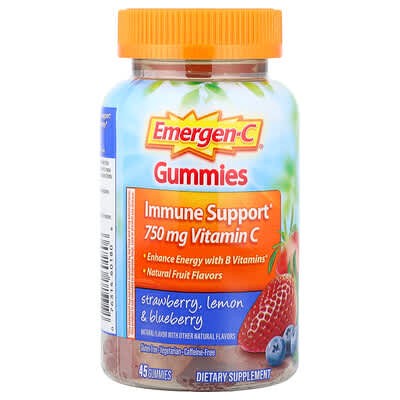
$12.99 $0.86 per serving
Product analysis
Emergen-C Immune Support gummies provide 750 mg of vitamin C per three-gummy serving to support normal immune function and antioxidant defenses. Vitamin B6 and B12 help cover nutritional needs related to energy metabolism, but the chewable format comes with 8 g of added sugar per serving.
AI assessment of the formula, label and price. How scoring works
Nutrient Quality43
Vitamin C comes as ascorbic acid, and the gummy uses a well-identified form of vitamin B6. Zinc sulfate is a less favorable form for absorption and supplies just 1.5 mg per serving.
Ingredient Transparency83
The label gives a per-serving amount for all nine listed entries. It identifies five forms, so shoppers can check the sources of several key vitamins and minerals.
Value For Money39
Vitamin C is the main reason to buy these gummies on price, with a cost per gram below that of many comparable products. The small amounts of zinc and several other nutrients offer less value if you’re shopping for those specifically.
Customer Satisfaction85
Buyers rated the gummies 4.6 out of 5. More than 3,000 ratings give that average a broad base of customer feedback.
Product Focus69
Immune support is the clearest use, with vitamin C doing most of the work. The B vitamins add some everyday nutritional support, especially when intake is low.
- Format
Gummy - Container
- 45 Gummy(ies)
- Per serving
- $0.86
- Customer rating
- 4.6 · 3,179 ratings
Goals

Impact
High effect
Vitamin C · 750 mgZinc · 1.5 mg
Immune Support 750 mg Vitamin C offers vitamin C-led immune support, with modest regular-use support for shorter colds. Its 750 mg of vitamin C is the main contributor. Vitamin B6 at 1.5 mg and B12 at 4 mcg can help fill dietary gaps that impair normal immune-cell function.
Vitamin C Supportive

Impact
High effect
Zinc · 1.5 mgVitamin C · 750 mg
Immune Support 750 mg Vitamin C is a straightforward nutritional support option for skin when intake is inadequate. Its 750 mg of vitamin C supports collagen formation, while 1.5 mg of vitamin B6 helps cover a nutrient whose deficiency can cause skin problems. The formula is driven by those two nutrients rather than ingredients directed at skin hydration or barrier function.
Zinc Supportive
Vitamin C Supportive
Biotin Supportive

Impact
High effect
Vitamin B12 · 4 mcgZinc · 1.5 mgVitamin C · 750 mg
Immune Support 750 mg Vitamin C offers focused nutritional support for everyday health. Its 750 mg of vitamin C contributes to normal immune function and antioxidant defence. Vitamin B6 at 1.5 mg supports normal metabolism and blood formation.
Vitamin B12 Adverse
Zinc Supportive
Vitamin C Supportive

Impact
High effect
Vitamin C · 750 mg
Immune Support 750 mg Vitamin C offers a conditional fit for inflammation support, led by 750 mg of vitamin C. Vitamin C supports antioxidant defenses, while the supplied inflammation evidence is most relevant to people with elevated baseline inflammatory markers.
Zinc Supportive
Vitamin C Supportive

Impact
High effect
Zinc · 1.5 mgVitamin C · 750 mg
Immune Support 750 mg Vitamin C offers a narrow antioxidant contribution to eye health. Its 750 mg of vitamin C supports retinal and lens antioxidant defense.
Zinc Supportive
Vitamin C Disputed
Ingredients
| Ingredient | Amount per serving | Score |
|---|---|---|
Calories | 45 Calorie(s) | |
Total Carbohydrates | 11 Gram(s) | |
Vitamin C (Ascorbic Acid) | 750 mg | |
Vitamin B6 (Pyridoxine Hydrochloride) | 1.5 mg | |
Vitamin B12 (Cyanocobalamin) | 4 mcg | |
Biotin | 36 mcg | |
Zinc (Zinc Sulfate) | 1.5 mg | |
Manganese (Manganese Gluconate) | 0.38 mg | |
Sodium | 35 mg |
Vitamin C (Ascorbic Acid) · 750 mg OverallScore59
Emergen-C Immune Support 750 mg Vitamin C provides 750 mg of vitamin C per serving and offers good value at $1.15 per gram of vitamin C and $0.87 per serving, with the serving price covering the full formula. The vitamin C source is Ascorbic Acid. No buffering is established. The formula contains a sweetener.
Alternative products
Report alternatives
Sources
Published studies used for the product analysis and the top-ranked studies for each ingredient and goal.
- Oral Vitamin B12 versus Placebo for the Prevention of Chemotherapy-Induced Peripheral Neuropathy in Gynecological Cancer Patients: A Randomized, Double-Blind, Placebo-Controlled Trial.
- Vitamin B12 Supplementation in Diabetic Neuropathy: A 1-Year, Randomized, Double-Blind, Placebo-Controlled Trial.
- A single-center randomized controlled trial of local methylcobalamin injection for subacute herpetic neuralgia.
- Local Injection of Methylcobalamin Combined with Lidocaine for Acute Herpetic Neuralgia.
- The Effect of Vitamin B12 and Folic Acid Supplementation on Serum Homocysteine, Anemia Status and Quality of Life of Patients with Multiple Sclerosis.
- Dietary intake and blood concentrations of antioxidants and the risk of cardiovascular disease, total cancer, and all-cause mortality: a systematic review and dose-response meta-analysis of prospective studies.
- Scientific Opinion on the substantiation of a health claim related to vitamin C and increasing non haem iron absorption pursuant to Article 14 of Regulation (EC) No 1924/2006.
- Vitamin C Depletion and All-Cause Mortality in Renal Transplant Recipients.
- Associations of Serum Biomarkers of Fruit and Vegetable Intake With the Risk of Cause-Specific Mortality and All-Cause Mortality: A National Prospective Cohort Study.
- Relation between plasma ascorbic acid and mortality in men and women in EPIC-Norfolk prospective study: a prospective population study. European Prospective Investigation into Cancer and Nutrition.
- Effectiveness of sodium bicarbonate and zinc chloride mouthwashes in the treatment of oral mucositis and quality of life in patients with cancer under chemotherapy.
- Zinc supplementation in young children with acute diarrhea in India.
- Associations of mortality with ocular disorders and an intervention of high-dose antioxidants and zinc in the Age-Related Eye Disease Study: AREDS Report No. 13.
- Effects of zinc and probiotic co-supplementation on inflammation, gastrointestinal symptoms, quality of life, and mood in irritable bowel syndrome patients.
- Effect of zinc sulfate supplementation on premenstrual syndrome and health-related quality of life: Clinical randomized controlled trial.
- Role of Oral Vitamin 'C' on Astigmatic Errors in Phacoemulsification.
- Ascorbic acid metabolites are involved in intraocular pressure control in the general population.
- Nutritional modulation of cataract.
- Dietary n-3 Fatty Acid, α-Tocopherol, Zinc, vitamin D, vitamin C, and β-carotene are Associated with Age-Related Macular Degeneration in Japan.
- Adherence to a Mediterranean diet, lifestyle and age-related macular degeneration: the Coimbra Eye Study - report 3.