
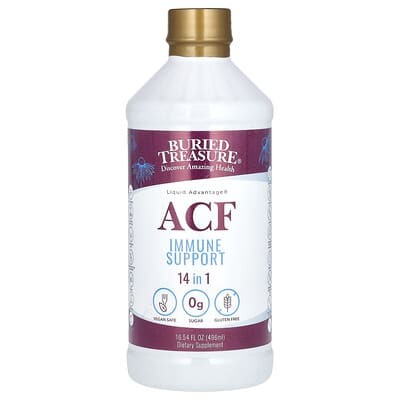
ACF Advanced Immune Response

Goals
$26.77 $1.67 per serving


Product analysis
ACF Advanced Immune Response supplies vitamin C and zinc for normal immune nutrition, with benefits most relevant when intake falls short. Most botanical preparations are not identified, making the broader formula harder to compare.
AI assessment of the formula, label and price. How scoring works
Nutrient Quality36
Zinc gluconate has favourable absorption potential, while most botanical forms are not clearly identified. That leaves quality uncertain across much of the wider mixture.
Ingredient Transparency64
Most amounts are stated, but fat and cholesterol quantities are omitted. Most forms are also unidentified, limiting a full comparison of the formula.
Value For Money24
The product appears relatively costly in the vitamin C, zinc, ginger and rutin comparisons. A firm judgment of value for the whole formula remains uncertain.
Customer Satisfaction71
Customer ratings are positive across a few hundred responses. They reflect satisfaction without proving immune benefits or safety.
Product Focus48
Vitamin C and zinc provide the clearest nutritional contribution, with more limited preparation-specific support for the botanicals. The long ingredient list makes the formula broader than its main immune-nutrition purpose.
- Format
Liquid - Container
- 16 Liquid(s)
- Per serving
- $1.67
- Customer rating
- 4.6 · 216 ratings
Goals

Impact
High effect
Vitamin C · 1000 mg
Vitamin C has a limited connection to inflammation through a CRP reduction seen in people with elevated starting CRP; the trial was null overall. This does not establish routine inflammation relief. Zinc supports correction of low zinc status. The ginger extract amount and preparation do not match the repeated raw or heated ginger exposure associated with less exercise-related muscle pain.
How this product is rated for Inflammation
Ingredient fit56
Relevant ingredients sit within a formula also intended for other goals. Amounts provide uneven support in the saved comparison; a qualifying amount does not guarantee clinical benefit.
Goal fit
Relevant ingredients sit within a formula also intended for other goals.
Dose adequacy
Amounts provide uneven support in the saved comparison; a qualifying amount does not guarantee clinical benefit.
Pathways55
The saved findings are strongest for oxidative stress. Coverage remains concentrated rather than broad.
Depth
The strongest saved connection is to oxidative stress; pathway coverage does not establish a clinical effect.
Breadth
Only one pathway reaches the saved coverage threshold.
Evidence87
Vitamin C leads the saved evidence finding. The saved finding accepts the relevant preparations; this does not remove the population and outcome limitations.
Evidence strength
Vitamin C leads the saved evidence finding, although its supplied clinical evidence remains qualified by population, outcome or amount.
Studied preparation
The saved finding accepts the relevant preparations; this does not remove the population and outcome limitations.
Formulation logic100
The counted ingredients have no unmet partner requirement or matched conflict in the supplied findings. Their qualifying amounts do not establish synergy.
Partner coverage
No counted ingredient has an unmet partner requirement.
Conflicts
No configured conflict was matched; this is a limited finding about the supplied combination.
Effective doses
All counted ingredients reach the saved amount threshold; ingredients below it do not contribute to this finding.

Impact
High effect
Zinc · 15 mgVitamin C · 1000 mg
Vitamin C and zinc contribute to normal immune and antioxidant functions, with nutritional value when intake is low. The selected 30 mL serving supplies substantial vitamin C and a meaningful zinc contribution. Elderberry received credit in the saved findings, but limited research during respiratory illness does not establish daily prevention or general wellness benefits. The ginger amount was too small to contribute to those findings.
How this product is rated for Everyday Health
Ingredient fit58
The useful contributions vary in size; Ginger fell below the saved inclusion threshold.
Goal fit
Relevant nutrients contribute to general health, alongside other actives whose routine general-health contribution is not established here.
Dose adequacy
The useful contributions vary in size; Ginger fell below the minimum amount used in these findings.
Pathways60
The strongest contribution concerns normal antioxidant and immune functions. Other meaningful coverage is limited to the named nutrient roles.
Depth
The strongest finding concerns normal antioxidant and immune functions, based on the relevant ingredients and their supplied amounts.
Breadth
Meaningful coverage extends to normal antioxidant and immune functions.
Evidence74
Vitamin C provides the leading evidence contribution. Nutritional functions and the saved preparation findings do not establish broad health improvements above adequate intake.
Evidence strength
Vitamin C leads the evidence contribution; its nutrient role does not establish extra benefit above adequate intake.
Studied preparation
The included preparations meet the preparation criteria; this does not establish superiority of a particular form.
Formulation logic100
The included ingredients can contribute without a missing required partner, and no configured conflict was found. Their amounts pass the saved minimum contribution check.
Partner coverage
The included ingredients can contribute independently or have their required partners; no extra benefit from combining them is established.
Conflicts
No configured ingredient conflict was identified in the supplied facts.
Effective doses
The included amounts all meet the minimum amount used in these findings; that threshold is not a proven clinical dose.

Impact
Moderate effect
Zinc · 15 mgVitamin C · 1000 mg
Vitamin C supports normal collagen formation, while zinc supports skin maintenance and repair. The 1000 mg vitamin C and 15 mg zinc are the relevant skin nutrients here, although extra intake does not establish added cosmetic benefit when nutritional needs are already met.
How this product is rated for Skin Health
Ingredient fit52
2 ingredients relate to the assessed skin goal, alongside 12 other actives, so the formula has a broader focus. The assessed amounts partly align with the saved dose comparisons.
Goal fit
2 ingredients relate to the assessed skin goal, alongside 12 other actives, so the formula has a broader focus.
Dose adequacy
The assessed amounts partly align with the saved dose comparisons.
Pathways0
No direct skin structure, hydration, barrier or UV antioxidant pathway has a meaningful saved contribution. None of the assessed skin pathways reaches the saved threshold for substantial coverage.
Depth
No direct skin structure, hydration, barrier or UV antioxidant pathway has a meaningful saved contribution.
Breadth
None of the assessed skin pathways reaches the saved threshold for substantial coverage.
Evidence100
Vitamin C leads the saved evidence assessment among ingredients with sufficient assessed amounts. Evidence strength varies by ingredient and does not predict an individual benefit. The saved assessment identifies 2 ingredient preparations as matching its evidence criteria at sufficient assessed amounts.
Evidence strength
Vitamin C leads the saved evidence assessment among ingredients with sufficient assessed amounts. Evidence strength varies by ingredient and does not predict an individual benefit.
Studied preparation
The saved assessment identifies 2 ingredient preparations as matching its evidence criteria at sufficient assessed amounts.
Formulation logic100
The assessed ingredients can contribute on their own or have their required partner present. 2 of 2 assessed ingredients meet the saved minimum amount threshold.
Partner coverage
The assessed ingredients can contribute on their own or have their required partner present.
Conflicts
No ingredient conflict was identified in the saved assessment.
Effective doses
2 of 2 assessed ingredients meet the saved minimum amount threshold.

Impact
Highest effect
Vitamin C · 1000 mgZinc · 15 mgEuropean Elder · 750 mg
Vitamin C may modestly shorten colds with regular supplementation, while zinc contributes to normal immune nutrition when intake is low. This does not establish infection prevention or treatment of an established cold. Elderberry receives a contribution in the saved result, but mixed studies in travellers and acute influenza do not establish the same effects for this unspecified preparation. Swallowed zinc does not inherit acute lozenge benefits.
How this product is rated for Immunity
Ingredient fit59
Relevant ingredients connect the product to immune support, with the strength of the amount finding depending on the selected serving.
Goal fit
Relevant ingredients contribute to the immune findings, while other active ingredients make this a broader-purpose formula.
Dose adequacy
The selected serving provides partial contributions across the relevant comparison amounts, without establishing a proven clinical response threshold.
Pathways100
The strongest saved finding concerns innate immune-cell activity. Other immune areas also receive substantial coverage.
Depth
The strongest saved finding concerns innate immune-cell activity; it does not by itself establish fewer infections.
Breadth
Several immune areas receive substantial coverage, although this does not establish broad clinical protection.
Evidence100
Vitamin C provides the leading saved evidence finding. Supplied clinical qualifications determine which benefits can be expected.
Evidence strength
Vitamin C leads the saved evidence finding; its clinical meaning remains bounded by the supplied nutrient or preparation-specific evidence.
Studied preparation
The saved preparation criteria are met, without establishing superiority of the supplied forms or transferability of every clinical outcome.
Formulation logic100
The relevant ingredients have the partners they require, no configured conflict was found, and included amounts meet the minimum saved comparison.
Partner coverage
Relevant ingredients can contribute independently or have their required partners present; an extra combination benefit is not established.
Conflicts
No configured conflict was identified among the supplied ingredients.
Effective doses
The included ingredients meet the saved minimum amount comparison; this does not establish proven clinical efficacy at those amounts.
Ginger Not classified
No linked studies yet.

Impact
High effect
Zinc · 15 mgVitamin C · 1000 mg
Zinc can help fill nutritional gaps that can cause diffuse shedding, without establishing regrowth when intake is adequate. Vitamin C supports normal collagen formation and iron absorption; these functions do not establish extra hair growth.
How this product is rated for Hair Health
Ingredient fit48
The recognized ingredients sit within a broader formula, reducing its focus on hair support. Several amounts provide partial coverage or remain unresolved, limiting the contribution supported by one serving.
Goal fit
The recognized ingredients sit within a broader formula, reducing its focus on hair support.
Dose adequacy
Several amounts provide partial coverage or remain unresolved, limiting the contribution supported by one serving.
Pathways60
The main recorded connection is follicle antioxidant protection, which does not by itself establish hair regrowth.
Depth
The main recorded connection is follicle antioxidant protection, which does not by itself establish hair regrowth.
Breadth
The recorded coverage is concentrated in one functional area, with limited breadth across other hair-related functions.
Evidence98
The declared preparations are recognized in the saved comparison; that does not establish a hair-outcome trial for every ingredient.
Evidence strength
The leading ingredient is recognized in the saved findings, but nutrient functions and selected clinical findings do not establish routine regrowth.
Studied preparation
The declared preparations are recognized in the saved comparison; that does not establish a hair-outcome trial for every ingredient.
Formulation logic100
The recognized ingredients have no missing required partners or configured conflicts. Their amounts meet the saved threshold without establishing regrowth efficacy.
Partner coverage
No required partner is missing for the recognized contributions; this does not establish extra benefit from combining ingredients.
Conflicts
No configured ingredient conflict was identified; nutrient excess and individual treatment suitability are separate questions.
Effective doses
All counted ingredients meet the saved amount threshold, without establishing an effective regrowth dose.

Impact
Moderate effect
Zinc · 15 mgVitamin C · 1000 mg
Vitamin C's connection to eye health comes mainly from its place in a specific combination for certain people with age-related macular degeneration. Taking vitamin C with zinc doesn't mean you'll see more clearly in everyday life. That specialized use cannot be assumed from the presence or amount of these ingredients alone.
How this product is rated for Eye Health
Ingredient fit45
The declared nutrients have links to eye function, but those links do not imply sharper vision.
Goal fit
Several other ingredients serve purposes beyond vision, so the ingredient list has a broader focus.
Dose adequacy
Vitamin C 1000 mg, Zinc 15 mg. These amounts are comparisons, not guarantees of improved vision.
Pathways47
The main connection concerns antioxidant defenses in the retina and lens, rather than a predictable improvement in sight.
Depth
The main connection concerns antioxidant defenses in the retina and lens, rather than a predictable improvement in sight.
Breadth
The connections are concentrated in nutrient roles and antioxidant defenses rather than broad visual-performance effects.
Evidence84
Vitamin C in a specialized combination differs from vitamin C alone improving routine vision.
Evidence strength
Vitamin C in a specialized combination differs from vitamin C alone improving routine vision.
Studied preparation
The relevant ingredient forms are recognized; that does not make benefits from specialized combinations transferable to every user.
Formulation logic100
No particular ingredient conflict is identified, and no missing partner is identified for the ingredients involved.
Partner coverage
No missing partner is identified for the relevant ingredients.
Conflicts
No particular conflict between the ingredients is identified.
Effective doses
The relevant declared amounts span their comparison ranges; these ranges do not establish a minimum effective dose.
Ingredients
| Ingredient | Amount per serving | Score |
|---|---|---|
Calories | 17 Calorie(s) | |
Total Fat | 0 Gram(s) | |
Cholesterol | 0 mg | |
Sodium | 10 mg | |
Total Carbohydrates | 4 Gram(s) | |
Vitamin C (Ascorbic Acid) | 1000 mg | |
Zinc (Zinc Gluconate) | 15 mg | |
Elderberry extract | 750 mg | |
Echinacea purpurea extract | 600 mg | |
White Willow bark extract (Salicin) | 400 mg | |
Citrus Bioflavonoids Complex (Hesperidin) | 300 mg | |
Goldenseal extract | 200 mg | |
Ginger root extract | 100 mg | |
Myrrh | 100 mg | |
Osha | 100 mg | |
Usnea Lichen | 100 mg | |
Rutin | 50 mg | |
Thyme | 50 mg | |
purified Silver | 30 mcg |
European Elder · 750 mg OverallScore65
Each serving lists 750 mg of elderberry. The saved facts do not identify a scientific species or plant part.
How this ingredient is rated
Composition and Label Disclosure30
The recorded source is elderberry. The saved facts do not identify a scientific species or plant part.
Botanical Identity Detail
The source is recorded as elderberry. The saved facts do not identify a scientific species or plant part.
Composition and Label Disclosure100
The preparation amount is recorded as 750 mg per serving.
Actual Preparation Amount Disclosure
The recorded amount is 750 mg of elderberry per serving.
Commercial Price and Usability
Value was not assessed for this ingredient.
Zinc (Zinc Gluconate) · 15 mg OverallScore62
Each serving provides 15 mg of zinc as zinc gluconate. A whole-product serving costs about $1.67, giving a price basis for comparison.
How this ingredient is rated
Active Ingredient Quality & Bioavailability80
The recorded zinc source is zinc gluconate.
Zinc Form Bioavailability
The recorded zinc source is zinc gluconate.
Dose, Safety & Label Transparency61
The records give 15 mg of zinc per serving, but copper is unknown, so their balance cannot be assessed.
Elemental Dose Transparency
The records give 15 mg of elemental zinc per serving and identify the source form.
Zinc Dosage Safety & Effectiveness
The recorded elemental zinc amount is 15 mg per serving.
Zinc-to-Copper Mineral Balance
The copper amount is unknown, so the zinc-to-copper balance cannot be determined from the available facts.
Value30
A whole-product serving costs about $1.67.
Price Per Serving Efficiency
The price is about $1.67 per whole-product serving.
Ginger · 100 mg OverallScore45
Each serving contains 100 mg of ginger root extract. The available facts do not specify the amount or concentration of ginger markers, so the stated amount alone cannot establish either.
How this ingredient is rated
Composition and Label Disclosure11
The available facts do not specify the amount or concentration of ginger markers. The saved facts identify ginger root as the plant part.
Ginger Marker Disclosure
Ginger marker amounts and concentrations are unavailable in the saved facts.
Botanical Source Detail
The saved facts identify ginger root as the plant part.
Composition and Label Disclosure100
Each serving lists 100 mg of ginger root extract. No additives were flagged in the categories assessed.
Ginger Amount Disclosure
The ginger amount is specified as 100 mg of ginger root extract per serving.
Other Ingredients Disclosure
No additives were flagged in the categories assessed; this is not a test for contaminants.
Commercial Price and Usability0
The whole-product serving costs about $1.70.
Selected-Serving Price Comparison
The selected whole-product serving costs about $1.70.
Alternative products
Report alternatives
Sources
Published studies used for the product analysis and the top-ranked studies for each ingredient and goal.
- Elderberry Supplementation Reduces Cold Duration and Symptoms in Air-Travellers: A Randomized, Double-Blind Placebo-Controlled Clinical Trial.
- COVID-19: Is There Evidence for the Use of Herbal Medicines as Adjuvant Symptomatic Therapy?
- Effect of a Standardized Ginger Root Powder Regimen on Chemotherapy-Induced Nausea and Vomiting: A Multicenter, Double-Blind, Placebo-Controlled Randomized Trial.
- Efficacy and safety of steamed ginger extract for gastric health: a randomized, double-blind, placebo-controlled multi-center clinical trial.
- Ginger extract versus Loratadine in the treatment of allergic rhinitis: a randomized controlled trial.
- The effect of frankincense (Boswellia serrata, oleoresin) and ginger (Zingiber officinale, rhizoma) on heavy menstrual bleeding: A randomized, placebo-controlled, clinical trial.
- The effect of ginger (Zingiber officinale) supplementation on clinical, biochemical, and anthropometric parameters in patients with multiple sclerosis: a double-blind randomized controlled trial.
- Dietary intake and blood concentrations of antioxidants and the risk of cardiovascular disease, total cancer, and all-cause mortality: a systematic review and dose-response meta-analysis of prospective studies.
- Scientific Opinion on the substantiation of a health claim related to vitamin C and increasing non haem iron absorption pursuant to Article 14 of Regulation (EC) No 1924/2006.
- Vitamin C Depletion and All-Cause Mortality in Renal Transplant Recipients.
- Associations of Serum Biomarkers of Fruit and Vegetable Intake With the Risk of Cause-Specific Mortality and All-Cause Mortality: A National Prospective Cohort Study.
- Relation between plasma ascorbic acid and mortality in men and women in EPIC-Norfolk prospective study: a prospective population study. European Prospective Investigation into Cancer and Nutrition.
- Effectiveness of sodium bicarbonate and zinc chloride mouthwashes in the treatment of oral mucositis and quality of life in patients with cancer under chemotherapy.
- Zinc supplementation in young children with acute diarrhea in India.
- Associations of mortality with ocular disorders and an intervention of high-dose antioxidants and zinc in the Age-Related Eye Disease Study: AREDS Report No. 13.
- Effects of zinc and probiotic co-supplementation on inflammation, gastrointestinal symptoms, quality of life, and mood in irritable bowel syndrome patients.
- Effect of zinc sulfate supplementation on premenstrual syndrome and health-related quality of life: Clinical randomized controlled trial.
- A randomized, double-masked study on the treatment of retinal vein occlusion with troxerutin
- Role of Oral Vitamin 'C' on Astigmatic Errors in Phacoemulsification.
- Ascorbic acid metabolites are involved in intraocular pressure control in the general population.