
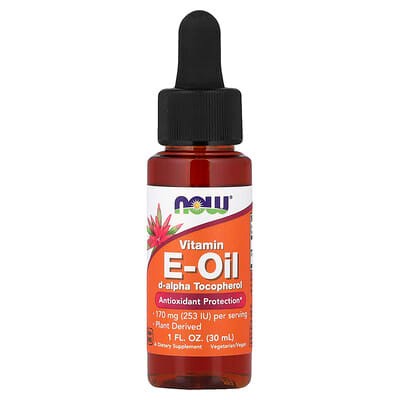

$12.70 $0.13 per serving


Product analysis
Natural E-Oil provides vitamin E in a clearly identified natural form at a favourable cost. Routine vitamin E use has no clear general role in cardiovascular support.
AI assessment of the formula, label and price. How scoring works
Nutrient Quality100
The natural vitamin E form has favourable form-quality support. Its clear identification allows a direct comparison with other vitamin E options.
Ingredient Transparency100
The vitamin E amount and form are both disclosed. That makes the serving straightforward to check and compare.
Value For Money100
The natural vitamin E form offers favourable value at the serving price. Price appeal does not establish a cardiovascular benefit.
Customer Satisfaction84
Customer ratings are generally positive across a large number of reviews. The feedback gives a broad picture of satisfaction without proving health benefits.
Product Focus30
The formula stays focused on vitamin E. Routine supplementation has no clear general cardiovascular-support role.
- Format
Liquid - Container
- 1 Liquid(s)
- Per serving
- $0.13
- Also available
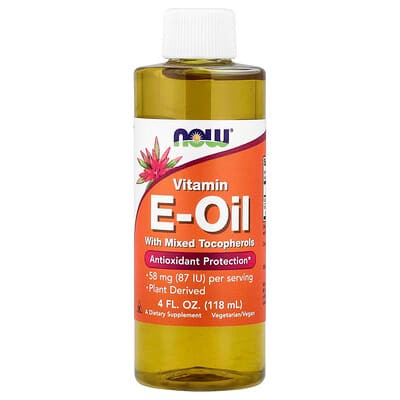 Natural E-Oil$11.60
- Customer rating
- 4.6 · 3,064 ratings
Goals

Impact
Situational effect
Vitamin E · 253 IU

Impact
Situational effect
Vitamin E · 253 IU
Natural E-Oil declares 253 IU of D-alpha-tocopherol, but its usable cardiovascular amount is not established in the supplied facts. The cited human evidence did not show lower major cardiovascular-event incidence from routine vitamin E supplementation, leaving it without a clear general cardiovascular-support role.
How this product is rated for Cardiovascular Support
Ingredient fit56
Vitamin E is the only identified active; its label amount is listed in IU, and the selected amount remains unresolved.
Goal fit
No other active ingredient adds a clear cardiovascular role in the supplied details.
Dose adequacy
The label lists 253 IU, but the selected amount for comparison is unknown.
Pathways0
The supplied cardiovascular context doesn't establish a pathway at the disclosed amount.
Depth
No cardiovascular pathway is established at a usable amount in the supplied facts.
Breadth
The supplied details show no second supported pathway.
Evidence0
Vitamin E has been studied, but the cited trial did not find lower major cardiovascular-event incidence from supplementation.
Evidence strength
The supplied Vitamin E evidence doesn't support routine event prevention.
Studied preparation
No effective cardiovascular amount is established for this disclosed preparation.
Formulation logic75
No partner ingredient or listed conflict is missing, but the label doesn't establish an effective cardiovascular amount.
Partner coverage
No required partner is missing; this doesn't add a cardiovascular role.
Conflicts
No listed stimulant or high-sodium conflict is present.
Effective doses
No effective dose is confirmed because the selected amount is unknown.

Impact
Situational effect
Vitamin E · 253 IU
Ingredients
| Ingredient | Amount per serving | Score |
|---|---|---|
Vitamin E (D-Alpha-Tocopherol) | 253 IU |
Vitamin E (D-Alpha-Tocopherol) · 253 IU OverallScore72
The serving contains 253 IU of vitamin E as natural d-alpha-tocopherol. The saved facts record no mixed tocopherols or tocotrienols.
How this ingredient is rated
Active Ingredient Quality & Bioavailability46
Vitamin E is natural d-alpha-tocopherol; no mixed tocopherols or tocotrienols are recorded in the saved facts.
Natural (d-alpha) vs. Synthetic (dl-alpha)
The d-alpha-tocopherol form is identified as natural vitamin E.
Mixed Tocopherol Isomer Diversity
No mixed tocopherols are recorded in the saved facts.
Tocotrienol Complex Inclusion
No tocotrienols are recorded in the saved facts.
Dose, Safety & Label Transparency85
The serving provides 253 IU, and the specific d-alpha-tocopherol form is identified.
Therapeutic Dosage Range
The serving provides 253 IU of vitamin E.
Label Transparency and Isomer Specificity
The form and serving amount are identified as d-alpha-tocopherol and 253 IU.
Value100
The whole product costs about $0.14 per serving and supplies natural vitamin E.
Cost per Natural-Form Therapeutic Serving
The whole product costs about $0.14 per serving and supplies natural vitamin E.
Alternative products
Report alternatives
Sources
Published studies used for the product analysis and the top-ranked studies for each ingredient and goal.
- Supplementation with vitamin E alone is associated with reduced myocardial infarction: a meta-analysis.
- Vitamin E ameliorates blood cholesterol level and alters gut microbiota composition: A randomized controlled trial.
- Effects of long-term vitamin E supplementation on cardiovascular events and cancer: a randomized controlled trial.
- Independent and combined associations of dietary antioxidant exposure with all-cause and cause-specific mortality in the general population.
- Tocotrienol rich fraction supplementation improved lipid profile and oxidative status in healthy older adults: A randomized controlled study.
- Antioxidant vitamin and mineral supplements for preventing age-related macular degeneration.
- Dietary n-3 Fatty Acid, α-Tocopherol, Zinc, vitamin D, vitamin C, and β-carotene are Associated with Age-Related Macular Degeneration in Japan.
- Dietary carotenoids, vitamins C and E, and risk of cataract in women: a prospective study.
- Long-term nutrient intake and 5-year change in nuclear lens opacities.
- Dietary intake of antioxidants and risk of age-related macular degeneration.
- Effects of delta-tocotrienol supplementation on Glycemic Control, oxidative stress, inflammatory biomarkers and miRNA expression in type 2 diabetes mellitus: A randomized control trial.
- Effect of vitamin E supplementation on serum C-reactive protein level: a meta-analysis of randomized controlled trials.
- Efficacy of Nutritional Interventions on Inflammatory Markers in Haemodialysis Patients: A Systematic Review and Limited Meta-Analysis.
- Vitamin E improves serum markers and histology in adults with metabolic dysfunction-associated steatotic liver disease: Systematic review and meta-analysis.
- Delta-tocotrienol supplementation improves biochemical markers of hepatocellular injury and steatosis in patients with nonalcoholic fatty liver disease: A randomized, placebo-controlled trial.