


Vitamin D Supportive
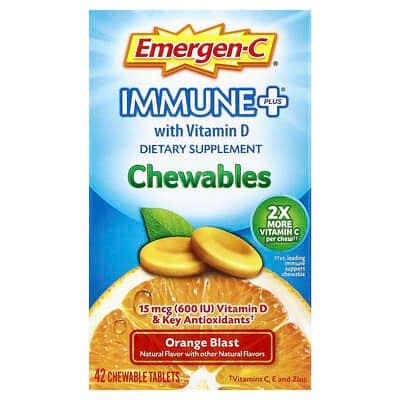
$10.00 $0.47 per serving
Product analysis
Emergen-C Immune+ Orange Blast Chewables support normal immune function with 1,000 mg vitamin C, 15 mcg vitamin D3 and 5 mg zinc per two chews. The chewable format is convenient and fairly priced for its vitamin C content, although each serving contains 4 g of added sugar.
AI assessment of the formula, label and price. How scoring works
Nutrient Quality44
The chewables use vitamin D3 and a clearly identified form of B6. The synthetic vitamin E and the less readily absorbed zinc oxide are weaker parts of the mix.
Ingredient Transparency67
The label makes the amounts in a two-chew serving easy to check. It identifies several nutrient forms and leaves the proportions of the vitamin C blend unclear.
Value For Money40
The chews are fairly priced for the amount of vitamin C they provide. Several added nutrients are relatively expensive for the amount you get, especially vitamin E, B6 and zinc.
Customer Satisfaction74
Customer ratings for the chewables are high, averaging 4.71 out of 5. The 225 ratings give a reasonable picture of how buyers received them.
Product Focus73
Normal immune support is the clearest use for the chewables, with vitamin C and D3 doing much of the work. Some of the same nutrients also support everyday nutrition and antioxidant defenses.
- Format
Tablet - Container
- 42 Tablet(s)
- Per serving
- $0.47
- Also available
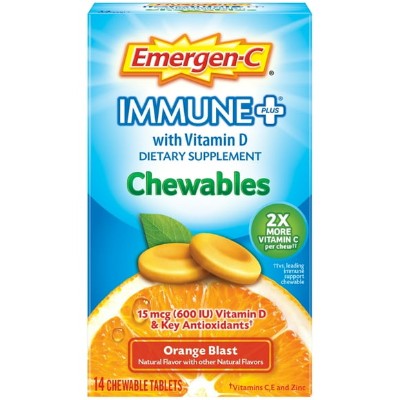 Immune+ Chewables Orange Blast$7.99
- Customer rating
- 4.7 · 240 ratings
Goals

Impact
Highest effect
Vitamin C · 1000 mgZinc · 5 mgVitamin D · 15 mcg
Immune+ Chewables Orange Blast centers its immune support on 1,000 mg vitamin C, which may modestly shorten colds with regular use. Vitamin D3 at 15 mcg adds normal immune-function support. Vitamin E at 13.5 mg contributes antioxidant protection relevant to immune cells.
Zinc Supportive
Vitamin C Supportive
Vitamin E Supportive

Impact
Highest effect
Vitamin D · 15 mcgZinc · 5 mgVitamin C · 1000 mg
Immune+ Chewables Orange Blast offers everyday nutrient support centered on antioxidant and immune functions. Vitamin C at 1000 mg leads that contribution, while 15 mcg of vitamin D supports bone and mineral metabolism. Vitamin B6 at 2 mg adds support for normal blood formation and nutrient metabolism when intake falls short.
Vitamin D Supportive
Zinc Supportive
Vitamin C Supportive

Impact
High effect
Vitamin D · 15 mcgVitamin E · 13.5 mgVitamin C · 1000 mg
Immune+ Chewables Orange Blast offers inflammation-related antioxidant support led by its 1000 mg vitamin C serving. Vitamin C contributes through oxidative-stress pathways, with the relevant inflammatory-marker benefit confined to people with elevated markers in the supplied findings. Vitamin D3 at 15 mcg adds a smaller immune-signalling contribution.
Vitamin D Supportive
Zinc Supportive
Vitamin C Supportive
Vitamin E Supportive

Impact
High effect
Zinc · 5 mgVitamin C · 1000 mgVitamin E · 13.5 mg
Immune+ Chewables Orange Blast supports skin mainly through nutrition, with the clearest added benefit when intake is inadequate. Its 1,000 mg of vitamin C supports normal collagen formation and deficiency-related wound healing. The 2 mg of vitamin B6 helps maintain normal skin when B6 intake is low.
Zinc Supportive
Vitamin C Supportive
Vitamin E Supportive
Biotin Supportive

Impact
High effect
Zinc · 5 mgVitamin E · 13.5 mgVitamin C · 1000 mg
Immune+ Chewables Orange Blast offers a narrow eye-health fit through 1,000 mg vitamin C for antioxidant support. The eye-outcome evidence for vitamin C concerns a defined combination in selected people with age-related macular degeneration, limiting its relevance to routine visual improvement.
Zinc Supportive
Vitamin D Disputed
Vitamin E Disputed
Vitamin C Disputed
Ingredients
| Ingredient | Amount per serving | Score |
|---|---|---|
Calories | 25 Calorie(s) | |
Total Carbohydrates | 5 Gram(s) | |
Vitamin C (Ascorbic Acid, Sodium Ascorbate) | 1000 mg | |
Vitamin D (Cholecalciferol) | 15 mcg | |
Vitamin E (DL-Alpha-Tocopheryl Acetate) | 13.5 mg | |
Vitamin B6 (Pyridoxine Hydrochloride) | 2 mg | |
Biotin | 150 mcg | |
Zinc (Zinc Oxide) | 5 mg | |
Sodium | 60 mg |
Vitamin C (Ascorbic Acid, Sodium Ascorbate) · 1000 mg OverallScore64
Emergen-C Immune+ Chewables Orange Blast supplies 1000 mg of vitamin C per serving, with a around the middle price of $0.48 per 1,000 mg of vitamin C, also the price per serving. Vitamin C comes from Ascorbic Acid and Sodium Ascorbate, in unspecified proportions. Sweeteners are listed. The serving price covers the full formula.
Alternative products
Report alternatives
Sources
Published studies used for the product analysis and the top-ranked studies for each ingredient and goal.
- Dietary intake and blood concentrations of antioxidants and the risk of cardiovascular disease, total cancer, and all-cause mortality: a systematic review and dose-response meta-analysis of prospective studies.
- Scientific Opinion on the substantiation of a health claim related to vitamin C and increasing non haem iron absorption pursuant to Article 14 of Regulation (EC) No 1924/2006.
- Vitamin C Depletion and All-Cause Mortality in Renal Transplant Recipients.
- Associations of Serum Biomarkers of Fruit and Vegetable Intake With the Risk of Cause-Specific Mortality and All-Cause Mortality: A National Prospective Cohort Study.
- Relation between plasma ascorbic acid and mortality in men and women in EPIC-Norfolk prospective study: a prospective population study. European Prospective Investigation into Cancer and Nutrition.
- Vitamin D supplementation for prevention of mortality in adults.
- Effect of vitamin D on gastrointestinal symptoms and health-related quality of life in irritable bowel syndrome patients: a randomized double-blind clinical trial.
- The impact of vitamin D administration on mortality in COVID-19 patients: a systematic review and meta-analysis of randomized controlled trials.
- Vitamin D Status and Mortality: A Systematic Review of Observational Studies.
- Meta-analysis of long-term vitamin D supplementation on overall mortality.
- Effectiveness of sodium bicarbonate and zinc chloride mouthwashes in the treatment of oral mucositis and quality of life in patients with cancer under chemotherapy.
- Zinc supplementation in young children with acute diarrhea in India.
- Associations of mortality with ocular disorders and an intervention of high-dose antioxidants and zinc in the Age-Related Eye Disease Study: AREDS Report No. 13.
- Effects of zinc and probiotic co-supplementation on inflammation, gastrointestinal symptoms, quality of life, and mood in irritable bowel syndrome patients.
- Effect of zinc sulfate supplementation on premenstrual syndrome and health-related quality of life: Clinical randomized controlled trial.
- Role of Oral Vitamin 'C' on Astigmatic Errors in Phacoemulsification.
- Ascorbic acid metabolites are involved in intraocular pressure control in the general population.
- Nutritional modulation of cataract.
- Dietary n-3 Fatty Acid, α-Tocopherol, Zinc, vitamin D, vitamin C, and β-carotene are Associated with Age-Related Macular Degeneration in Japan.
- Adherence to a Mediterranean diet, lifestyle and age-related macular degeneration: the Coimbra Eye Study - report 3.