


Iron Disputed
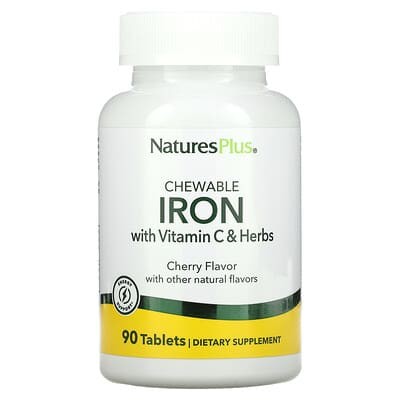
$16.53 $0.18 per serving
Product analysis
AI assessment of the formula, label and price. How scoring works
Nutrient Quality37
Ingredient Transparency88
Value For Money71
Customer Satisfaction88
Product Focus64
- Format
Tablet - Container
- 90 Tablet(s)
- Per serving
- $0.18
- Customer rating
- 4.7 · 5,804 ratings
Goals

Impact
High effect
Iron · 27 mgVitamin C · 100 mg
Chewable Iron Cherry Flavor is a targeted option for hair health when iron deficiency is contributing to shedding. Its 27 mg of iron supplies the nutrient needed to correct that gap. Vitamin C at 100 mg supports iron absorption, making it a practical companion to the iron.
Vitamin C Mixed

Impact
High effect
Iron · 27 mg
Chewable Iron Cherry Flavor fits energy needs chiefly when low iron contributes to fatigue. Iron at 27 mg is the leading ingredient for that purpose. Vitamin C at 100 mg adds nutritional support because its deficiency can also cause fatigue.
Iron Supportive

Impact
High effect
Vitamin C · 100 mg
Chewable Iron Cherry Flavor has a conditional immunity fit through its 27 mg iron serving. Iron can support immune-cell function when it fills a dietary gap that would otherwise impair that function. The chewable amino acid chelate form supplies the iron, with no separate immune advantage assigned to the form.
Vitamin C Supportive
Iron Supportive

Impact
Moderate effect
Iron · 27 mg
Chewable Iron Cherry Flavor has a conditional productivity role when low iron contributes to fatigue or poor concentration. Its 27 mg iron amino acid chelate declaration provides a clear nutrient amount. The practical connection is filling an iron gap, which cannot be established from the label alone.
Iron Supportive

Impact
Lower effect
Iron Adverse
Ingredients
| Ingredient | Amount per serving | Score |
|---|---|---|
Total Carbohydrates | 1 Gram(s) | |
Vitamin C (Ascorbic Acid) | 100 mg | |
Iron (Iron Amino Acid Chelate) | 27 mg |
Iron (Iron Amino Acid Chelate) · 27 mg OverallScore79
NaturesPlus Chewable Iron Cherry Flavor provides 27 mg of iron per serving and is inexpensive at $0.034 per 5 mg of iron; the full formula costs $0.18 per serving. Iron amino acid chelate is named, but the specific amino acid is not given. The serving contains 100 mg of vitamin C, which may support iron absorption.
Alternative products
Report alternatives
Sources
Published studies used for the product analysis and the top-ranked studies for each ingredient and goal.
- Large-dose intravenous ferric carboxymaltose injection for iron deficiency anemia in heavy uterine bleeding: a randomized, controlled trial.
- The Effect of Parenteral or Oral Iron Supplementation on Fatigue, Sleep, Quality of Life and Restless Legs Syndrome in Iron-Deficient Blood Donors: A Secondary Analysis of the IronWoMan RCT.
- Ferric carboxymaltose vs. oral iron in the treatment of pregnant women with iron deficiency anemia: an international, open-label, randomized controlled trial (FER-ASAP).
- Effect of iron therapy on fatigue symptoms in non-anaemic iron deficient women of reproductive age- A Randomized Controlled Trial.
- Intravenous iron isomaltoside treatment of women suffering from severe fatigue after postpartum hemorrhage.
- The Association Between Alopecia Areata and Iron Deficiency Anemia: A Large-Scale Population-Based Case-Control Study.
- Iron Deficiency and Nonscarring Alopecia in Women: Systematic Review and Meta-Analysis.
- Comparative Analysis of Postoperative Hair Loss and Micronutrient Deficiencies After One-Anastomosis Gastric Bypass Versus Sleeve Gastrectomy.
- Assessment of Serum Ferritin Levels in Female Patients With Telogen Effluvium.
- Diagnosis and treatment of female alopecia: Focusing on the iron deficiency-related alopecia.
- Management of hair loss associated with endocrine therapy in patients with breast cancer: an overview.
- Elucidating causal relationships of diet-derived circulating antioxidants and the risk of non-scarring alopecia: A Mendelian randomization study.
- Alterations of plasma antioxidants and mitochondrial DNA mutation in hair follicles of smokers.
- Removal of synthetic hair dye using formamidine sulfinic acid and other sulfinate precursors.
- A Zinc Sulphate-Resistant Acrodermatitis Enteropathica Patient with a Novel Mutation in SLC39A4 Gene.
- The immune response in iron-deficient children: Impaired cellular defense mechanisms with altered humoral components.
- The role of iron homeostasis in remodeling immune function and regulating inflammatory disease.
- Hepcidin--a peptide hormone at the interface of innate immunity and iron metabolism.
- Adaptive immunity and vaccination - iron in the spotlight.
- Buried Treasure: Evolutionary Perspectives on Microbial Iron Piracy.