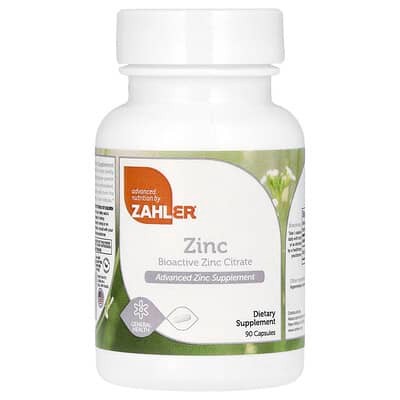

Zinc

Zinc

Format:Capsule Quantity: 90 Capsule(s) · 90 servings
Goals

About this product

A high zinc dose limits the appeal of this supplement for routine daily use. The 50 mg citrate serving exceeds the supplied adult upper intake level of 40 mg, making ongoing use a decision that needs supervision. A larger amount does not establish greater benefit for someone already getting enough zinc.

Its main nutritional role is helping fill low zinc intake and supporting normal immune and skin functions. Hair and testosterone findings also depend on inadequate zinc status. Neither the dose nor the citrate form establishes extra hair growth, a hormone increase or improved everyday vision in adequately nourished adults.

The label clearly identifies the zinc amount and source, and the serving cost is relatively low. Those strengths do not resolve the high-dose trade-off. Copper is not quantified in the supplied information, so the zinc-to-copper balance cannot be assessed.

Who is it for
  • Adults advised to use a higher zinc amount for a specific nutritional need.
Best for
  • A supervised zinc plan with a defined dose and duration.

Pros

  • Clearly states the zinc amount and citrate source.
  • Focused formula avoids an undisclosed active blend.
  • Relatively low cost per labeled serving.

Cons

  • High dose offers no established extra benefit at adequate zinc intake.
  • Copper amount and mineral balance are unverified.
  • Broad hair, eye and hormone claims exceed the supported nutritional role.

Warnings

  • The 50 mg serving exceeds the supplied 40 mg adult upper intake level; ongoing daily use needs supervision.
  • Adding other zinc supplements raises intake further without resolving the missing copper information.


Product analysis

87 out of 100

Advanced Nutrition by Zahler Zinc is a high-strength supplement for supporting normal immune function and addressing inadequate zinc intake. One capsule supplies 50 mg of zinc citrate, a well-absorbed form, but this amount exceeds the adult upper limit for long-term use and calls for professional supervision, particularly because the formula contains no copper.

AI assessment of the formula, label and price. How scoring works

Nutrient Quality80

Zinc citrate is a well-absorbed zinc source. The named form makes it a useful choice when a higher zinc amount is specifically needed.

Ingredient Transparency100

The zinc quantity and source are clearly stated. There is no blend to obscure the amount.

Value For Money99

It offers very good value for the amount of zinc provided. However, the high amount should be chosen for nutritional need rather than price alone.

Customer Satisfaction77

Customer feedback is very positive. Several hundred ratings support that impression.

Product Focus80

The single active ingredient has a clear nutritional role, especially for immune support. Benefits for other goals primarily depend on inadequate zinc status, and the large serving is not necessary for everyone.

Format
Capsule
Container
90 Capsule(s)
Per serving
$0.18
Customer rating
4.8 · 383 ratings
Report analysis

Goals

Eye Health
Impact
Highest effect
A Ingredient FitC PathwaysB+ EvidenceA Formulation Logic
Zinc · 50 mg

Zinc has a narrow eye-health fit and a material mineral-balance concern at its 50 mg serving. The zinc citrate supplies zinc relevant to retinal functions, but the supplied facts do not support standalone routine visual improvement. No copper is present, so continued high zinc intake can reduce copper status, with potential consequences for blood and optic-nerve health.

Study evidence
Zinc Supportive
Everyday Health
Impact
High effect
A Ingredient FitD+ PathwaysB- EvidenceA Formulation Logic
Zinc · 50 mg

Zinc is a focused option for filling a zinc intake gap. Its 50 mg of zinc supports normal immune and antioxidant functions. The high zinc amount without copper raises a concern about copper depletion.

Study evidence
Zinc Supportive
Testosterone Support
Impact
High effect
A Ingredient FitF PathwaysA EvidenceA Formulation Logic
Zinc · 50 mg

Zinc offers nutritional support when low zinc status affects testosterone, but the 50 mg serving comes without copper in the supplied facts, raising a zinc–copper balance concern. The declared amount is elemental zinc supplied as citrate. The strongest practical rationale is correcting a nutritional shortfall rather than choosing a larger amount for a larger hormone effect.

Study evidence
Zinc Disputed
Immunity
Impact
Highest effect
A Ingredient FitB+ PathwaysA+ EvidenceA Formulation Logic
Zinc · 50 mg

Zinc provides normal immune-function support, but its 50 mg serving without copper raises a practical concern for continued use. Zinc supports lymphocyte function and innate immune cells. High zinc without copper can deplete copper and reduce the neutrophils that help defend against infection.

Study evidence
Zinc Supportive
Hair Health
Impact
High effect
A Ingredient FitF PathwaysA+ EvidenceA+ Formulation Logic
Zinc · 50 mg

Zinc has a focused nutritional role when zinc deficiency contributes to hair shedding. The serving supplies 50 mg as zinc citrate. The hair-health value comes from addressing a deficiency, with no greater hair benefit implied by the large serving.

Study evidence
Zinc Supportive

Ingredients

IngredientAmount per servingScore
Zinc (Zinc Citrate)
50 mg 72
Gluten Free Adults 18–50 Kosher Dairy Free Vegetarian
Report overview
B+ Active Ingredient Quality & BioavailabilityD+ Dose, Safety & Label TransparencyA+ Value
Advanced Nutrition by Zahler Zinc is a zinc choice that calls for care because its serving exceeds the long-term adult upper limit. Each serving supplies 50 mg of zinc as Zinc Citrate. The amount exceeds the adult upper limit for long-term daily use without supervision. The zinc offers good value at $0.036 per 10 mg; the full formula costs $0.18 per serving.
Report alternatives

Sources

Published studies used for the product analysis and the top-ranked studies for each ingredient and goal.

  1. Effectiveness of sodium bicarbonate and zinc chloride mouthwashes in the treatment of oral mucositis and quality of life in patients with cancer under chemotherapy.
    Mohammadi F; Oshvandi K; Kamallan SR; Khazaei S; Ranjbar H; Ahmadi-Motamayel F; Gillespie M; Jenabi E; Vafaei SY · Nursing open · 2022
    Randomized trial144 participantsEveryday Health forZinc
  2. Zinc supplementation in young children with acute diarrhea in India.
    Sazawal S; Black RE; Bhan MK; Bhandari N; Sinha A; Jalla S · The New England journal of medicine · 1995
    Randomized trial937 participantsEveryday Health forZinc
  3. Associations of mortality with ocular disorders and an intervention of high-dose antioxidants and zinc in the Age-Related Eye Disease Study: AREDS Report No. 13.
    Clemons TE; Kurinij N; Sperduto RD; AREDS Research Group · Archives of ophthalmology (Chicago, Ill. : 1960) · 2004
    Randomized trial4,753 participantsEveryday Health forZinc
  4. Effects of zinc and probiotic co-supplementation on inflammation, gastrointestinal symptoms, quality of life, and mood in irritable bowel syndrome patients.
    Rezazadegan M; Soheilipour M; Amani R · Scientific reports · 2026
    Randomized trial84 participantsEveryday Health forZinc
  5. Effect of zinc sulfate supplementation on premenstrual syndrome and health-related quality of life: Clinical randomized controlled trial.
    Siahbazi S; Behboudi-Gandevani S; Moghaddam-Banaem L; Montazeri A · The journal of obstetrics and gynaecology research · 2018
    Randomized trial142 participantsEveryday Health forZinc
  6. Antioxidant vitamin and mineral supplements for age-related macular degeneration.
    Evans JR · The Cochrane database of systematic reviews · 2002
    Systematic review170 participants7 studies pooledEye Health forZinc
  7. Antioxidant vitamin and mineral supplements for slowing the progression of age-related macular degeneration.
    Evans JR; Lawrenson JG · The Cochrane database of systematic reviews · 2023
    Meta-analysis3,790 participants5 studies pooledEye Health forZinc
  8. Oral zinc in macular degeneration.
    Newsome DA; Swartz M; Leone NC; Elston RC; Miller E · Archives of ophthalmology (Chicago, Ill. : 1960) · 1988
    Randomized trial151 participantsEye Health forZinc
  9. A randomized, placebo-controlled, clinical trial of high-dose supplementation with vitamins C and E, beta carotene, and zinc for age-related macular degeneration and vision loss: AREDS report no. 8.
    Age-Related Eye Disease Study Research Group · Archives of ophthalmology (Chicago, Ill. : 1960) · 2001
    Randomized trial3,640 participantsEye Health forZinc
  10. Effect of vitamin A and zinc supplementation on the nutriture of children in Northeast Thailand.
    Udomkesmalee E; Dhanamitta S; Sirisinha S; Charoenkiatkul S; Tuntipopipat S; Banjong O; Rojroongwasinkul N; Kramer TR; Smith JC · The American journal of clinical nutrition · 1992
    Randomized trial133 participantsEye Health forZinc
  11. The effects of minoxidil, 1% pyrithione zinc and a combination of both on hair density: a randomized controlled trial.
    Berger RS; Fu JL; Smiles KA; Turner CB; Schnell BM; Werchowski KM; Lammers KM · The British journal of dermatology · 2003
    Randomized trial200 participantsHair Health forZinc
  12. Incubatory environment of the scalp impacts pre-emergent hair to affect post-emergent hair cuticle integrity.
    Schwartz JR; Henry JP; Kerr KM; Flagler MJ; Page SH; Redman-Furey N · Journal of cosmetic dermatology · 2018
    Randomized trialHair Health forZinc
  13. A comparison of hair quality and cosmetic acceptance following the use of two anti-dandruff shampoos.
    Draelos ZD; Kenneally DC; Hodges LT; Billhimer W; Copas M; Margraf C · The journal of investigative dermatology. Symposium proceedings · 2006
    Randomized trial40 participantsHair Health forZinc
  14. BMI and levels of zinc, copper in hair, serum and urine of Turkish male patients with androgenetic alopecia.
    Ozturk P; Kurutas E; Ataseven A; Dokur N; Gumusalan Y; Gorur A; Tamer L; Inaloz S · Journal of trace elements in medicine and biology : organ of the Society for Minerals and Trace Elements (GMS) · 2015
    Case-control study216 participantsHair Health forZinc
  15. Analysis of serum zinc and copper concentrations in hair loss.
    Kil MS; Kim CW; Kim SS · Annals of dermatology · 2013
    Case-control study342 participantsHair Health forZinc
  16. Nutrient supplementation for prevention of viral respiratory tract infections in healthy subjects: A systematic review and meta-analysis.
    Vlieg-Boerstra B; de Jong N; Meyer R; Agostoni C; De Cosmi V; Grimshaw K; Milani GP; Muraro A; Oude Elberink H; Pali-Schöll I; Roduit C; Sasaki M; Skypala I; Sokolowska M; van Splunter M; Untersmayr E; Venter C; O'Mahony L; Nwaru BI · Allergy · 2022
    Meta-analysis199,055 participants115 studies pooledImmunity forZinc
  17. Zinc supplementation reduces the incidence of acute lower respiratory infections in infants and preschool children: a double-blind, controlled trial.
    Sazawal S; Black RE; Jalla S; Mazumdar S; Sinha A; Bhan MK · Pediatrics · 1998
    Randomized trial609 participantsImmunity forZinc
  18. A randomized controlled trial of zinc supplementation in the treatment of acute respiratory tract infection in Thai children.
    Rerksuppaphol S; Rerksuppaphol L · Pediatric reports · 2020
    Randomized trial64 participantsImmunity forZinc
  19. The effect of zinc and vitamin A supplementation on immune response in an older population.
    Fortes C; Forastiere F; Agabiti N; Fano V; Pacifici R; Virgili F; Piras G; Guidi L; Bartoloni C; Tricerri A; Zuccaro P; Ebrahim S; Perucci CA · Journal of the American Geriatrics Society · 1998
    Randomized trial136 participantsImmunity forZinc
  20. The role of specific nutrients in preventing immune system and blood cell disorders: an umbrella review.
    Vecchietti A; Strano P; Minutolo G; Grieco V; Cappuccio G; Granvillano G; Confalonieri L; Briganti GL; Raso E; Chimienti M; Pellegrini M; Mercogliano M; Spatari G; Lugli C; Urbano T; Lorenzon A · Journal of preventive medicine and hygiene · 2026
    Systematic review13 studies pooledImmunity forZinc