
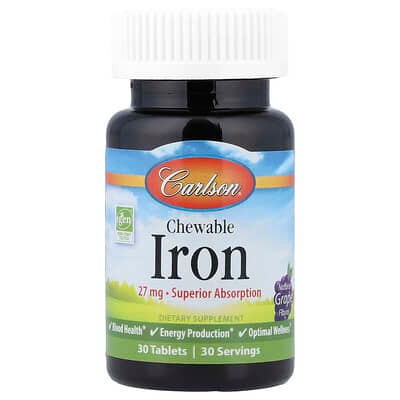
Chewable Iron 27 mg Natural Grape Flavor

Goals
$5.87 $0.19 per serving


Product analysis
Chewable Iron 27 mg Natural Grape Flavor offers an option for addressing low iron, which may help related tiredness or hair shedding. The iron content also compares favorably for the serving price.
AI assessment of the formula, label and price. How scoring works
Nutrient Quality36
Iron is identified as a glycinate form, but that alone does not establish its absorption quality. The other nutrient detail is too general to support a fuller quality comparison.
Ingredient Transparency75
The ingredient amounts are disclosed, making serving comparisons easier. Iron is the only ingredient with a specific form identified.
Value For Money72
The serving price compares favorably for its iron content. The carbohydrate component cannot be meaningfully judged for value.
Customer Satisfaction85
Customer ratings are strongly favorable across a substantial number of reviews. These ratings describe satisfaction without showing who will benefit from iron.
Product Focus73
Iron gives the supplement a clear purpose for people whose iron intake or stores are low. Improvements in energy, concentration or shedding depend on low iron contributing to the problem.
- Format
Tablet - Container
- 30 Tablet(s)
- Per serving
- $0.19
- Also available
 Chewable Iron 27 mg Natural Grape Flavor$11.48
- Customer rating
- 4.7 · 1,726 ratings
Goals

Impact
High effect
Iron · 27 mg

Impact
High effect
Iron · 27 mg

Impact
High effect
Iron · 27 mg
Ingredients
| Ingredient | Amount per serving | Score |
|---|---|---|
Calories | 5 Calorie(s) | |
Total Carbohydrate | 1 Gram(s) | |
Iron (Iron Glycinate Chelate) | 27 mg |
Iron (Iron Glycinate Chelate) · 27 mg OverallScore91
Alternative products
Report alternatives
Sources
Published studies used for the product analysis and the top-ranked studies for each ingredient and goal.
- Large-dose intravenous ferric carboxymaltose injection for iron deficiency anemia in heavy uterine bleeding: a randomized, controlled trial.
- The Effect of Parenteral or Oral Iron Supplementation on Fatigue, Sleep, Quality of Life and Restless Legs Syndrome in Iron-Deficient Blood Donors: A Secondary Analysis of the IronWoMan RCT.
- Ferric carboxymaltose vs. oral iron in the treatment of pregnant women with iron deficiency anemia: an international, open-label, randomized controlled trial (FER-ASAP).
- Effect of iron therapy on fatigue symptoms in non-anaemic iron deficient women of reproductive age- A Randomized Controlled Trial.
- Intravenous iron isomaltoside treatment of women suffering from severe fatigue after postpartum hemorrhage.
- The Association Between Alopecia Areata and Iron Deficiency Anemia: A Large-Scale Population-Based Case-Control Study.
- Iron Deficiency and Nonscarring Alopecia in Women: Systematic Review and Meta-Analysis.
- Comparative Analysis of Postoperative Hair Loss and Micronutrient Deficiencies After One-Anastomosis Gastric Bypass Versus Sleeve Gastrectomy.
- Assessment of Serum Ferritin Levels in Female Patients With Telogen Effluvium.
- Diagnosis and treatment of female alopecia: Focusing on the iron deficiency-related alopecia.
- Effects of daily iron supplementation in primary-school-aged children: systematic review and meta-analysis of randomized controlled trials.
- Consumption of Iron-Biofortified Beans Positively Affects Cognitive Performance in 18- to 27-Year-Old Rwandan Female College Students in an 18-Week Randomized Controlled Efficacy Trial.
- Functional consequences of iron supplementation in iron-deficient female cotton mill workers in Beijing, China.
- The Effect of Iron-Fortified Lentils on Blood and Cognitive Status among Adolescent Girls in Bangladesh.
- Daily iron supplementation for improving anaemia, iron status and health in menstruating women.