
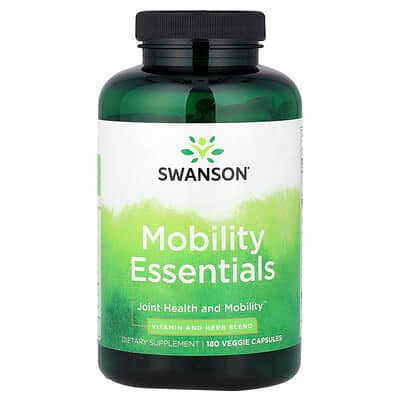

$21.19 $0.35 per serving


Product analysis
Mobility Essentials supplies nutrients that support normal collagen formation and bone structure. Several ingredient forms are not identified, making the wider combination harder to compare for quality.
AI assessment of the formula, label and price. How scoring works
Nutrient Quality46
The zinc and manganese forms support a favorable view of their quality. Many other ingredients lack clear form details, leaving much of the combination harder to judge.
Ingredient Transparency61
Individual amounts are stated, making serving comparisons easier. Many forms and the detailed glucosamine composition are not disclosed, leaving gaps in understanding the formula.
Value For Money53
Value is mixed, with manganese favorable and zinc, bromelain and curcumin offering more moderate value. Value for several other ingredients is unclear, limiting a complete comparison of the combination.
Customer Satisfaction76
Customer ratings are very positive. The modest review pool gives a narrower picture of satisfaction than a much larger one.
Product Focus48
The clearest nutritional roles involve collagen formation, normal immune function and support when nutrient intake is low. The broad combination does not establish added hair growth, digestive relief or general wellness benefits.
- Format
Capsule - Container
- 180 Capsule(s)
- Per serving
- $0.35
- Customer rating
- 4.8 · 208 ratings
Goals

Impact
High effect
Manganese · 5 mgZinc · 15 mgVitamin C · 250 mg
Vitamin C helps form the collagen framework of bone, with meaningful benefit when intake is deficient rather than established extra benefit above adequacy. Zinc and manganese have supporting roles in bone-forming processes, but the supplied evidence does not isolate routine skeletal benefit from either supplement. The product’s bone-related coverage is concentrated on the bone matrix rather than mineral supply.
How this product is rated for Bone Health
Ingredient fit59
Vitamin C, zinc and manganese account for the bone-related findings in a broader mobility formula.
Goal fit
Vitamin C, zinc and manganese account for the bone-related findings in a broader mobility formula.
Dose adequacy
All three retained nutrients meet the saved amount threshold; this does not establish independent skeletal efficacy for zinc or manganese.
Pathways60
The strongest retained connection is collagen matrix formation. Coverage is concentrated on the collagen framework alone.
Depth
The saved finding is strongest for collagen matrix formation, reflecting the retained ingredients and their amounts.
Breadth
The retained coverage extends to the collagen framework alone.
Evidence98
Zinc leads the saved finding, but available evidence does not isolate its independent skeletal benefit.
Evidence strength
Zinc leads the saved finding, but available evidence does not isolate its independent skeletal benefit.
Studied preparation
The retained nutrient preparations satisfy the saved criteria, without proving additional bone benefit from their combination.
Formulation logic100
The retained nutrients have no unmet partner requirement in the saved result.
Partner coverage
The retained nutrients have no unmet partner requirement in the saved result.
Conflicts
No configured ingredient conflict was identified in the supplied facts.
Effective doses
All retained nutrients meet the saved amount threshold, which does not prove skeletal benefit for each ingredient.

Impact
Moderate effect
Vitamin C · 250 mgZinc · 15 mg
Vitamin C at 250 mg and zinc at 15 mg provide the clearest support for normal immune-cell function and antioxidant defenses. Green tea and bromelain have more limited, preparation-dependent human findings, while the curcumin benefit depends on matching a specifically studied preparation. A broad infection-prevention effect remains uncertain.
How this product is rated for Immunity
Ingredient fit47
Relevant immune ingredients are present alongside ingredients serving other needs. Small or unresolved relevant amounts limit the contribution.
Goal fit
Relevant immune ingredients are present alongside ingredients serving other needs.
Dose adequacy
Small or unresolved relevant amounts limit the contribution.
Pathways40
Lymphocyte function and immune regulation is the strongest area of support in the saved findings. The saved findings show meaningful coverage of 1 aspect of immune support, with less coverage elsewhere.
Depth
Lymphocyte function and immune regulation is the strongest area of support in the saved findings.
Breadth
The saved findings show meaningful coverage of 1 aspect of immune support, with less coverage elsewhere.
Evidence94
Vitamin C provides the strongest relevant evidence at the assessed amount; normal nutritional function is distinct from preventing infections. Some qualifying ingredients differ from preparations represented in the supplied evidence.
Evidence strength
Vitamin C provides the strongest relevant evidence at the assessed amount; normal nutritional function is distinct from preventing infections.
Studied preparation
Some qualifying ingredients differ from preparations represented in the supplied evidence.
Formulation logic100
The assessed ingredients can contribute on their own or have their required partner present. No ingredient conflicts were identified in the saved assessment. All assessed ingredients met the saved minimum amount criterion.
Partner coverage
The assessed ingredients can contribute on their own or have their required partner present.
Conflicts
No ingredient conflicts were identified in the saved assessment.
Effective doses
All assessed ingredients met the saved minimum amount criterion.

Impact
Moderate effect
Curcumin · 50 mgZinc · 15 mgVitamin C · 250 mg
Vitamin C and zinc support normal immune and antioxidant functions. Bromelain and curcumin have evidence tied to narrower conditions and preparations, so their contribution to routine everyday wellness is less certain.
How this product is rated for Everyday Health
Ingredient fit41
The relevant ingredients share the formula with ingredients aimed at other uses, giving it a broader focus. The declared amounts provide partial coverage of the amounts used in the saved assessment.
Goal fit
The relevant ingredients share the formula with ingredients aimed at other uses, giving it a broader focus.
Dose adequacy
The declared amounts provide partial coverage of the amounts used in the saved assessment.
Pathways40
The strongest saved contribution concerns antioxidant and immune defence, with substantial coverage. One of the three target pathways reaches substantial coverage.
Depth
The strongest saved contribution concerns antioxidant and immune defence, with substantial coverage.
Breadth
One of the three target pathways reaches substantial coverage.
Evidence74
Vitamin C supplies the strongest saved evidence among ingredients at an assessed effective amount, while relevance to broad everyday health remains conditional. The saved findings recognize the assessed effective ingredients as studied preparations.
Evidence strength
Vitamin C supplies the strongest saved evidence among ingredients at an assessed effective amount, while relevance to broad everyday health remains conditional.
Studied preparation
The saved findings recognize the assessed effective ingredients as studied preparations.
Formulation logic100
The credited ingredients can contribute independently or have their required partners. No configured ingredient conflicts were recorded in the saved findings. All credited ingredients meet the saved minimum amount.
Partner coverage
The credited ingredients can contribute independently or have their required partners.
Conflicts
No configured ingredient conflicts were recorded in the saved findings.
Effective doses
All credited ingredients meet the saved minimum amount.

Impact
Moderate effect
Zinc · 15 mgBromelain · 250 mgCurcumin · 50 mg
Bromelain is a protein-digesting enzyme, while 15 mg of zinc supports normal nutrition and intestinal maintenance when intake is low. Digestive symptom evidence for isolated bromelain is limited. Curcumin at 50 mg contributes little at the supplied comparison amounts.
How this product is rated for Gut Health
Ingredient fit43
Only part of the broader formula is directly relevant to digestive support. The assessed amounts provide a partial comparison exposure.
Goal fit
Only part of the broader formula is directly relevant to digestive support.
Dose adequacy
The assessed amounts provide a partial comparison exposure.
Pathways45
The main assessed contribution concerns digestive enzyme, acid and bile support. Substantial coverage is limited to one assessed area.
Depth
The main assessed contribution concerns digestive enzyme, acid and bile support.
Breadth
Substantial coverage is limited to one assessed area.
Evidence84
Zinc provides the strongest evidence contribution among ingredients at a qualifying amount. The support remains specific to its studied uses. The qualifying ingredients meet the saved preparation criteria; that match does not promise symptom relief.
Evidence strength
Zinc provides the strongest evidence contribution among ingredients at a qualifying amount. The support remains specific to its studied uses.
Studied preparation
The qualifying ingredients meet the saved preparation criteria; that match does not promise symptom relief.
Formulation logic100
The assessed ingredients can contribute independently or have their required partners. No conflict was triggered by the specific ingredient and amount checks performed.
Partner coverage
The assessed ingredients can contribute independently or have their required partners.
Conflicts
No conflict was triggered by the specific ingredient and amount checks performed.
Effective doses
2 of 2 assessed ingredients meet the saved minimum amount comparison.

Impact
Moderate effect
Zinc · 15 mgVitamin C · 250 mg
Zinc may help with diffuse shedding caused by low zinc intake. Vitamin C helps normal collagen formation and iron absorption, but those roles don't mean it independently regrows hair. Having both nutrients together doesn't justify an extra hair-growth benefit, and zinc's usefulness depends on whether a shortage is contributing to the problem.
How this product is rated for Hair Health
Ingredient fit41
Zinc may help when low intake contributes to shedding.
Goal fit
Zinc may help when low intake contributes to shedding.
Dose adequacy
Zinc supplies 15 mg per serving; the amount alone doesn't predict hair growth.
Pathways40
Nutrient functions and hair-related mechanisms do not by themselves demonstrate regrowth or improvement across different causes of hair loss.
Depth
Antioxidant-related ingredients are present, but their normal roles do not by themselves show hair regrowth.
Breadth
The ingredient roles are concentrated rather than showing broad effects across different causes of hair loss.
Evidence98
Zinc may help when low intake contributes to shedding. Ingredient form and the cause of hair loss affect how relevant a possible benefit is.
Evidence strength
Zinc may help when low intake contributes to shedding. Benefits when nutrient intake is adequate are unclear.
Studied preparation
The ingredient forms are identifiable for comparison; this does not imply that they will regrow hair.
Formulation logic100
No particular ingredient conflict or missing required partner is identified. Ingredient amounts alone do not show that the combination improves hair growth.
Partner coverage
No required ingredient partner is identified as missing; this does not imply an added benefit from combining ingredients.
Conflicts
No particular ingredient conflict is identified.
Effective doses
The relevant ingredient amounts are available for comparison, though those amounts alone do not predict hair improvement.

Impact
Lower effect
Zinc · 15 mg

Impact
Moderate effect
Zinc · 15 mgVitamin C · 250 mgGreen Tea · 150 mg
Vitamin C supports normal collagen synthesis, and zinc supports skin repair, with benefit most plausible when nutrient intake is inadequate. Green tea's oral skin findings are mixed, and its generic extract amount cannot be equated with the reviewed catechin exposure.
How this product is rated for Skin Health
Ingredient fit43
Only part of the formula directly contributes to the assessed skin-health goal. Relevant quantities provide partial support, with smaller or unresolved amounts limiting the finding.
Goal fit
Only part of the formula directly contributes to the assessed skin-health goal.
Dose adequacy
Relevant quantities provide partial support, with smaller or unresolved amounts limiting the finding.
Pathways12
The strongest saved connection is to the skin's collagen and connective-tissue structure. The findings do not show substantial coverage across several distinct skin-health processes.
Depth
The strongest saved connection is to the skin's collagen and connective-tissue structure.
Breadth
The findings do not show substantial coverage across several distinct skin-health processes.
Evidence100
Vitamin C supplies the strongest evidence contribution in the saved findings, with the supplied limitations on routine skin benefits retained. The saved findings recognize the relevant preparation at its assessed amount.
Evidence strength
Vitamin C supplies the strongest evidence contribution in the saved findings, with the supplied limitations on routine skin benefits retained.
Studied preparation
The saved findings recognize the relevant preparation at its assessed amount.
Formulation logic100
No listed formulation conflict was matched in the saved findings. All ingredients counted in this finding meet the saved minimum amount benchmark.
Partner coverage
No required ingredient partner is missing in the saved findings.
Conflicts
No listed formulation conflict was matched in the saved findings.
Effective doses
All ingredients counted in this finding meet the saved minimum amount benchmark.
Ingredients
| Ingredient | Amount per serving | Score |
|---|---|---|
Vitamin C (Ascorbic Acid) | 250 mg | |
Zinc (TRAACS Zinc Glycinate Chelate) | 15 mg | |
Manganese (Manganese Glycinate) | 5 mg | |
TruFlex Glucosamine Sulfate (Glucosamine Sulfate 2KCl, Shellfish) | 725 mg | |
TruFlex MSM | 300 mg | |
Boswellin Boswellia serrata (Boswellic Acid) | 250 mg | |
Bromelain | 250 mg | |
TruFlex Chondroitin Sulfate | 200 mg | |
Green Tea | 150 mg | |
White Willow | 100 mg | |
Curcumin | 50 mg | |
Devil’s Claw | 25 mg | |
Quercetin | 25 mg | |
Sea Cucumber | 25 mg |
Manganese (Manganese Glycinate) · 5 mg OverallScore84
A serving provides 5 mg of manganese. The cost per serving is moderate. The source is Manganese Glycinate.
How this ingredient is rated
Active Ingredient Quality & Bioavailability70
The source is Manganese Glycinate.
Manganese Chemical Form
The source is Manganese Glycinate.
Dose, Safety & Label Transparency100
A serving provides 5 mg of manganese. The amount and source are stated.
Manganese Dosage Efficacy & Safety
A serving provides 5 mg of manganese.
Elemental Weight Disclosure
The manganese amount and source are stated.
Value80
The cost per serving is moderate.
Price per Serving vs. Median
The cost per serving is moderate.
Zinc (TRAACS Zinc Glycinate Chelate) · 15 mg OverallScore76
The 15 mg of zinc per serving is a useful amount, with a moderate cost per serving. It comes as Zinc Bisglycinate. The copper amount is unknown, so the zinc-to-copper balance is unclear.
How this ingredient is rated
Active Ingredient Quality & Bioavailability100
The zinc comes as Zinc Bisglycinate.
Zinc Form Bioavailability
The zinc comes as Zinc Bisglycinate.
Dose, Safety & Label Transparency61
The label gives the elemental zinc amount and its source. The copper amount is unknown, leaving the mineral balance unclear.
Elemental Dose Transparency
The label states 15 mg elemental zinc and names Zinc Bisglycinate as its source.
Zinc Dosage Safety & Effectiveness
The serving provides 15 mg of zinc, an amount suited to maintenance.
Zinc-to-Copper Mineral Balance
The copper amount is unknown, so the zinc-to-copper ratio cannot be determined.
Value60
The cost per serving is moderate.
Price Per Serving Efficiency
The cost per serving is moderate.
Bromelain · 250 mg OverallScore74
The serving declares 250 mg of bromelain, with a moderate whole-product cost relative to its amount. Activity is declared as 2400 GDU per gram. The botanical source is unspecified.
How this ingredient is rated
Composition and Label Disclosure100
Activity is declared as 2400 GDU per gram.
Enzyme Activity Disclosure
Activity is declared as 2400 GDU per gram.
Declared GDU per Gram
The declared activity concentration is 2400 GDU per gram.
Composition and Label Disclosure60
The serving declares 250 mg of bromelain. The botanical source is unspecified.
Declared Bromelain Mass
The declared bromelain amount is 250 mg per serving.
Botanical Source Disclosure
The botanical source is unspecified.
Commercial Price and Usability50
The whole-product cost per 500 mg of declared bromelain is moderate.
Cost per 500 mg Declared Bromelain
The whole-product cost per 500 mg of declared bromelain is moderate.
Alternative products
Report alternatives
Sources
Published studies used for the product analysis and the top-ranked studies for each ingredient and goal.
- Effects of Curcumin on Bone Loss and Biochemical Markers of Bone Turnover in Patients with Spinal Cord Injury.
- The Effect of Selected Herbal Medicines on Bone Turnover Markers: A Systematic Review and Meta-Analysis.
- Efficacy of nanomicelle curcumin, Nigella sativa oil, and their combination on bone turnover markers and their safety in postmenopausal women with primary osteoporosis and osteopenia: A triple-blind randomized controlled trial.
- The Effect of Curcumin on Postmenopausal Symptoms: A Systematic Review Based on Randomized Controlled Trials.
- Effects of a curcumin-based supplementation in asymptomatic subjects with low bone density: a preliminary 24-week supplement study.
- Risk of Environmental Chemicals on Bone Fractures Is Independent of Low Bone Mass in US Adults: Insights from 2017 to 2018 NHANES.
- The Manganese-Bone Connection: Investigating the Role of Manganese in Bone Health.
- Associations of multiple metals with bone mineral density: A population-based study in US adults.
- Sex-specific associations of urinary mixed-metal concentrations with femoral bone mineral density among older people: an NHANES (2017-2020) analysis.
- Relationship between blood manganese and bone mineral density and bone mineral content in adults: A population-based cross-sectional study.
- Can Dietary Intake of Vitamin C-Oriented Foods Reduce the Risk of Osteoporosis, Fracture, and BMD Loss? Systematic Review With Meta-Analyses of Recent Studies.
- Dietary vitamin C intake and the risk of hip fracture: a dose-response meta-analysis.
- Smoking, antioxidant vitamins, and the risk of hip fracture.
- Micronutrients and the risk of hip fracture: Case-control study.
- Favorable effect of dietary vitamin C on bone mineral density in postmenopausal women (KNHANES IV, 2009): discrepancies regarding skeletal sites, age, and vitamin D status.
- Increased incidence of fractures in middle-aged and elderly men with low intakes of phosphorus and zinc.
- Zinc Supplementation Increases Procollagen Type 1 Amino-Terminal Propeptide in Premenarcheal Girls: A Randomized Controlled Trial.
- Randomized controlled trial of prenatal zinc supplementation and fetal bone growth.
- The effects of zinc supplementation on serum zinc, alkaline phosphatase activity and fracture healing of bones.
- Is Zinc an Important Trace Element on Bone-Related Diseases and Complications? A Meta-analysis and Systematic Review from Serum Level, Dietary Intake, and Supplementation Aspects.