
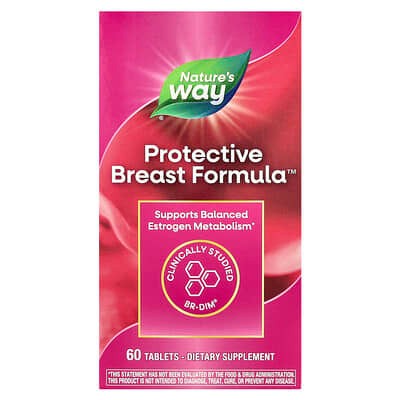

$52.94 $1.76 per serving


Product analysis
Protective Breast Formula combines green tea and turmeric, with antioxidant compounds but uncertain everyday benefits. Its extract descriptions do not establish a close match to the preparations behind particular reported effects.
AI assessment of the formula, label and price. How scoring works
Nutrient Quality38
The quality of the named extracts and nutrient forms cannot be confirmed. Several additional preparations are unspecified, leaving much of the combination uncertain.
Ingredient Transparency66
All listed amounts and some forms are disclosed. Missing forms and the proportions of combined components make the full preparation harder to compare.
Value For Money33
Green tea and maitake are costly in their respective comparisons. Usable comparisons for several other ingredients are unavailable, limiting a complete view of value.
Customer Satisfaction75
Customer ratings are very positive, though the review pool is relatively small. Satisfaction does not establish the formula's skin, inflammation or aging benefits.
Product Focus65
Green tea and turmeric provide the clearest connection to antioxidant and inflammation-related processes. Mixed findings and preparation differences limit expectations for skin protection, metabolism or longer life.
- Format
Tablet - Container
- 60 Tablet(s)
- Per serving
- $1.76
- Customer rating
- 4.8 · 201 ratings
Goals

Impact
High effect
Vitamin D · 10 mcgGreen Tea · 500 mg


Impact
High effect
Green Tea · 500 mg

Impact
High effect
Vitamin D · 10 mcgGreen Tea · 500 mg
Ingredients
| Ingredient | Amount per serving | Score |
|---|---|---|
Calories | 10 Calorie(s) | |
Total Carbohydrates | 2 Gram(s) | |
Vitamin D3 (Cholecalciferol) | 10 mcg | |
Calcium (Calcium D-Glucarate) | 24 mg | |
Sodium | 10 mg | |
Turmeric rhizome extract (Curcuminoids) | 1 Gram(s) | |
Green Tea leaf extract (Epigallocatechin Gallate, Polyphenols) | 500 mg | |
Calcium D-Glucarate | 200 mg | |
Indolplex Diindolylmethane (BR-DIM) Complex | 120 mg | |
Grape seed extract (Polyphenols, Procyanidolic Oligomers) | 100 mg | |
Maitake Mushroom extract (pure D-Fraction) | 90 mg |
Maitake Mushroom (pure D-Fraction) · 90 mg OverallScore42
The serving lists 90 mg of Maitake Mushroom Extract. The cost per serving is high. The available information gives no numeric beta-glucan or polysaccharide amount, so the active marker content is unclear.
How this ingredient is rated
Composition and Label Disclosure0
The available information gives no numeric beta-glucan or polysaccharide amount, so the active marker content is unclear.
Named Maitake Marker Disclosure
The available information gives no numeric beta-glucan or polysaccharide amount, so the active marker content is unclear.
Composition and Label Disclosure100
The serving lists 90 mg of Maitake Mushroom Extract.
Individual Preparation Amount Disclosure
The serving lists 90 mg of Maitake Mushroom Extract.
Commercial Price and Usability10
The cost per serving is high.
Commercial Price per Labeled Serving
The cost per serving is high.
Green Tea (Epigallocatechin Gallate, Polyphenols) · 500 mg OverallScore45
The serving lists 500 mg of green tea leaf extract, with a high whole-product cost relative to its stated EGCG. It declares 55% EGCG and 80% polyphenols. The total product caffeine amount is unknown.
How this ingredient is rated
Composition and Label Disclosure100
The extract states 55% EGCG and 80% polyphenols.
Declared Green Tea Marker Concentration
It declares 55% EGCG and 80% polyphenols.
Composition and Label Disclosure0
The whole-product caffeine amount is unclear.
Whole-Product Caffeine Disclosure
The whole-product caffeine amount is not stated in the available information.
Commercial Price and Usability25
The whole-product price is high relative to the stated EGCG amount.
Cost per 200 mg Declared EGCG
The whole-product cost per 200 mg of stated EGCG is high.
Alternative products
Report alternatives
Sources
Published studies used for the product analysis and the top-ranked studies for each ingredient and goal.
- The effects of green tea on acne vulgaris: A systematic review and meta-analysis of randomized clinical trials.
- Green Tea Catechin Association with Ultraviolet Radiation-Induced Erythema: A Systematic Review and Meta-Analysis.
- Efficacy of (-)-epigallocatechin gallate delivered by a new-type scaler tip during scaling and root planing on chronic periodontitis: a split-mouth, randomized clinical trial.
- Camellia Sinensis Mouthwashes in Oral Care: a Systematic Review.
- Skin photoprotection by green tea: antioxidant and immunomodulatory effects.
- Vitamin D deficiency and C-reactive protein: a bidirectional Mendelian randomization study.
- Vitamin D in Children With Inflammatory Bowel Disease: A Randomized Controlled Clinical Trial.
- Vitamin D supplementation reduces infection rate and promotes wound healing in patients with diabetic foot ulcers.
- Associations of C-reactive Protein with 25-hydroxyvitamin D in 24 Specific Diseases: A Cross-sectional Study from NHANES.
- Combined effects of vitamin D deficiency and systemic inflammation on all-cause mortality and cause-specific mortality in older adults.
- Green tea and coffee intake and risk of cognitive decline in older adults: the National Institute for Longevity Sciences, Longitudinal Study of Aging.
- Associations of green tea, coffee, and soft drink consumption with longitudinal changes in leukocyte telomere length.
- Can teatime increase one's lifetime?
- Influences of tea consumption on self-rated health and life satisfaction among older adults: Evidence from the CLHLS.
- Double-blinded, placebo-controlled trial of green tea extracts in the clinical and histologic appearance of photoaging skin.
- Joint association of serum 25-hydroxyvitamin D concentration and body mass index on the acceleration of clinical biomarker-based biological aging.
- Serum 25-Hydroxyvitamin D Levels as an Aging Marker: Strong Associations With Age and All-Cause Mortality Independent From Telomere Length, Epigenetic Age Acceleration, and 8-Isoprostane Levels.
- Sex-specific associations of serum 25-hydroxyvitamin D concentrations with incident sarcopenia in older adults: A 2-year follow-up study.
- Vitamin D deficit is associated with accelerated brain aging in the general population.
- Vitamin D intake is associated with dementia risk in the Washington Heights-Inwood Columbia Aging Project (WHICAP).