
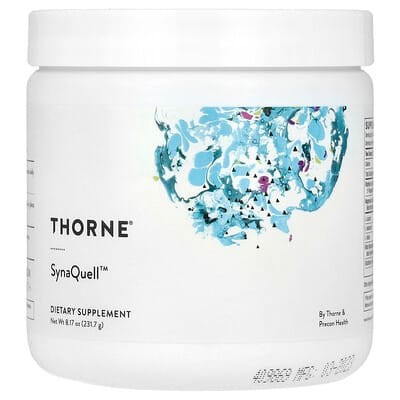

$75.00 $2.50 per serving


Product analysis
SynaQuell combines nutrients involved in normal energy use and cellular protection. Its high cost and limited disclosure of ingredient forms make it harder to justify for everyday use.
AI assessment of the formula, label and price. How scoring works
Nutrient Quality20
The quality of most ingredient forms remains uncertain. That limits confidence in how well the full combination can be used by the body.
Ingredient Transparency56
Most amounts are listed, but most ingredient forms are omitted. Some combination details also remain unclear, making a close comparison harder.
Value For Money10
The price is high for several of the declared ingredients. Paying more does not establish a greater benefit from the combination.
Customer Satisfaction73
Customers give generally favorable ratings. The review pool is modest, so it gives a less settled picture of satisfaction.
Product Focus58
The combination has some support for normal energy use and cellular protection. The evidence is mixed and does not establish a faster metabolism.
- Format
Powder - Container
- 8 Ounce(s)
- Per serving
- $2.50
- Customer rating
- 4.7 · 167 ratings
Goals

Impact
Moderate effect
Coenzyme Q-10 · 50 mgGlutathione · 250 mgCurcumin · 125 mg
Trans-resveratrol at 125 mg has a limited, inconsistent connection to inflammatory markers. Glutathione at 250 mg supports cellular redox balance, while the smaller curcumin, CoQ10, DHA and magnesium amounts contribute less in the saved assessment.
How this product is rated for Inflammation
Ingredient fit57
The formula has broader nutritional purposes, with a smaller share directly relevant to this goal. The known amounts provide relatively substantial support in the saved assessment.
Goal fit
The formula has broader nutritional purposes, with a smaller share directly relevant to this goal.
Dose adequacy
The known amounts provide relatively substantial support in the saved assessment.
Pathways16
The main connection is cellular inflammatory signaling, with limited coverage in the saved findings. The saved findings show limited coverage across the reviewed inflammation mechanisms.
Depth
The main connection is cellular inflammatory signaling, with limited coverage in the saved findings.
Breadth
The saved findings show limited coverage across the reviewed inflammation mechanisms.
Evidence62
Resveratrol provides the strongest evidence among the ingredients counted at a meaningful amount. Its support for this broad goal is limited.
Evidence strength
Resveratrol provides the strongest evidence among the ingredients counted at a meaningful amount. Its support for this broad goal is limited.
Studied preparation
The ingredients counted at meaningful amounts match preparations accepted in the saved assessment.
Formulation logic100
The relevant ingredients can contribute on their own or have their required partner. No ingredient conflicts were identified in the saved assessment.
Partner coverage
The relevant ingredients can contribute on their own or have their required partner.
Conflicts
No ingredient conflicts were identified in the saved assessment.
Effective doses
2 of 2 relevant ingredients reach the saved meaningful-amount threshold.

Impact
High effect
Niacin · 207.5 mgRiboflavin · 25 mgMagnesium · 59 mgResveratrol · 125 mgCurcumin · 125 mgCoenzyme Q-10 · 50 mg
Riboflavin and CoQ10 help with normal energy transfer, while resveratrol is connected with mitochondrial and insulin-related functions. Those roles do not establish a faster whole-body metabolic rate, and resveratrol research includes a small study with lower resting expenditure. Nicotinamide riboside findings are mixed, and the declared hydrogen-malate compound amount is not equivalent to free nicotinamide riboside.
How this product is rated for Metabolism Support
Ingredient fit56
Resveratrol, riboflavin and CoQ10 provide the ingredient connections retained in the saved findings. Their amount comparisons describe the declared serving rather than a demonstrated metabolism-boosting regimen.
Goal fit
Resveratrol, riboflavin and CoQ10 account for the goal-related ingredient findings, while the product's range of other uses and other active ingredients make it less focused on this goal.
Dose adequacy
The declared amounts receive partial amount findings overall; meeting these comparisons does not establish a proven calorie-burning dose.
Pathways47
The strongest saved connection concerns mitochondrial energy and fat oxidation; these mechanisms do not by themselves demonstrate faster whole-body energy expenditure. Only one meets the saved coverage threshold.
Depth
The strongest saved connection concerns mitochondrial energy and fat oxidation; these mechanisms do not by themselves demonstrate faster whole-body energy expenditure.
Breadth
Only one pathway meets the saved coverage threshold, so the mechanistic coverage is narrow.
Evidence81
Resveratrol provides the strongest saved evidence finding among the qualifying amounts; this does not itself demonstrate a general metabolism boost.
Evidence strength
Resveratrol provides the strongest saved evidence finding among the qualifying amounts; this does not itself demonstrate a general metabolism boost.
Studied preparation
The qualifying ingredients are treated as matching studied preparations in the saved findings; preparation matching alone does not establish a rise in energy expenditure.
Formulation logic100
The retained ingredients have no missing required partner or matched configured conflict. They meet the saved amount criterion, which does not establish additional calorie burning.
Partner coverage
The included ingredient contributions do not lack a required partner; this does not establish extra benefit from combining them.
Conflicts
No configured ingredient conflict was matched in the supplied facts; this finding does not establish overall safety.
Effective doses
All ingredients retained for this amount check meet its comparison criterion; that criterion is not a proven dose for increased calorie burning.
Ingredients
| Ingredient | Amount per serving | Score |
|---|---|---|
Calories | 23 Calorie(s) | |
Total Carbohydrates | 1 Gram(s) | |
Riboflavin (Riboflavin 5-Phosphate Sodium) | 25 mg | |
Magnesium (Magnesium Beta-Hydroxybutyrate) | 59 mg | |
L-Leucine | 1.25 Gram(s) | |
L-Isoleucine | 625 mg | |
L-Valine | 625 mg | |
Beta Hydroxybutyrate (Magnesium Beta Hydroxybutyrate) | 500 mg | |
Glutathione, Reduced | 250 mg | |
Nicotinamide Riboside Hydrogen Malate | 207.5 mg | |
Meriva (Curcumin Phytosome) | 125 mg | |
Docosahexaenoic Acid (Algal Oil) | 125 mg | |
Trans-Resveratrol | 125 mg | |
Ubiqsome (Coenzyme Q10 Phytosome) | 50 mg | |
Betaine Anhydrous (Trimethylglycine) | 42.5 mg |
Niacin · 207.5 mg OverallScore65
Curcumin (Curcumin Phytosome) · 125 mg OverallScore0
Valine · 625 mg OverallScore70
The serving provides a modest 625 mg of L-valine. A sport-specific certification is recorded, and the whole-product price works out to about $3.99 per gram of valine.
How this ingredient is rated
Active Ingredient Quality & Bioavailability100
L-valine is the recorded form, and a sport-specific third-party certification is recorded.
Valine Isomer and Source Type
The recorded form is L-valine.
Third-Party Sport Certifications
The saved facts record a sport-specific third-party certification.
Dose, Safety & Label Transparency70
The amount and form are clearly recorded: 625 mg of L-valine per serving. It is a modest amount for the athletic use considered.
Valine Dosage Efficacy
The serving provides 625 mg of valine, a modest amount for the athletic use considered.
Label Transparency and Proprietary Blends
The amount and L-valine form are recorded for each serving.
Value10
The whole-product serving price works out to about $3.99 per gram of valine.
Price Per Gram of Valine
The whole-product serving price works out to about $3.99 per gram of valine.
Sources
Published studies used for the product analysis and the top-ranked studies for each ingredient and goal.
- The effect of coenzyme Q10 supplementation on inflammatory and endothelial dysfunction markers in overweight/obese polycystic ovary syndrome patients.
- The effects of coenzyme Q10 supplementation on metabolic profiles and parameters of mental health in women with polycystic ovary syndrome.
- Efficacy and Optimal Dose of Coenzyme Q10 Supplementation on Inflammation-Related Biomarkers: A GRADE-Assessed Systematic Review and Updated Meta-Analysis of Randomized Controlled Trials.
- Can coenzyme Q10 supplementation effectively reduce human tumor necrosis factor-α and interleukin-6 levels in chronic inflammatory diseases? A systematic review and meta-analysis of randomized controlled trials.
- Promising efficacy of coenzyme Q10 supplementation as adjunctive therapy in juvenile idiopathic arthritis: a randomized-controlled pilot study.
- Effect of curcumin on inflammatory markers and disease activity in patients with rheumatoid arthritis: A meta-analysis.
- Effect of curcumin on C-reactive protein as a biomarker of systemic inflammation: An updated meta-analysis of randomized controlled trials.
- Effect of curcumin on circulating interleukin-6 concentrations: A systematic review and meta-analysis of randomized controlled trials.
- Nano-curcumin improves glucose indices, lipids, inflammation, and Nesfatin in overweight and obese patients with non-alcoholic fatty liver disease (NAFLD): a double-blind randomized placebo-controlled clinical trial.
- Is Curcumin Intake Really Effective for Chronic Inflammatory Metabolic Disease? A Review of Meta-Analyses of Randomized Controlled Trials.
- Serum type III procollagen, procollagen V, tumour necrosis factor-a, interleukin-6 in liver cirrhosis after antiviral treatment.
- Evaluation of the antioxidant and anti-inflammatory effect of sublingual glutathione on COPD patients.
- Dietary magnesium intake is inversely associated with serum C-reactive protein levels: meta-analysis and systematic review.
- Efficacy and safety of magnesium glycinate as add on therapy in hypomagnesemic asthma and chronic obstructive pulmonary disease patients: A randomised controlled study assessing inflammatory biomarkers.
- Magnesium Supplementation and the Effects on Wound Healing and Metabolic Status in Patients with Diabetic Foot Ulcer: a Randomized, Double-Blind, Placebo-Controlled Trial.
- The effect of long-term magnesium intake on inflammatory markers in patients with metabolic syndrome: a systematic review and meta-analysis of randomized controlled trials.
- Effect of Magnesium Supplementation on Inflammatory Parameters: A Meta-Analysis of Randomized Controlled Trials.
- Role of resveratrol supplementation in regulation of glucose hemostasis, inflammation and oxidative stress in patients with diabetes mellitus type 2: A randomized, placebo-controlled trial.
- Resveratrol decreases local inflammatory markers and systemic endotoxin in patients with aggressive periodontitis.
- Effects of resveratrol supplementation on inflammatory markers, fatigue scale, fasting blood sugar and lipid profile in relapsing-remitting multiple sclerosis patients: a double-blind, randomized placebo-controlled trial.