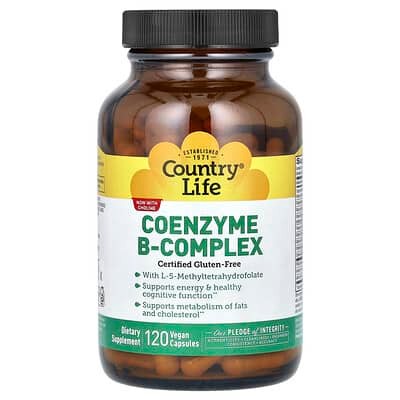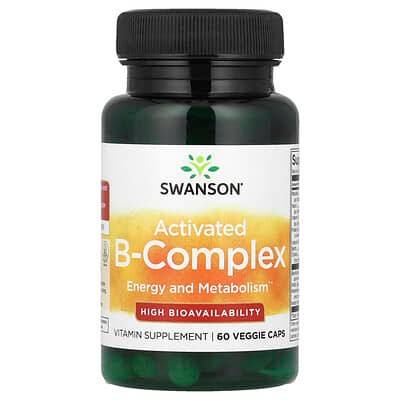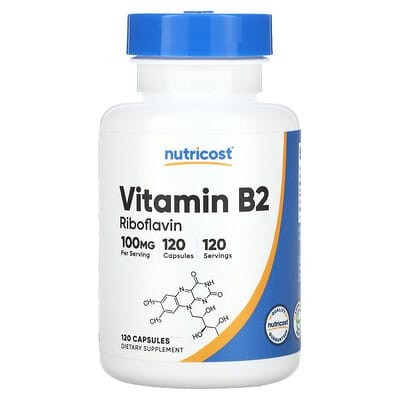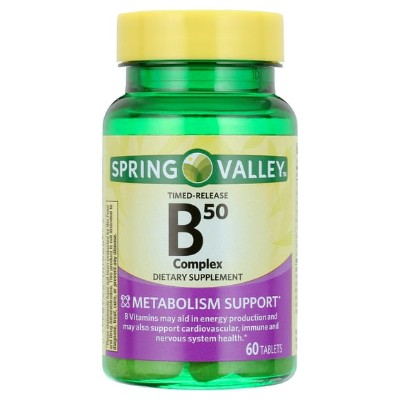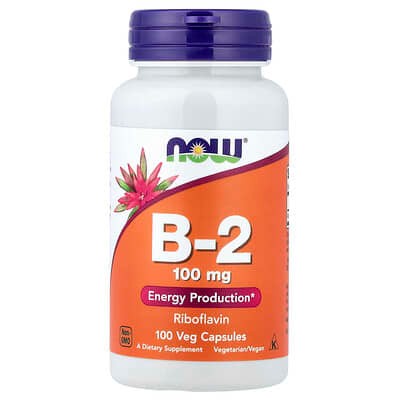
Riboflavin

Description

Riboflavin, also known as Vitamin B2, is a water-soluble vitamin that plays a central role in energy metabolism. It is a precursor to the coenzymes flavin mononucleotide (FMN) and flavin adenine dinucleotide (FAD), which are involved in numerous metabolic reactions, including those that convert carbohydrates, proteins, and fats into usable energy for the body. Beyond energy production, Riboflavin is critical for cellular growth and function. It contributes to the maintenance of healthy skin, vision, and mucous membranes. It also aids in the metabolism and activation of other B vitamins, particularly Niacin (Vitamin B3) and Vitamin B6, as well as Folate and Iron. As an antioxidant, Riboflavin helps protect cells from oxidative stress. It is involved in the synthesis of red blood cells and supports the proper functioning of the nervous system. Due to its water-soluble nature, Riboflavin is not stored in large amounts in the body, necessitating regular dietary intake.

Sources
Milk and dairy productsEggsLean meats (beef, pork)PoultryFishFortified cerealsMushroomsAlmondsSpinach and other leafy greensBroccoliLegumes
cheapest Riboflavin supplements
Discover the most affordable Riboflavin supplements, essential for vision support, metabolism boost, energy production, detoxification, and overall skin health.
Best Riboflavin supplements
Explore the best Riboflavin supplements to support vision, boost metabolism, enhance energy, aid detoxification, and promote healthy skin.
Value Riboflavin supplements
Compare top Riboflavin supplements to support vision, boost metabolism and energy, aid detoxification, and enhance skin health.
Timing & Intake
AnytimeWith foodTake with Food
Riboflavin absorption is enhanced when taken with food.
Daily Intake
RDA (Men)1 mg
RDA (Women)1 mg
RDI1 mg
Optimal Dosage
Minimum10 mg
Maximum25 mg
Safety & Toxicity
Toxicity Effectno known toxicity
Goals
Energy
Energy
Impact
Highest effect
Typical dose:1.3–100 mg
As a precursor to FAD and FMN, Riboflavin (B2) is an essential cofactor in the electron transport chain, the body's primary engine for ATP generation. A deficiency can directly impair energy metabolism and lead to fatigue.
View goal ->
Metabolism Boost
Metabolism Boost
Impact
Highest effect
Typical dose:1.3–50 mg
Riboflavin is a non-negotiable component of the electron transport chain, the final stage of cellular energy (ATP) production. It is fundamentally required for deriving energy from all macronutrients, making it a foundational element for a healthy metabolic rate.
View goal ->
Detoxification
Detoxification
Impact
High effect
Typical dose:5–50 mg
The original priority of 0 did not reflect its importance. Riboflavin is required for the enzyme glutathione reductase, which keeps the body's primary antioxidant defense system functional. This is a highly effective and necessary support function for detoxification.
View goal ->
Vision Support
Vision Support
Impact
Moderate effect
Typical dose:1.3–25 mg
While deficiency can cause serious eye problems, supplementation is most beneficial for addressing or preventing a deficiency. For the general population, its role is supportive of the eye's antioxidant systems, like glutathione recycling, rather than being a high-impact, direct treatment for common age-related conditions. Its priority should reflect this supportive role.
View goal ->
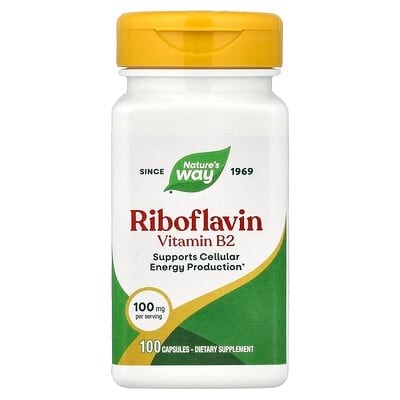
Skin Health
Skin Health
Impact
Situational effect
Typical dose:1.3–10 mg
Riboflavin (Vitamin B2) is crucial for cellular function and repair. While adequate levels are essential for skin health, supplementation is primarily beneficial for preventing or correcting a deficiency, which can manifest as skin disorders like dermatitis. For those with adequate dietary intake, its additional benefit is supportive rather than primary.
View goal ->
Price per product
Average$27.15
Median$23.89
Price per serving
Average$0.59
Median$0.50
Price per 10 mg
Average$0.17
Median$0.13
Price distribution
Price per serving distribution
Price per 10 mg
Reference amount: 10 mg
Forms
Paired ingredients
Vitamin B2 (439)85
Vitamin B2, commonly known as Riboflavin, is an essential water-soluble vitamin that acts as a precursor to the coenzymes Flavin Mononucleotide (FMN) and Flavin Adenine Dinucleotide (FAD). These coenzymes are crucial for cellular growth, energy production, and the metabolism of fats, carbohydrates, and proteins. It plays a significant role in maintaining healthy vision, skin, and nerve function, and aids in the body's antioxidant defenses.
Pros
  • Widely available and affordable
  • Well-researched and recognized for its essential functions
  • Generally well-tolerated
Cons
  • Requires conversion to its active coenzyme forms (FMN and FAD) in the body
  • Absorption can be limited at very high doses
  • Sensitive to light exposure
Per product
Avg$26.05
Med$21.78
Per serving
Avg$0.54
Med$0.41
Per 10 mg
Avg$0.81
Med$0.34
Price distribution
Riboflavin (152)85
Riboflavin is the chemical name for Vitamin B2, an essential water-soluble vitamin that plays a central role in energy metabolism by serving as a precursor for the coenzymes FMN and FAD. These coenzymes are integral to the function of various flavoproteins, which are involved in critical enzymatic reactions throughout the body, including those for nutrient metabolism, antioxidant defense, and the conversion of other B vitamins into their active forms.
Pros
  • Essential for fundamental bodily functions
  • Good general bioavailability
  • Cost-effective
Cons
  • Requires metabolic conversion to active forms
  • Sensitive to light, which can degrade it in food or solutions
Per product
Avg$30.64
Med$27.33
Per serving
Avg$0.71
Med$0.49
Per 10 mg
Avg$1.02
Med$0.32
Price distribution
Riboflavin 5-Phosphate (136)92
Riboflavin 5-Phosphate, also known as Flavin Mononucleotide (FMN), is the physiologically active coenzyme form of Vitamin B2. Unlike standard riboflavin, which requires conversion by the body into R-5-P and FAD, this form is already activated, allowing for direct utilization in various enzymatic reactions. This makes it particularly beneficial for individuals with genetic variations that might impair riboflavin activation or those seeking a more readily absorbed and utilized form.
Pros
  • Higher bioavailability
  • Does not require metabolic conversion
  • Potentially more effective for individuals with absorption or conversion issues
  • Directly supports enzyme function
Cons
  • Typically more expensive than standard riboflavin
  • Less common in general supplements
Per product
Avg$36.74
Med$31.26
Per serving
Avg$0.89
Med$0.60
Per 10 mg
Avg$0.94
Med$0.24
Price distribution
riboflavin 5'-phosphate sodium (36)92
Riboflavin-5-Phosphate Sodium is an active and readily absorbable form of Vitamin B2, chemically identical to Riboflavin 5-Phosphate Sodium. It delivers the coenzyme Flavin Mononucleotide (FMN) directly, bypassing the need for the body to convert inactive riboflavin into its active state. This form is characterized by its excellent water solubility and stability, making it an efficient choice for supplements aiming for maximum bioavailability and immediate physiological impact in energy metabolism and cellular function.
Pros
  • Active coenzyme form, no conversion needed
  • High bioavailability and rapid utilization
  • Excellent stability and water solubility
Cons
  • Typically more expensive than basic riboflavin
  • Potential for a slight bitter taste in some formulations
Per product
Avg$43.77
Med$42.85
Per serving
Avg$1.22
Med$0.94
Per 1 mg
Avg$0.40
Med$0.29
Price distribution
Riboflavin 5'-Phosphate Sodium (36)92
Riboflavin-5-Phosphate Sodium is an active and readily absorbable form of Vitamin B2, chemically identical to Riboflavin 5-Phosphate Sodium. It delivers the coenzyme Flavin Mononucleotide (FMN) directly, bypassing the need for the body to convert inactive riboflavin into its active state. This form is characterized by its excellent water solubility and stability, making it an efficient choice for supplements aiming for maximum bioavailability and immediate physiological impact in energy metabolism and cellular function.
Pros
  • Active coenzyme form, no conversion needed
  • High bioavailability and rapid utilization
  • Excellent stability and water solubility
Cons
  • Typically more expensive than basic riboflavin
  • Potential for a slight bitter taste in some formulations
Per product
Avg$43.77
Med$42.85
Per serving
Avg$1.22
Med$0.94
Per 1 mg
Avg$0.40
Med$0.29
Price distribution
organic Brown Rice (22)70
Organic brown rice is a whole grain that serves as a natural dietary source of riboflavin (Vitamin B2), contributing to daily nutritional intake. While the concentration of riboflavin in brown rice is lower than in fortified foods or supplements, it offers the vitamin in its natural food matrix, alongside fiber, other B vitamins, and minerals. The riboflavin present in brown rice must be released during digestion and then converted by the body into its active coenzyme forms.
Pros
  • Natural food source
  • Provides other beneficial nutrients and fiber
  • Generally well-tolerated
  • Supports a whole-foods diet
Cons
  • Riboflavin concentration is relatively low
  • Intake requires consuming larger quantities
  • Bioavailability can vary depending on individual digestion and cooking methods
  • Not suitable for addressing deficiencies rapidly
Per product
Avg$37.96
Med$37.27
Per serving
Avg$0.72
Med$0.75
Per 1 mg
Avg$0.24
Med$0.26
Price distribution
Riboflavin 5-Phosphate Sodium (22)92
Riboflavin-5-Phosphate Sodium is an active and readily absorbable form of Vitamin B2, chemically identical to Riboflavin 5-Phosphate Sodium. It delivers the coenzyme Flavin Mononucleotide (FMN) directly, bypassing the need for the body to convert inactive riboflavin into its active state. This form is characterized by its excellent water solubility and stability, making it an efficient choice for supplements aiming for maximum bioavailability and immediate physiological impact in energy metabolism and cellular function.
Pros
  • Active coenzyme form, no conversion needed
  • High bioavailability and rapid utilization
  • Excellent stability and water solubility
Cons
  • Typically more expensive than basic riboflavin
  • Potential for a slight bitter taste in some formulations
Per product
Avg$49.79
Med$38.00
Per serving
Avg$1.49
Med$1.23
Per 10 mg
Avg$2.57
Med$1.90
Price distribution
Riboflavin 5' Phosphate (16)92
Riboflavin 5-Phosphate, also known as Flavin Mononucleotide (FMN), is the physiologically active coenzyme form of Vitamin B2. Unlike standard riboflavin, which requires conversion by the body into R-5-P and FAD, this form is already activated, allowing for direct utilization in various enzymatic reactions. This makes it particularly beneficial for individuals with genetic variations that might impair riboflavin activation or those seeking a more readily absorbed and utilized form.
Pros
  • Higher bioavailability
  • Does not require metabolic conversion
  • Potentially more effective for individuals with absorption or conversion issues
  • Directly supports enzyme function
Cons
  • Typically more expensive than standard riboflavin
  • Less common in general supplements
Per product
Avg$74.47
Med$73.00
Per serving
Avg$1.32
Med$1.05
Per 10 mg
Avg$0.45
Med$0.38
Price distribution
R-5-P (5)92
R-5-P, or Riboflavin 5-Phosphate, is the biologically active coenzyme form of Vitamin B2 (Riboflavin). It is also known as Flavin Mononucleotide (FMN). Unlike standard riboflavin, R-5-P does not require enzymatic conversion in the liver before it can be used by the body, making it a highly bioavailable and efficient form. It plays a pivotal role in over 100 enzymatic reactions, primarily in energy production, fatty acid and amino acid metabolism, and as an antioxidant.
Pros
  • Directly bioavailable and active
  • Circumvents potential conversion issues
  • Rapid utilization for metabolic support
  • Generally well-tolerated
Cons
  • Higher cost compared to basic riboflavin
  • Sometimes less available than the sodium salt form
Per product
Avg$38.60
Med$38.34
Per serving
Avg$1.14
Med$1.01
Per 10 mg
Avg$0.31
Med$0.30
Price distribution