

$26.99 $0.53 per serving

Product analysis
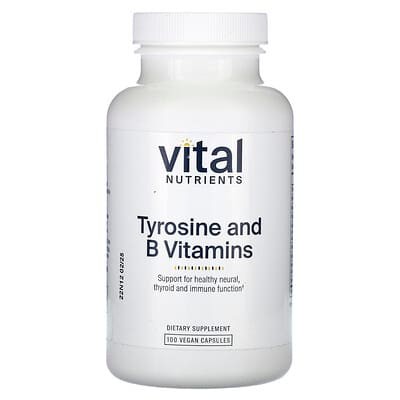
Tyrosine and B Vitamins supports normal nerve function, with possible help from tyrosine during acute stress or sleep loss. That limited benefit may be more relevant during demanding periods than for improving everyday thinking when rested.
AI assessment of the formula, label and price. How scoring works
Nutrient Quality34
Most B-vitamin sources are named, making their identity easier to compare. Tyrosine, niacin and biotin lack clear form details, and a special absorption advantage is not established.
Ingredient Transparency88
The listed amounts are stated and most forms are identified. Missing form details for tyrosine, niacin and biotin leave some comparisons incomplete.
Value For Money40
Tyrosine offers limited value for the amount supplied. Reliable value comparisons for the B vitamins are unavailable, so the full combination is hard to judge on price.
Customer Satisfaction66
The small amount of customer feedback is generally favourable. The limited review base leaves the satisfaction picture tentative.
Product Focus72
The formula focuses on normal nerve nutrition and possible performance support during acute stress. Its B vitamins do not establish better thinking or more energy when nutritional needs are already met.
- Format
Capsule - Container
- 100 Capsule(s)
- Per serving
- $0.53
- Customer rating
- 4.5 · 21 ratings
Goals

Impact
High effect
Folate · 85 mcg DFEVitamin B12 · 100 mcgVitamin B6 · 12 mgThiamin · 12 mg
Ingredients
| Ingredient | Amount per serving | Score |
|---|---|---|
Thiamine (Thiamine Hydrochloride) | 12 mg | |
Riboflavin | 10 mg | |
Vitamin B6 (Pyridoxine Hydrochloride) | 12 mg | |
Folate (L-5-MTHF) | 85 mcg DFE | |
Vitamin B12 (Methylcobalamin) | 100 mcg | |
Biotin | 100 mcg | |
Pantothenic Acid (Calcium Pantothenate) | 20 mg | |
Niacinamide | 50 mg | |
Tyrosine | 800 mg |
Tyrosine · 800 mg OverallScore77
Alternative products
Report alternatives
Sources
Published studies used for the product analysis and the top-ranked studies for each ingredient and goal.
- B vitamins and prevention of cognitive decline and incident dementia: a systematic review and meta-analysis.
- Folate and long-chain polyunsaturated fatty acid supplementation during pregnancy has long-term effects on the attention system of 8.5-y-old offspring: a randomized controlled trial.
- Folic acid supplementation improves cognitive function in participants with cerebral small vascular disease-related cognitive impairment: a randomized controlled trial.
- Circulating folate concentrations and the risk of mild cognitive impairment: A prospective study on the older Chinese population without folic acid fortification.
- Normal-But-Low Serum Folate Levels and the Risks for Cognitive Impairment.
- Can thiamine substitution restore cognitive function in alcohol use disorder?
- EFNS guidelines for diagnosis, therapy and prevention of Wernicke encephalopathy.
- Diagnosis and treatment of Wernicke's encephalopathy: A systematic literature review.
- Vitamin Supplementation and Dementia: A Systematic Review.
- Association between dietary vitamin B1 intake and cognitive function among older adults: a cross-sectional study.
- Combined L-carnosine and L-tyrosine supplementation as an ergogenic strategy for physical and cognitive performance under fatigue in professional football players.
- Effect of tyrosine supplementation on clinical and healthy populations under stress or cognitive demands--A review.
- Influence of nutritional tyrosine on cognition and functional connectivity in healthy old humans.
- Dietary Tyrosine Intake (FFQ) Is Associated with Locus Coeruleus, Attention and Grey Matter Maintenance: An MRI Structural Study on 398 Healthy Individuals of the Berlin Aging Study-II.
- Baseline-dependent effect of dopamine's precursor L-tyrosine on working memory gating but not updating.
- Relationship between vitamin B12 levels and motor development: A systematic review.
- Vitamin B12 supplementation improves cognitive function in middle aged and elderly patients with cognitive impairment.
- Structural and Functional Brain Changes Associated with Vitamin B12 Deficiency using Magnetic Resonance Imaging: A Systematic Review and Meta-analysis.
- Maternal vitamin B12, vitamin D, and folic acid status during pregnancy and child neurodevelopment: a systematic review.
- Higher vitamin B12 from mid- to late life is related to slower rates of cognitive decline.