
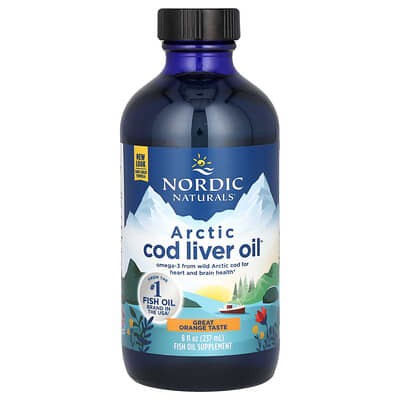
Arctic Cod Liver Oil Orange

Goals
$27.16 $0.56 per serving


Product analysis
Arctic Cod Liver Oil Orange provides omega-3s that may help joint comfort with regular use, although the evidence is mixed. Its cost compares favorably for the amount of EPA and DHA, the main omega-3 fats.
AI assessment of the formula, label and price. How scoring works
Nutrient Quality20
The oil information identifies triglycerides, a favorable form for absorption. Forms are not specified alongside the individual nutrient amounts, leaving other quality details uncertain.
Ingredient Transparency63
Amounts are given for all listed entries, helping you compare quantities. Forms are not identified alongside those amounts, limiting detailed comparisons.
Value For Money67
The omega-3 portion compares favorably on cost for its EPA and DHA content. Vitamin A’s value comparison remains unresolved, so the full picture is incomplete.
Customer Satisfaction87
Customer ratings are very positive across several thousand reviews. The broad review pool describes satisfaction, without proving joint, skin or metabolic benefits.
Product Focus69
Omega-3s have a possible role in joint comfort, although the evidence is mixed and concerns repeated intake. Skin and metabolism findings depend on specific preparations or populations, so they do not establish routine benefits from this serving.
- Format
Liquid - Container
- 8 Fluid Ounce(s)
- Per serving
- $0.56
- Also available
 Arctic Cod Liver Oil Orange$46.71
- Customer rating
- 4.8 · 2,092 ratings
Goals

Impact
Moderate effect
Omega-3 · 1060 mg

Impact
High effect
Omega-3 · 1060 mg

Impact
High effect
Omega-3 · 1060 mg
Ingredients
| Ingredient | Amount per serving | Score |
|---|---|---|
Calories | 40 Calorie(s) | |
Total Fat | 4.5 Gram(s) | |
Cholesterol | 20 mg | |
Vitamin A | 40 mcg RAE | |
Total Omega-3 Fatty Acids | 1060 mg |
Omega-3 · 1060 mg OverallScore76
Arctic Cod Liver Oil Orange provides 340 mg EPA and 510 mg DHA per serving at a fairly low cost for that amount. The omega-3 is in triglyceride form. The proportion of EPA and DHA in the total oil remains unclear.
How this ingredient is rated
Active Ingredient Quality & Bioavailability88
The omega-3 is in triglyceride form. Cod liver oil is listed with an antioxidant.
Molecular Form & Absorption Potential
The omega-3 is in triglyceride form.
Source Purity & Oxidative Protection
Cod liver oil is listed with an antioxidant.
Dose, Safety & Label Transparency61
The serving lists 340 mg EPA and 510 mg DHA separately. The oil concentration cannot be established from the available amounts. Third-party testing is claimed, with certificates of analysis available.
EPA & DHA Label Specificity
The serving lists 340 mg EPA and 510 mg DHA separately.
Active Ingredient Concentration
The EPA and DHA share of the oil is unclear because a compatible total oil amount is unavailable.
Third-Party Purity Verification
Third-party testing is claimed, with certificates of analysis available.
Value80
The cost per gram of EPA and DHA is fairly low.
Price per 1000mg of EPA+DHA
The cost per gram of EPA and DHA is fairly low.
Alternative products
Report alternatives
Sources
Published studies used for the product analysis and the top-ranked studies for each ingredient and goal.
- Supplementation of fish oil and olive oil in patients with rheumatoid arthritis.
- Krill oil improved osteoarthritic knee pain in adults with mild to moderate knee osteoarthritis: a 6-month multicenter, randomized, double-blind, placebo-controlled trial.
- Effects of omega-3 supplementation on lipid metabolism, inflammation, and disease activity in rheumatoid arthritis: a meta-analysis of randomized controlled trials.
- Impact of type and dose of oral polyunsaturated fatty acid supplementation on disease activity in inflammatory rheumatic diseases: a systematic literature review and meta-analysis.
- A meta-analysis of the analgesic effects of omega-3 polyunsaturated fatty acid supplementation for inflammatory joint pain.
- Effects of omega-3 supplementation on glucose and lipid metabolism in patients with gestational diabetes: A meta-analysis of randomized controlled trials.
- Hepatic de novo lipogenesis is suppressed and fat oxidation is increased by omega-3 fatty acids at the expense of glucose metabolism.
- Clinical and metabolic response to flaxseed oil omega-3 fatty acids supplementation in patients with diabetic foot ulcer: A randomized, double-blind, placebo-controlled trial.
- The Effects of Flaxseed Oil Omega-3 Fatty Acids Supplementation on Metabolic Status of Patients with Polycystic Ovary Syndrome: A Randomized, Double-Blind, Placebo-Controlled Trial.
- A combination of omega-3 and plant sterols regulate glucose and lipid metabolism in individuals with impaired glucose regulation: a randomized and controlled clinical trial.
- Dietetic intervention in psoriatic arthritis: the DIETA trial.
- Omega-3 fatty acid supplement skin cancer prophylaxis in lung transplant recipients: A randomized, controlled pilot trial.
- Treatment of hard-to-heal wounds in ischaemic lower extremities with a novel fish skin-derived matrix.
- Effect of eicosapentaenoic acid, an omega-3 polyunsaturated fatty acid, on UVR-related cancer risk in humans. An assessment of early genotoxic markers.
- Efficacy and Tolerability of Topical 0.1% Stabilized Bioactive Retinol for Photoaging: A Vehicle-Controlled Integrated Analysis.
- Tensile properties and contours of aging facial skin. A controlled double-blind comparative study of the effects of retinol, melibiose-lactose and their association.
- Antiaging action of retinol: from molecular to clinical.
- An Updated Review of Topical Tretinoin in Dermatology: From Acne and Photoaging to Skin Cancer.
- Novel Cyclized Hexapeptide-9 Outperforms Retinol Against Skin Aging: A Randomized, Double-Blinded, Active- and Vehicle-Controlled Clinical Trial.