
Nutrient quality
Broad plant coverage and safe amounts provide limited general-wellness value. Weak active definition, modest dosing, and numerous small additions make the formula filler-heavy.
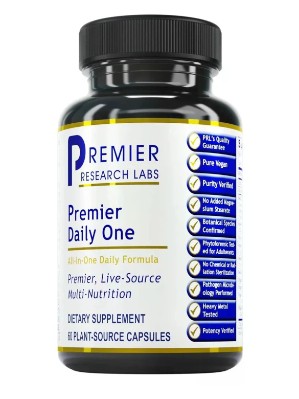
.
 Pure Formulas Pure Formulas | $ 35.99 |
Beta glucans lead the active list at 192 mg, with green tea and broccoli each supplied at 108 mg. Red algae minerals, milk thistle, garlic, kale, olive, chlorella, and prickly pear add smaller amounts.
Green tea lacks EGCG and caffeine disclosure, while milk thistle gives no silymarin yield. Chlorella species is named, but cell-wall processing and meaningful dose depth are absent.
Two capsules provide a broad whole-food-style mixture rather than a targeted botanical dose. The high serving cost makes better-characterized single-purpose formulas easier to recommend.
Broad plant coverage and safe amounts provide limited general-wellness value. Weak active definition, modest dosing, and numerous small additions make the formula filler-heavy.
.Some active amounts are visible, but a hidden blend and duplicate entries make the label hard to interpret. Missing marker, direction, and excipient details further reduce transparency.
.The aggregate rating is strong, but it provides no specific experience evidence. The very small review count gives the broad signal limited stability, while no detailed feedback supports taste, tolerance, or recurring-problem assessment.
.Broad ingredient coverage does not translate into strong measurable value. A high relative serving cost, shallow doses, and hidden details make the formula poorly competitive.
.| Ingredient | Amount per serving |
|---|---|
Total Carbohydrates | 1 Gram(s) |
Calcium (Aquamin F) | 24 mg |
Beta Glucan Blend | 192 mg |
Green Tea Leaf Extract | 108 mg |
Broccoli | 108 mg |
Aquamin F (mineralized Red Algae) | 80 mg |
Milk Thistle Seed Extract | 79 mg |
Bear Garlic | 72 mg |
Kale | 72 mg |
Olive | 60 mg |
Chlorella (Chlorella sorokiniana) | 60 mg |
Prickly Pear (Opuntia ficus-indica) | 60 mg |
The seed extract gives neither a silymarin percentage nor a concentration ratio. The dry capsule uses no phytosome, oil carrier, or other absorption-enhancing delivery system. The actual silymarin dose cannot be calculated because no standardization percentage or separate marker weight is given. Cost per serving is very high for a small non-standardized milk thistle extract.