Published studies used for the product analysis and the top-ranked studies for each ingredient and goal.
- Effectiveness of sodium bicarbonate and zinc chloride mouthwashes in the treatment of oral mucositis and quality of life in patients with cancer under chemotherapy.
Mohammadi F; Oshvandi K; Kamallan SR; Khazaei S; Ranjbar H; Ahmadi-Motamayel F; Gillespie M; Jenabi E; Vafaei SY · Nursing open · 2022
Randomized trial144 participantsflagGeneral Health forscienceZinc
- Zinc supplementation in young children with acute diarrhea in India.
Sazawal S; Black RE; Bhan MK; Bhandari N; Sinha A; Jalla S · The New England journal of medicine · 1995
Randomized trial937 participantsflagGeneral Health forscienceZinc
- Associations of mortality with ocular disorders and an intervention of high-dose antioxidants and zinc in the Age-Related Eye Disease Study: AREDS Report No. 13.
Clemons TE; Kurinij N; Sperduto RD; AREDS Research Group · Archives of ophthalmology (Chicago, Ill. : 1960) · 2004
Randomized trial4,753 participantsflagGeneral Health forscienceZinc
- Effects of zinc and probiotic co-supplementation on inflammation, gastrointestinal symptoms, quality of life, and mood in irritable bowel syndrome patients.
Rezazadegan M; Soheilipour M; Amani R · Scientific reports · 2026
Randomized trial84 participantsflagGeneral Health forscienceZinc
- Effect of zinc sulfate supplementation on premenstrual syndrome and health-related quality of life: Clinical randomized controlled trial.
Siahbazi S; Behboudi-Gandevani S; Moghaddam-Banaem L; Montazeri A · The journal of obstetrics and gynaecology research · 2018
Randomized trial142 participantsflagGeneral Health forscienceZinc
- The effects of minoxidil, 1% pyrithione zinc and a combination of both on hair density: a randomized controlled trial.
Berger RS; Fu JL; Smiles KA; Turner CB; Schnell BM; Werchowski KM; Lammers KM · The British journal of dermatology · 2003
Randomized trial200 participantsflagHair Health forscienceZinc
- Incubatory environment of the scalp impacts pre-emergent hair to affect post-emergent hair cuticle integrity.
Schwartz JR; Henry JP; Kerr KM; Flagler MJ; Page SH; Redman-Furey N · Journal of cosmetic dermatology · 2018
Randomized trialflagHair Health forscienceZinc
- A comparison of hair quality and cosmetic acceptance following the use of two anti-dandruff shampoos.
Draelos ZD; Kenneally DC; Hodges LT; Billhimer W; Copas M; Margraf C · The journal of investigative dermatology. Symposium proceedings · 2006
Randomized trial40 participantsflagHair Health forscienceZinc
- BMI and levels of zinc, copper in hair, serum and urine of Turkish male patients with androgenetic alopecia.
Ozturk P; Kurutas E; Ataseven A; Dokur N; Gumusalan Y; Gorur A; Tamer L; Inaloz S · Journal of trace elements in medicine and biology : organ of the Society for Minerals and Trace Elements (GMS) · 2015
Case-control study216 participantsflagHair Health forscienceZinc
- Analysis of serum zinc and copper concentrations in hair loss.
Kil MS; Kim CW; Kim SS · Annals of dermatology · 2013
Case-control study342 participantsflagHair Health forscienceZinc
- Nutrient supplementation for prevention of viral respiratory tract infections in healthy subjects: A systematic review and meta-analysis.
Vlieg-Boerstra B; de Jong N; Meyer R; Agostoni C; De Cosmi V; Grimshaw K; Milani GP; Muraro A; Oude Elberink H; Pali-Schöll I; Roduit C; Sasaki M; Skypala I; Sokolowska M; van Splunter M; Untersmayr E; Venter C; O'Mahony L; Nwaru BI · Allergy · 2022
Meta-analysis199,055 participants115 studies pooledflagImmunity forscienceZinc
- Zinc supplementation reduces the incidence of acute lower respiratory infections in infants and preschool children: a double-blind, controlled trial.
Sazawal S; Black RE; Jalla S; Mazumdar S; Sinha A; Bhan MK · Pediatrics · 1998
Randomized trial609 participantsflagImmunity forscienceZinc
- A randomized controlled trial of zinc supplementation in the treatment of acute respiratory tract infection in Thai children.
Rerksuppaphol S; Rerksuppaphol L · Pediatric reports · 2020
Randomized trial64 participantsflagImmunity forscienceZinc
- The effect of zinc and vitamin A supplementation on immune response in an older population.
Fortes C; Forastiere F; Agabiti N; Fano V; Pacifici R; Virgili F; Piras G; Guidi L; Bartoloni C; Tricerri A; Zuccaro P; Ebrahim S; Perucci CA · Journal of the American Geriatrics Society · 1998
Randomized trial136 participantsflagImmunity forscienceZinc
- The role of specific nutrients in preventing immune system and blood cell disorders: an umbrella review.
Vecchietti A; Strano P; Minutolo G; Grieco V; Cappuccio G; Granvillano G; Confalonieri L; Briganti GL; Raso E; Chimienti M; Pellegrini M; Mercogliano M; Spatari G; Lugli C; Urbano T; Lorenzon A · Journal of preventive medicine and hygiene · 2026
Systematic review13 studies pooledflagImmunity forscienceZinc
- Sex-related differences in response to zinc pyrithione shampoo vs. non-anti-dandruff shampoo.
Collins LZ; Baines FL; Matheson JR; Turner GA; Diao Y; Li Y; Pi Y · International journal of cosmetic science · 2019
Meta-analysis2,088 participants20 studies pooledflagSkin Health forscienceZinc
- Maintenance of an Acidic Skin Surface with a Novel Zinc Lactobionate Emollient Preparation Improves Skin Barrier Function in Patients with Atopic Dermatitis.
Andrew PV; Pinnock A; Poyner A; Brown K; Chittock J; Kay LJ; Cork MJ; Danby SG · Dermatology and therapy · 2024
Cohort study23 participantsflagSkin Health forscienceZinc
- Spatial expression of metallothionein, matrix metalloproteinase-1 and Ki-67 in human epidermal wounds treated with zinc and determined by quantitative immunohistochemistry: A randomised double-blind trial.
Ågren MS; Chafranska L; Eriksen JO; Forman JL; Bjerrum MJ; Schjerling P; Larsen HF; Cottarelli E; Jorgensen LN; Gjerdrum LMR · European journal of cell biology · 2021
Randomized trial30 participantsflagSkin Health forscienceZinc
- A pilot trial using topical regular crystalline insulin vs. aqueous zinc solution for uncomplicated cutaneous wound healing: Impact on quality of life.
Attia EA; Belal DM; El Samahy MH; El Hamamsy MH · Wound repair and regeneration : official publication of the Wound Healing Society [and] the European Tissue Repair Society · 2014
Randomized trial90 participantsflagSkin Health forscienceZinc
- Evidence-Based Nutritional Interventions in Wound Care.
Saeg F; Orazi R; Bowers GM; Janis JE · Plastic and reconstructive surgery · 2021
Systematic review2,339 participants36 studies pooledflagSkin Health forscienceZinc
- Environmental exposure to metals and male reproductive hormones: circulating testosterone is inversely associated with blood molybdenum.
Meeker JD; Rossano MG; Protas B; Padmanahban V; Diamond MP; Puscheck E; Daly D; Paneth N; Wirth JJ · Fertility and sterility · 2010
Cross-sectional study219 participantsflagTestosterone Support forscienceZinc
- Nonpharmacological Interventions for the Management of Testosterone and Sperm Parameters: A Scoping Review.
Santos HO; Cadegiani FA; Forbes SC · Clinical therapeutics · 2022
Scoping reviewflagTestosterone Support forscienceZinc
- Zinc is an Essential Element for Male Fertility: A Review of Zn Roles in Men's Health, Germination, Sperm Quality, and Fertilization.
Fallah A; Mohammad-Hasani A; Colagar AH · Journal of reproduction & infertility · 2020
Narrative reviewflagTestosterone Support forscienceZinc
- Clinical, endocrinological and biochemical effects of zinc deficiency.
Prasad AS · Clinics in endocrinology and metabolism · 1986
Narrative reviewflagTestosterone Support forscienceZinc
- Clinical, endocrinologic, and biochemical effects of zinc deficiency.
Prasad AS · Special topics in endocrinology and metabolism · 1986
Narrative reviewflagTestosterone Support forscienceZinc
- Antioxidant vitamin and mineral supplements for age-related macular degeneration.
Evans JR · The Cochrane database of systematic reviews · 2002
Systematic review170 participants7 studies pooledflagVision Support forscienceZinc
- Antioxidant vitamin and mineral supplements for slowing the progression of age-related macular degeneration.
Evans JR; Lawrenson JG · The Cochrane database of systematic reviews · 2023
Meta-analysis3,790 participants5 studies pooledflagVision Support forscienceZinc
- Oral zinc in macular degeneration.
Newsome DA; Swartz M; Leone NC; Elston RC; Miller E · Archives of ophthalmology (Chicago, Ill. : 1960) · 1988
Randomized trial151 participantsflagVision Support forscienceZinc
- A randomized, placebo-controlled, clinical trial of high-dose supplementation with vitamins C and E, beta carotene, and zinc for age-related macular degeneration and vision loss: AREDS report no. 8.
Age-Related Eye Disease Study Research Group · Archives of ophthalmology (Chicago, Ill. : 1960) · 2001
Randomized trial3,640 participantsflagVision Support forscienceZinc
- Effect of vitamin A and zinc supplementation on the nutriture of children in Northeast Thailand.
Udomkesmalee E; Dhanamitta S; Sirisinha S; Charoenkiatkul S; Tuntipopipat S; Banjong O; Rojroongwasinkul N; Kramer TR; Smith JC · The American journal of clinical nutrition · 1992
Randomized trial133 participantsflagVision Support forscienceZinc

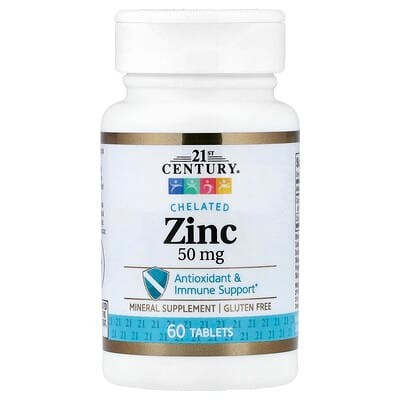
 Walmart
 Amazon
 iHerb
iHerb