
Nutrient quality
L-arginine hydrochloride is clear, while one maca entry has an extract ratio and the other lacks form detail. The arginine amount is substantial, while both maca contributions are modest.
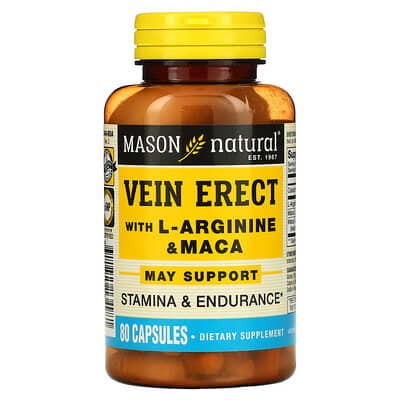
 iHerb iHerb | $ 13.27 | |
 Pure Formulas Pure Formulas | $ 14.66 | |
 Vitacost Vitacost | $ 14.13 | |
 Amazon Amazon | $ 11.43 |
Four capsules provide 2,500 mg of L-arginine hydrochloride with two modest maca entries, giving the formula substantial nitric-oxide support and limited additional adaptogenic depth. L-arginine is a nitric-oxide precursor, so it may support blood-vessel relaxation and circulation without acting as a stimulant.
The arginine amount is useful, but no sustained-release feature is stated and the four-capsule serving creates a notable pill burden. Favorable cost per gram suits users who specifically want arginine and maca together, although a single-active formula would be more focused.
The formula fits adults who want focused arginine support and can adjust intake to the stated serving size. L-arginine may add to the blood-pressure-lowering effects of nitrates or antihypertensive medicines, increasing the chance of dizziness or an excessive pressure drop.
L-arginine hydrochloride is clear, while one maca entry has an extract ratio and the other lacks form detail. The arginine amount is substantial, while both maca contributions are modest.
Every listed active ingredient has a specific disclosed amount. Non-active ingredients and excipients are not provided.
The supplied average rating is weak. The substantial rating sample provides good statistical confidence.
The substantial arginine dose supports quality, while modest maca additions dilute focus. The moderate serving cost is reasonable for the active amount but not exceptional.

L-arginine directly supports nitric oxide production and blood-vessel relaxation. The clearly stated amount is meaningful, though it falls below many targeted daily regimens and evidence for sustained cardiovascular benefits is mixed.
The formula focuses mainly on endothelial blood flow, with maca adding little direct cardiovascular depth. L-arginine may amplify blood-pressure lowering from nitrates, phosphodiesterase inhibitors, or antihypertensive medicines.

Arginine may support blood flow and exercise-related nutrient delivery, giving it some physical-vitality relevance. The disclosed amount is substantial, while maca adds a separate traditional stamina pathway.
Arginine evidence for everyday energy is less direct than evidence for creatine, caffeine, or correction of nutrient deficiency. The two maca entries are modest and add uncertain depth rather than a reliable second pathway.
| Ingredient | Amount per serving |
|---|---|
Calcium (Calcium Carbonate) | 50 mg |
L-Arginine Hydrochloride | 2500 mg |
Maca | 100 mg |
Maca 4:1 extract | 100 mg |
The serving provides a strong amount of clearly identified L-arginine hydrochloride. Four capsules are required, and no sustained-release feature is stated. Cost per gram is favorable, although maca makes the formula less focused than a single-ingredient arginine product.
Published studies used for the product analysis and the top-ranked studies for each ingredient and goal.