
Nutrient quality
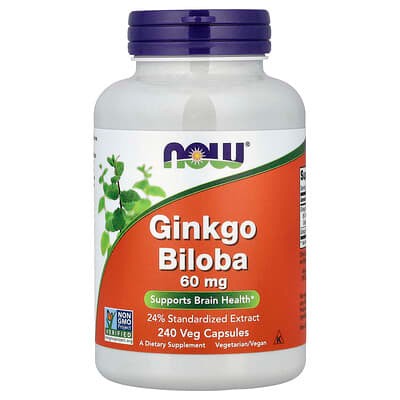
The key ginkgo marker groups are named, but their percentages and a purity limit are not fully disclosed. The formula supplies a maintenance-level extract amount, with no obvious overdosing.
.
 Daily Vita Daily Vita | $ 11.60 | |
 iHerb iHerb | $ 12.23 | |
 Amazon Amazon | $ 11.60 | |
 Vitacost Vitacost | $ 12.03 | |
 Pure Formulas Pure Formulas | $ 11.89 |
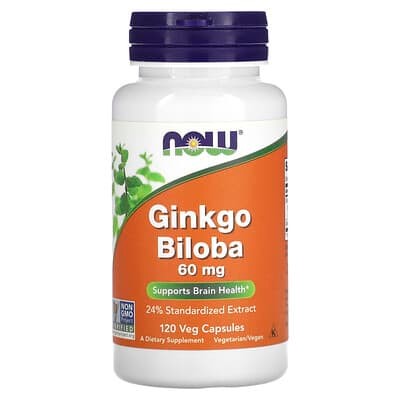
The capsule supplies 60 mg of extract plus 200 mg of ginkgo powder. Both main marker classes are named for the extract, though their percentages and a purity limit are absent.
The product may support cerebral circulation and selected cognitive functions at a maintenance level. Whole leaf adds botanical mass without providing the predictability of more standardized extract.
The capsule fits users who prefer a full-spectrum herb-plus-extract approach. People seeking a full clinical extract amount or direct vision nutrients may find it too limited.
The key ginkgo marker groups are named, but their percentages and a purity limit are not fully disclosed. The formula supplies a maintenance-level extract amount, with no obvious overdosing.
.The main active amounts are clearly listed, and no proprietary blend hides them. Intake directions, non-active ingredients, and some extract-quality details are absent from the supplied data.
.The supplied average is very strong and the response volume is substantial. No detailed feedback is provided to assess recurring complaints or fit with the intended purpose.
.The serving cost is appealing, but incomplete extract verification limits confidence in value. A fully standardized extract would provide a more dependable comparison.
.
Ginkgo may support cerebral blood flow and selected aspects of memory, giving it a direct cognitive mechanism. The 60 mg extract amount is disclosed with flavonglycoside and terpene-lactone markers, alongside additional unstandardized leaf powder.
Evidence is mixed for cognitive enhancement in healthy adults and is more relevant to age-related decline or circulation-related needs. Ginkgo can increase bleeding risk with anticoagulant or antiplatelet medicines and around surgery.

Ginkgo directly targets cerebral circulation and has relevant human evidence for cognitive support. The extract amount is better suited to mild maintenance than a full clinical serving.
Both ginkgo marker groups are named, but the extract amount is modest and percentages are missing. Ginkgo may raise bleeding risk with anticoagulant or antiplatelet drugs, so concurrent use needs specific medical review.

Ginkgo extract may support memory and cerebral circulation, but the extract amount is suited to mild use rather than a full clinical serving. Added ginkgo powder does not replace clear active-marker standardization.
The label names both main marker groups without stating their percentages or a ginkgolic-acid limit. Ginkgo may increase bleeding risk with anticoagulants or antiplatelet medicines.

Ginkgo may support focus through cerebral circulation and related cognitive mechanisms. Human evidence is mixed and depends heavily on using a well-standardized extract.
The 60 mg extract supports maintenance use, while added leaf powder does not substitute for standardized extract. Ginkgo may increase bleeding risk with anticoagulant or antiplatelet medicines.
| Ingredient | Amount per serving |
|---|---|
Ginkgo extract (Ginkgoflavonglycosides, Terpene Lactones) | 60 mg |
Ginkgo powder | 200 mg |
The extract amount is suited to mild maintenance rather than a full clinical serving. Both active-marker groups are named without percentages, and no ginkgolic-acid purity guarantee is given. Ginkgo may raise bleeding risk with anticoagulants or antiplatelet drugs, so concurrent use requires specific medical review.
Published studies used for the product analysis and the top-ranked studies for each ingredient and goal.