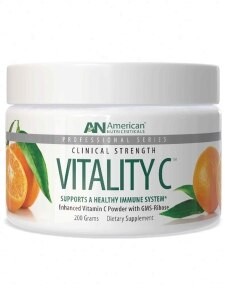
The very large vitamin C serving goes far beyond what most people need for ordinary antioxidant, collagen, or immune support. Absorption becomes less efficient as intake rises, so more powder does not translate into proportional benefit.
Four grams of L-ascorbate can cause nausea, cramping, or osmotic diarrhea. The product is a poor fit for sensitive users and is harder to justify for daily general-health use.
GMS-Ribose is stated separately, but its purpose and composition are not clear enough to establish added value. A lower-dose, simpler vitamin C formula would generally be easier to tolerate and assess.
thumb_upPros
Vitamin C amount is fully stated
Powder allows serving adjustment
Provides focused antioxidant support
Ribose amount is listed separately
thumb_downCons
Serving is far above routine nutritional needs
High intake has inefficient absorption
Ribose ingredient is poorly defined
Weak value per serving
warningWarnings
The 4,000 mg serving exceeds the usual adult upper intake level
A serving this large may cause nausea, cramping, or osmotic diarrhea
High vitamin C intake may be unsuitable for people prone to calcium oxalate kidney stones
scienceNutrient quality
37
Lower impact
L-ascorbate is recognizable, but the very large serving reduces absorption efficiency and has no disclosed buffering. The 4,000 mg serving exceeds the adult tolerable upper intake level and raises the risk of diarrhea and stomach upset.
scienceIngredient transparency
60
Moderate impact
Vitamin C and GMS-Ribose amounts are shown, though the branded ribose component is not fully defined. Complete excipient details and clear daily intake guidance are not supplied.
thumb_upCustomer satisfaction
70
High impact
The supplied aggregate satisfaction metrics are strong and based on meaningful volume. No feedback excerpts or complaint themes are supplied, so experience patterns cannot be verified.
workspace_premiumValue for money
27
Situational impact
Serving value appears weak for the disclosed formula. Added complexity provides limited clear value relative to the core vitamin C.
A+
Goal FitF
Strength of SupportF
CoverageD-
Formula Quality
Vitamin C · 4000 mg
Vitamin C directly supports antioxidant and immune function, but the serving is far above the amount needed to saturate absorption. The extra proprietary ribose blend does not strengthen the immune rationale.
The very large amount is likely to reduce absorption efficiency and increase nausea, cramping, or osmotic diarrhea. A lower vitamin C serving would provide a better balance of contribution and tolerance.
scienceStudy evidence
SupportiveMixedNo effectAdverse
Vitamin C Supportive star star_border star_border star_border star_border 53 studies
B-
Goal FitD-
Strength of SupportD-
CoverageD+
Formula Quality
Vitamin C · 4000 mg
Vitamin C supplies strong antioxidant capacity, but the very large single serving is poorly matched to efficient absorption. A proprietary ribose blend does not add clearly defined anti-inflammatory activity.
The excessive amount may reduce practical value because absorption becomes less efficient as single doses rise. Four grams of vitamin C can cause stomach upset or osmotic diarrhea, especially in sensitive users.
scienceStudy evidence
SupportiveMixedNo effectAdverse
Vitamin C Supportive star star_border star_border star_border star_border 50 studies
B+
Goal FitF
Strength of SupportD-
CoverageD-
Formula Quality
Vitamin C · 4000 mg
Vitamin C supports antioxidant defense, collagen formation, and normal immune function, but the 4000 mg serving is much larger than needed for routine nutritional support. Absorption becomes less efficient at high intakes, and gastrointestinal upset or diarrhea is more likely.
The proprietary GMS-Ribose blend adds uncertain value because its individual contents and amounts are not disclosed. A simpler, lower-dose vitamin C product would usually provide more practical general-health support.
scienceStudy evidence
SupportiveMixedNo effectAdverse
Vitamin C Supportive star star_border star_border star_border star_border 56 studies
F
Active Ingredient Quality & BioavailabilityC+
Dose, Safety & Label TransparencyD+
Value
The 4,000 mg serving is a very large dose of L-ascorbate crystals with no disclosed buffering or advanced delivery. Absorption efficiency is likely to fall at this amount, while gastrointestinal upset or osmotic diarrhea becomes more likely. Cost efficiency is average, and the proprietary GMS-Ribose blend is clearly separated from vitamin C but not fully defined.
The clearly disclosed vitamin C form provides a more focused alternative to the original formula. Its 500 mg of calcium ascorbate is buffered and includes 55 mg of calcium; the 10 mg bioflavonoid addition is modest.
The clearly disclosed vitamin C form provides a more focused alternative to the original formula. Its 1,000 mg of sodium ascorbate is buffered and simply formulated, with 130 mg of sodium clearly disclosed.
The clearly disclosed vitamin C form provides a more focused alternative to the original formula. Its capsules provide 850 mg of buffered sodium ascorbate with a clearly disclosed 100 mg sodium contribution.
The supplied serving-cost data indicates a less expensive way to obtain a comparable vitamin C serving. Compared with the original formula, it supplies 500 mg of ascorbic acid with 40 mg of rose hips, although the vitamin C remains unbuffered.
The supplied serving-cost data indicates a less expensive way to obtain a comparable vitamin C serving. Compared with the original formula, it supplies 500 mg of ascorbic acid with 30 mg of calcium in a basic, clearly dosed formula.
The supplied serving-cost data indicates a less expensive way to obtain a comparable vitamin C serving. Compared with the original formula, it supplies 1,000 mg of plain ascorbic acid without extra actives, favoring simplicity rather than buffering.
The combination of a focused ingredient list and efficient supply makes it a stronger value candidate than the original formula. Its powder provides 1,000 mg of ascorbic acid with flexible measuring, though the acidic form may not suit every user.
The combination of a focused ingredient list and efficient supply makes it a stronger value candidate than the original formula. Its single active is 500 mg of ascorbic acid, making the label easy to assess despite the lack of buffering.
The combination of a focused ingredient list and efficient supply makes it a stronger value candidate than the original formula. Its 1,100 mg of sodium ascorbate is fully buffered, but the disclosed 120 mg of sodium matters for sodium-restricted users.
flagReport alternatives
schoolSources
Published studies used for the product analysis and the top-ranked studies for each ingredient and goal.