


Vitamin D Supportive
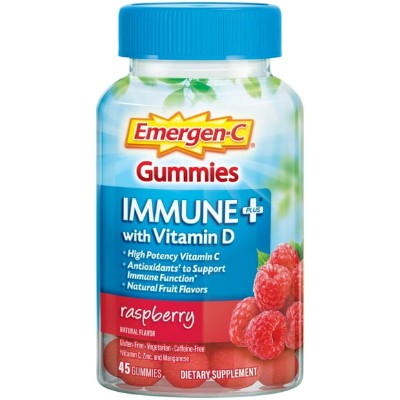
$14.99 $0.99 per serving
Product analysis
Emergen-C Immune+ Raspberry gummies support normal immune function with 750 mg of vitamin C and 20 mcg of vitamin D3 in three gummies. The chewable serving provides antioxidant and immune support, but contains 7 g of added sugar and only a small amount of zinc at 1.5 mg.
AI assessment of the formula, label and price. How scoring works
Nutrient Quality51
The gummies use vitamin D3 and a clearly identified form of vitamin B6. Zinc comes in sulfate form, which has limited absorption potential.
Ingredient Transparency85
The label gives amounts for all listed nutrients in a three-gummy serving. It names several vitamin and mineral forms, with some details still unclear.
Value For Money35
The gummies are good value for the large vitamin C serving. The small amounts of zinc and several other nutrients are relatively expensive when priced individually.
Customer Satisfaction71
Buyers rated the gummies favorably at 4.6 out of 5 stars. That average reflects 179 customer ratings.
Product Focus68
The gummies are fairly focused on everyday immune support. Vitamin C and D3 provide most of that support, with a small contribution from zinc.
- Format
Gummy - Container
- 45 Gummy(ies)
- Per serving
- $0.99
- Also available
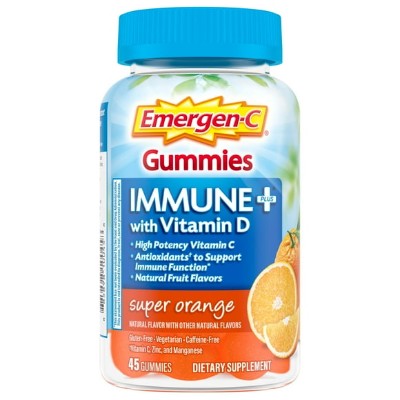 Immune+ Super Orange$16.78
- Customer rating
- 4.5 · 180 ratings
Goals

Impact
High effect
Vitamin C · 750 mgZinc · 1.5 mgVitamin D · 20 mcg
Immune+ Raspberry combines vitamin C with nutritional support for normal immune function. Its 750 mg vitamin C serving may modestly shorten colds with regular use. Vitamin D at 20 mcg contributes to immune-cell regulation, while vitamin B6 at 1.5 mg and vitamin B12 at 4 mcg matter chiefly when correcting dietary gaps that impair immune-cell function.
Zinc Supportive
Vitamin C Supportive

Impact
Highest effect
Vitamin B12 · 4 mcgVitamin D · 20 mcgZinc · 1.5 mgVitamin C · 750 mg
Immune+ Raspberry provides a fairly focused combination for normal antioxidant and immune functions, led by 750 mg vitamin C. Vitamin B6 at 1.5 mg adds a contribution to nutrient metabolism and blood formation, while 20 mcg vitamin D supports bone-mineral nutrition. The 1.5 mg zinc amount contributes little to the assessed benefit.
Vitamin D Supportive
Vitamin B12 Adverse
Zinc Supportive
Vitamin C Supportive

Impact
High effect
Zinc · 1.5 mgVitamin C · 750 mg
Immune+ Raspberry offers nutritional skin support when vitamin C intake is inadequate. Its 750 mg of vitamin C supports normal collagen formation and wound healing.
Zinc Supportive
Vitamin C Supportive
Biotin Supportive

Impact
High effect
Vitamin D · 20 mcgVitamin C · 750 mg
Immune+ Raspberry has a limited, nutrient-focused fit for inflammation. Vitamin C at 750 mg supplies its main antioxidant contribution, with inflammation-marker benefits most relevant when baseline inflammation is elevated.
Vitamin D Supportive
Zinc Supportive
Vitamin C Supportive

Impact
High effect
Zinc · 1.5 mgVitamin C · 750 mg
Immune+ Raspberry offers a narrow eye-health fit through vitamin C’s antioxidant role. Its 750 mg of vitamin C as ascorbic acid supports antioxidant protection in eye tissues. The wider nutrient blend makes it less focused on eye health.
Zinc Supportive
Vitamin D Disputed
Vitamin C Disputed
Ingredients
| Ingredient | Amount per serving | Score |
|---|---|---|
Calories | 45 Calorie(s) | |
Total Carbohydrates | 11 Gram(s) | |
Vitamin C (Ascorbic Acid) | 750 mg | |
Vitamin D3 (Cholecalciferol) | 20 mcg | |
Vitamin B6 (Pyridoxine Hydrochloride) | 1.5 mg | |
Vitamin B12 (Cyanocobalamin) | 4 mcg | |
Biotin | 36 mcg | |
Zinc (Zinc Sulfate) | 1.5 mg | |
Manganese (Manganese Gluconate) | 0.38 mg | |
Sodium | 35 mg |
Vitamin C (Ascorbic Acid) · 750 mg OverallScore59
Emergen-C Immune+ Raspberry provides 750 mg of vitamin C per serving and offers good value at $1.33 per gram of vitamin C and $1.00 per serving, with the serving price covering the full formula. The vitamin C source is Ascorbic Acid. No buffering is established. The formula contains a sweetener.
Alternative products
Report alternatives
Sources
Published studies used for the product analysis and the top-ranked studies for each ingredient and goal.
- Oral Vitamin B12 versus Placebo for the Prevention of Chemotherapy-Induced Peripheral Neuropathy in Gynecological Cancer Patients: A Randomized, Double-Blind, Placebo-Controlled Trial.
- Vitamin B12 Supplementation in Diabetic Neuropathy: A 1-Year, Randomized, Double-Blind, Placebo-Controlled Trial.
- A single-center randomized controlled trial of local methylcobalamin injection for subacute herpetic neuralgia.
- Local Injection of Methylcobalamin Combined with Lidocaine for Acute Herpetic Neuralgia.
- The Effect of Vitamin B12 and Folic Acid Supplementation on Serum Homocysteine, Anemia Status and Quality of Life of Patients with Multiple Sclerosis.
- Dietary intake and blood concentrations of antioxidants and the risk of cardiovascular disease, total cancer, and all-cause mortality: a systematic review and dose-response meta-analysis of prospective studies.
- Scientific Opinion on the substantiation of a health claim related to vitamin C and increasing non haem iron absorption pursuant to Article 14 of Regulation (EC) No 1924/2006.
- Vitamin C Depletion and All-Cause Mortality in Renal Transplant Recipients.
- Associations of Serum Biomarkers of Fruit and Vegetable Intake With the Risk of Cause-Specific Mortality and All-Cause Mortality: A National Prospective Cohort Study.
- Relation between plasma ascorbic acid and mortality in men and women in EPIC-Norfolk prospective study: a prospective population study. European Prospective Investigation into Cancer and Nutrition.
- Vitamin D supplementation for prevention of mortality in adults.
- Effect of vitamin D on gastrointestinal symptoms and health-related quality of life in irritable bowel syndrome patients: a randomized double-blind clinical trial.
- The impact of vitamin D administration on mortality in COVID-19 patients: a systematic review and meta-analysis of randomized controlled trials.
- Vitamin D Status and Mortality: A Systematic Review of Observational Studies.
- Meta-analysis of long-term vitamin D supplementation on overall mortality.
- Effectiveness of sodium bicarbonate and zinc chloride mouthwashes in the treatment of oral mucositis and quality of life in patients with cancer under chemotherapy.
- Zinc supplementation in young children with acute diarrhea in India.
- Associations of mortality with ocular disorders and an intervention of high-dose antioxidants and zinc in the Age-Related Eye Disease Study: AREDS Report No. 13.
- Effects of zinc and probiotic co-supplementation on inflammation, gastrointestinal symptoms, quality of life, and mood in irritable bowel syndrome patients.
- Effect of zinc sulfate supplementation on premenstrual syndrome and health-related quality of life: Clinical randomized controlled trial.