


Vitamin D Supportive
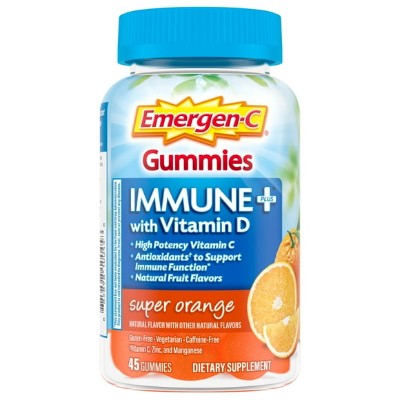
$16.78 $1.11 per serving
Product analysis
Emergen-C Immune+ Super Orange Gummies are a chewable immune-support option for adults that offers good value for its vitamin C. Three gummies provide 750 mg of vitamin C and 20 mcg of vitamin D3 to support normal immune function, but also contain 7 g of added sugar.
AI assessment of the formula, label and price. How scoring works
Nutrient Quality51
Vitamin D3 is a strength, and the gummies clearly identify their vitamin B6 form. Their zinc comes as zinc sulfate, which has less favorable absorption potential.
Ingredient Transparency85
The label gives an amount for every listed item in a three-gummy serving. It also names most forms, though entries such as biotin and sodium are less specific.
Value For Money34
Vitamin C is good value for the amount in three gummies. The same serving is comparatively expensive for the vitamin D3 and zinc it supplies.
Customer Satisfaction75
Buyers give the gummies a positive average of 4.7 out of 5. The average reflects 350 ratings.
Product Focus68
The gummies have a clear focus on everyday nutrition and immune support through vitamins C and D3. The shorter formula includes a small amount of zinc, so it plays a minor role.
- Format
Gummy - Container
- 45 Gummy(ies)
- Per serving
- $1.11
- Also available
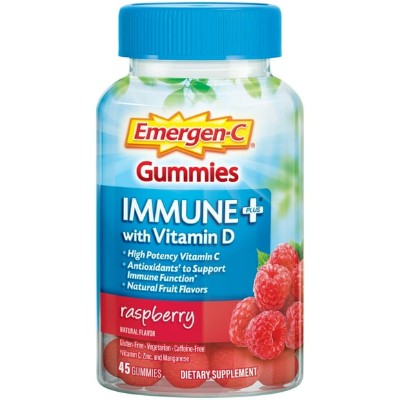 Immune+ Raspberry$14.99
- Customer rating
- 4.7 · 349 ratings
Goals

Impact
High effect
Vitamin C · 750 mgZinc · 1.5 mgVitamin D · 20 mcg
Immune+ Super Orange supports normal immune function through 750 mg of vitamin C and 20 mcg of vitamin D3. Vitamin C supports innate immune cells, while vitamin D supports immune-cell regulation.
Zinc Supportive
Vitamin C Supportive

Impact
Highest effect
Vitamin B12 · 4 mcgVitamin D · 20 mcgZinc · 1.5 mgVitamin C · 750 mg
Immune+ Super Orange provides a fairly focused combination for normal antioxidant and immune functions, led by 750 mg vitamin C. Vitamin B6 at 1.5 mg adds a contribution to nutrient metabolism and blood formation, while 20 mcg vitamin D supports bone-mineral nutrition. The 1.5 mg zinc amount contributes little to the assessed benefit.
Vitamin D Supportive
Vitamin B12 Adverse
Zinc Supportive
Vitamin C Supportive

Impact
High effect
Zinc · 1.5 mgVitamin C · 750 mg
Immune+ Super Orange offers nutritional skin support when vitamin C intake is inadequate. Its 750 mg of vitamin C supports normal collagen formation and wound healing.
Zinc Supportive
Vitamin C Supportive
Biotin Supportive

Impact
High effect
Vitamin D · 20 mcgVitamin C · 750 mg
Immune+ Super Orange has a limited, nutrient-focused fit for inflammation. Vitamin C at 750 mg supplies its main antioxidant contribution, with inflammation-marker benefits most relevant when baseline inflammation is elevated.
Vitamin D Supportive
Zinc Supportive
Vitamin C Supportive

Impact
High effect
Zinc · 1.5 mgVitamin C · 750 mg
Immune+ Super Orange offers a limited connection to routine eye support through 750 mg vitamin C and its role in retinal and lens antioxidant defense. Its mix is more focused than a broad multivitamin, but remains an immune-oriented nutrient formula.
Zinc Supportive
Vitamin D Disputed
Vitamin C Disputed
Ingredients
| Ingredient | Amount per serving | Score |
|---|---|---|
Calories | 45 Calorie(s) | |
Total Carbohydrates | 11 Gram(s) | |
Vitamin C (Ascorbic Acid) | 750 mg | |
Vitamin D3 (Cholecalciferol) | 20 mcg | |
Vitamin B6 (Pyridoxine Hydrochloride) | 1.5 mg | |
Vitamin B12 (Cyanocobalamin) | 4 mcg | |
Biotin | 36 mcg | |
Zinc (Zinc Sulfate) | 1.5 mg | |
Manganese (Manganese Gluconate) | 0.38 mg | |
Sodium | 35 mg |
Vitamin C (Ascorbic Acid) · 750 mg OverallScore59
Emergen-C Immune+ Super Orange provides 750 mg of vitamin C per serving and offers good value at $1.42 per gram of vitamin C and $1.07 per serving, with the serving price covering the full formula. The vitamin C source is Ascorbic Acid. No buffering is established. The formula contains a sweetener.
Alternative products
Report alternatives
Sources
Published studies used for the product analysis and the top-ranked studies for each ingredient and goal.
- Oral Vitamin B12 versus Placebo for the Prevention of Chemotherapy-Induced Peripheral Neuropathy in Gynecological Cancer Patients: A Randomized, Double-Blind, Placebo-Controlled Trial.
- Vitamin B12 Supplementation in Diabetic Neuropathy: A 1-Year, Randomized, Double-Blind, Placebo-Controlled Trial.
- A single-center randomized controlled trial of local methylcobalamin injection for subacute herpetic neuralgia.
- Local Injection of Methylcobalamin Combined with Lidocaine for Acute Herpetic Neuralgia.
- The Effect of Vitamin B12 and Folic Acid Supplementation on Serum Homocysteine, Anemia Status and Quality of Life of Patients with Multiple Sclerosis.
- Dietary intake and blood concentrations of antioxidants and the risk of cardiovascular disease, total cancer, and all-cause mortality: a systematic review and dose-response meta-analysis of prospective studies.
- Scientific Opinion on the substantiation of a health claim related to vitamin C and increasing non haem iron absorption pursuant to Article 14 of Regulation (EC) No 1924/2006.
- Vitamin C Depletion and All-Cause Mortality in Renal Transplant Recipients.
- Associations of Serum Biomarkers of Fruit and Vegetable Intake With the Risk of Cause-Specific Mortality and All-Cause Mortality: A National Prospective Cohort Study.
- Relation between plasma ascorbic acid and mortality in men and women in EPIC-Norfolk prospective study: a prospective population study. European Prospective Investigation into Cancer and Nutrition.
- Vitamin D supplementation for prevention of mortality in adults.
- Effect of vitamin D on gastrointestinal symptoms and health-related quality of life in irritable bowel syndrome patients: a randomized double-blind clinical trial.
- The impact of vitamin D administration on mortality in COVID-19 patients: a systematic review and meta-analysis of randomized controlled trials.
- Vitamin D Status and Mortality: A Systematic Review of Observational Studies.
- Meta-analysis of long-term vitamin D supplementation on overall mortality.
- Effectiveness of sodium bicarbonate and zinc chloride mouthwashes in the treatment of oral mucositis and quality of life in patients with cancer under chemotherapy.
- Zinc supplementation in young children with acute diarrhea in India.
- Associations of mortality with ocular disorders and an intervention of high-dose antioxidants and zinc in the Age-Related Eye Disease Study: AREDS Report No. 13.
- Effects of zinc and probiotic co-supplementation on inflammation, gastrointestinal symptoms, quality of life, and mood in irritable bowel syndrome patients.
- Effect of zinc sulfate supplementation on premenstrual syndrome and health-related quality of life: Clinical randomized controlled trial.