No linked studies yet.
Product analysis
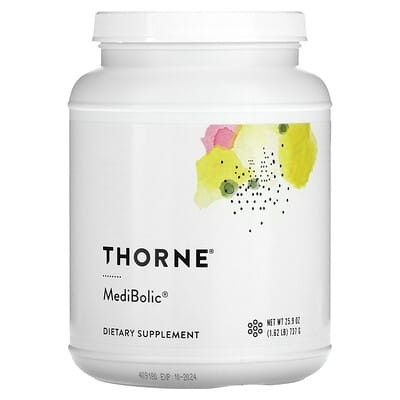
MediBolic supplies nutrients that support normal muscle, nerve and skin function, especially when intake is low. Its broad mix and undisclosed blend components make it harder to judge what each extra ingredient adds.
AI assessment of the formula, label and price. How scoring works
Nutrient Quality35
Several nutrient preparations are named, but their relative quality remains uncertain. Other preparations and mixed-source balances are unspecified, limiting comparison of the whole formula.
Ingredient Transparency68
The ingredient amounts and many preparations are stated. Unspecified forms and incomplete source balances, including a proprietary blend, leave parts of the composition unclear.
Value For Money38
The glycine, isoleucine and resveratrol comparisons indicate relatively high cost. Many other ingredients cannot be judged reliably for value, leaving the complete formula difficult to compare.
Customer Satisfaction66
The small set of customer reviews is generally positive. The limited review count gives a narrow view of satisfaction and does not establish health benefits.
Product Focus10
The nutrients have useful roles in maintaining normal function when intake is inadequate. The very broad formula and undisclosed blend make a specific longevity benefit difficult to judge.
- Format
Powder - Container
- 25 Ounce(s)
- Per serving
- $4.71
- Customer rating
- 4.5 · 33 ratings
Goals
Ingredients
| Ingredient | Amount per serving | Score |
|---|---|---|
Calories | 140 Calorie(s) | |
Total Fat | 8 Gram(s) | |
Total Carbohydrates | 16 Gram(s) | |
Protein | 18 Gram(s) | |
Vitamin A | 2250 mcg | |
Vitamin C (Ascorbic Acid) | 500 mg | |
Vitamin D (Vitamin D3) | 25 mcg | |
Vitamin E (D-Alpha-Tocopherol) | 134 mg | |
Vitamin K (Vitamin K1) | 100 mcg | |
Thiamine (Thiamine Hydrochloride) | 50 mg | |
Riboflavin (Riboflavin 5'-Phosphate Sodium) | 4 mg | |
Niacin | 40 mg | |
Vitamin B6 (Pyridoxal 5-Phosphate) | 5 mg | |
Folate | 500 mcg DFE | |
Vitamin B12 (Methylcobalamin) | 100 mcg | |
Biotin | 500 mcg | |
Pantothenic Acid (Calcium Pantothenate) | 46 mg | |
Choline (Choline Citrate) | 11 mg | |
Calcium (Calcium Citrate, DimaCal Dicalcium Malate) | 150 mg | |
Magnesium (Albion DiMagnesium Malate, Magnesium Citrate) | 150 mg | |
Zinc (TRAACS Zinc Bisglycinate Chelate) | 10 mg | |
Selenium (L-Selenomethionine) | 75 mcg | |
Copper (TRAACS Copper Bisglycinate Chelate) | 500 mcg | |
Manganese (TRAACS Manganese Bisglycinate Chelate) | 5 mg | |
Chromium (TRAACS Chromium Nicotinate Glycinate Chelate) | 400 mcg | |
Potassium (Potassium Citrate) | 100 mg | |
Proprietary Blend | 22.8 Gram(s) | |
partially hydrolyzed Guar Gum | 10 Gram(s) | |
Betaine Anhydrous (Trimethylglycine) | 1 Gram(s) | |
Jambolan extract | 750 mg | |
Glycine | 500 mg | |
L-Isoleucine | 300 mg | |
Cinnamon bark extract | 250 mg | |
Green Tea Phytosome (Camellia sinensis extract, Phospholipid complex) | 200 mg | |
Trans-Resveratrol | 50 mg | |
Boron (Bororganic Boron Glycinate Complex) | 100 mcg |
How this ingredient is rated
Active Ingredient Quality & Bioavailability0
Glycine Sourcing and Purity Standards
Dose, Safety & Label Transparency50
Clinically Relevant Dosage
Label Transparency and Yield Disclosure
Clean Label and Excipient Quality
Value30
Cost Efficiency per 1,000mg of Glycine
How this ingredient is rated
Active Ingredient Quality & Bioavailability86
Free-Form vs. Protein-Bound
Sourcing and Purity Signals
Dose, Safety & Label Transparency35
Isoleucine Potency per Serving
Label Transparency & Blend Disclosure
Third-Party Safety & Sport Testing
Value20
Price per Serving Efficiency
How this ingredient is rated
Composition and Label Disclosure77
Explicit Label Detail
Trans-Resveratrol Concentration Disclosure
Composition and Label Disclosure100
Resveratrol Amount Disclosure
Commercial Price and Usability10
Cost per 250 mg Declared Trans-Resveratrol
Alternative products
Sources
Published studies used for the product analysis and the top-ranked studies for each ingredient and goal.
- One-carbon metabolism-related compounds are associated with epigenetic aging biomarkers: results from the cross-sectional National Health and Nutrition Examination Survey 1999-2002.
- Longitudinal associations of one-carbon metabolism biomarkers with biological and epigenetic aging in older adults in India.
- Associations between leukocyte telomere length and three measures of folate status: a cross-sectional analysis of NHANES 1999-2002.
- Homocysteine versus the vitamins folate, B6, and B12 as predictors of cognitive function and decline in older high-functioning adults: MacArthur Studies of Successful Aging.
- Blood folate is associated with asymptomatic or partially symptomatic Alzheimer's disease in the Nun study.
- Accelerated biological aging, mediating amino acids, and risk of incident type 2 diabetes: a prospective cohort study.
- Dietary protein and amino acid intakes for mitigating sarcopenia in humans.
- Age-Related Neurochemical Changes in the Vestibular Nuclei.
- SHMT2 regulates CD8+ T cell senescence via the reactive oxygen species axis in HIV-1 infected patients on antiretroviral therapy.
- Metabolomics and incident dementia in older Chinese adults: The Shanghai Aging Study.
- Green tea and coffee intake and risk of cognitive decline in older adults: the National Institute for Longevity Sciences, Longitudinal Study of Aging.
- Associations of green tea, coffee, and soft drink consumption with longitudinal changes in leukocyte telomere length.
- Can teatime increase one's lifetime?
- Influences of tea consumption on self-rated health and life satisfaction among older adults: Evidence from the CLHLS.
- Double-blinded, placebo-controlled trial of green tea extracts in the clinical and histologic appearance of photoaging skin.
- Dietary Magnesium May Be Protective for Aging of Bone and Skeletal Muscle in Middle and Younger Older Age Men and Women: Cross-Sectional Findings from the UK Biobank Cohort.
- Higher Magnesium Intake Is Associated with a Lower Risk of Frailty in Older Adults.
- Ca:Mg Ratio, APOE Cytosine Modifications, and Cognitive Function: Results from a Randomized Trial.
- The Association between Dietary Nutrient Intake and Acceleration of Aging: Evidence from NHANES.
- Interpretable machine learning with SHAP analysis identifies redox-modulating dietary antioxidants for predicting accelerated biological aging.