
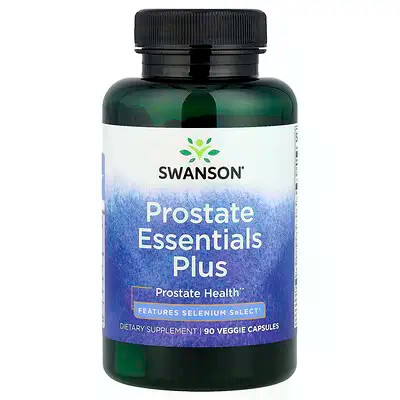

$21.39 $0.23 per serving

Product analysis
Prostate Essentials Plus supplies zinc and selenium that can help meet normal immune and antioxidant needs when intake is low. Several plant ingredients lack precise forms, making their contribution harder to compare.
AI assessment of the formula, label and price. How scoring works
Nutrient Quality44
Zinc uses a favorable picolinate form, while quality is less clear for much of the plant mixture. Several ingredients lack precise forms, which limits comparison with specific preparations.
Ingredient Transparency78
Ingredient amounts are stated throughout, making quantities easy to compare. Many precise forms are missing, so the exact types being taken are less clear.
Value For Money50
Value is mixed, with a favorable serving cost in some comparisons but a relatively high cost for the lycopene amount. Value for several other ingredients remains uncertain, so the whole combination is harder to judge.
Customer Satisfaction74
Customer feedback is positive across hundreds of ratings. Those opinions do not establish prostate, hair or hormone benefits.
Product Focus52
The clearest support comes from meeting zinc and selenium needs when intake is low. The broader plant mix does not establish added hair growth or higher testosterone in people who already get enough nutrients.
- Format
Capsule - Container
- 90 Capsule(s)
- Per serving
- $0.23
- Customer rating
- 4.7 · 227 ratings
Goals

Impact
Moderate effect
Zinc · 15 mg
Zinc may help restore testosterone when low zinc levels are contributing to the problem. Zinc deficiency can lower testosterone, so the benefit depends on nutritional status rather than simply taking a larger amount. If you already get enough zinc, an increase in testosterone isn't expected.
How this product is rated for Testosterone Support
Ingredient fit44
Zinc is relevant to the goal, but the ingredient amount and preparation still limit expectations.
Goal fit
Zinc provides the clearest goal-related connection, while other ingredients have less certain or unrelated roles.
Dose adequacy
Per serving: Zinc 15 mg, Stinging Nettle 120 mg, Selenium 50 mcg. These amounts don't guarantee higher testosterone.
Pathways9
Selenium and other ingredients relate to testosterone production, but routine hormone benefits remain uncertain.
Depth
Selenium and other ingredients relate to testosterone production, but routine hormone benefits remain uncertain.
Breadth
The ingredients do not provide a reliable expectation of benefits across multiple testosterone-related processes.
Evidence93
Zinc is most relevant when a deficiency contributes to low testosterone; extra zinc is not expected to raise it when intake is adequate.
Evidence strength
Zinc is most relevant when a deficiency contributes to low testosterone; extra zinc is not expected to raise it when intake is adequate.
Studied preparation
The preparation details for vitamin B6 or nettle do not provide a reliable basis for expecting a testosterone increase.
Formulation logic100
No particular ingredient conflict is identified.
Partner coverage
No additional partner ingredient is required for the ingredient roles described here.
Conflicts
No particular ingredient conflict is identified.
Effective doses
Declared amounts vary across ingredients; reaching a comparison amount does not itself show that testosterone will increase.
Stinging Nettle Not classified
No linked studies yet.

Impact
Moderate effect
Zinc · 15 mgSelenium · 50 mcg
Zinc at 15 mg and selenium at 50 mcg support normal immune-cell function and antioxidant defenses. Their value is mainly in maintaining adequate nutrient intake, rather than reliably improving infection resistance in well-nourished adults.
How this product is rated for Immunity
Ingredient fit42
The formula serves several needs, so only part of it is focused on immunity. The relevant amounts provide a partial match to the supplied dose comparisons.
Goal fit
The formula serves several needs, so only part of it is focused on immunity.
Dose adequacy
The relevant amounts provide a partial match to the supplied dose comparisons.
Pathways43
Lymphocyte function and immune regulation is the strongest area of support in the saved findings. The saved findings show meaningful coverage of 1 aspect of immune support, with less coverage elsewhere.
Depth
Lymphocyte function and immune regulation is the strongest area of support in the saved findings.
Breadth
The saved findings show meaningful coverage of 1 aspect of immune support, with less coverage elsewhere.
Evidence100
Zinc provides the strongest relevant evidence at the assessed amount; normal nutritional function is distinct from preventing infections. The qualifying ingredients match preparations represented in the supplied evidence.
Evidence strength
Zinc provides the strongest relevant evidence at the assessed amount; normal nutritional function is distinct from preventing infections.
Studied preparation
The qualifying ingredients match preparations represented in the supplied evidence.
Formulation logic100
The assessed ingredients can contribute on their own or have their required partner present. No ingredient conflicts were identified in the saved assessment. All assessed ingredients met the saved minimum amount criterion.
Partner coverage
The assessed ingredients can contribute on their own or have their required partner present.
Conflicts
No ingredient conflicts were identified in the saved assessment.
Effective doses
All assessed ingredients met the saved minimum amount criterion.

Impact
Moderate effect
Zinc · 15 mg
Zinc may help with shedding caused by low intake. Saw palmetto has a possible role in certain kinds of thinning, but generic material can't be assumed to match the effects of named preparations. Pumpkin seed material also isn't equivalent to a verified pumpkin seed oil preparation. Adding these ingredients doesn't by itself show that they improve hair growth together.
How this product is rated for Hair Health
Ingredient fit56
Zinc may help when low intake contributes to shedding.
Goal fit
Zinc may help when low intake contributes to shedding.
Dose adequacy
Zinc supplies 15 mg per serving; the amount alone doesn't predict hair growth.
Pathways16
Nutrient functions and hair-related mechanisms do not by themselves demonstrate regrowth or improvement across different causes of hair loss.
Depth
Antioxidant-related ingredients are present, but their normal roles do not by themselves show hair regrowth.
Breadth
A broad effect across distinct causes of hair loss is unclear.
Evidence93
Zinc may help when low intake contributes to shedding. Ingredient form and the cause of hair loss affect how relevant a possible benefit is.
Evidence strength
Zinc may help when low intake contributes to shedding. Benefits when nutrient intake is adequate are unclear.
Studied preparation
Some preparations differ from named preparations linked with hair outcomes, limiting how directly those effects apply.
Formulation logic100
No particular ingredient conflict or missing required partner is identified. Ingredient amounts alone do not show that the combination improves hair growth.
Partner coverage
No required ingredient partner is identified as missing; this does not imply an added benefit from combining ingredients.
Conflicts
No particular ingredient conflict is identified.
Effective doses
The relevant ingredient amounts are available for comparison, though those amounts alone do not predict hair improvement.

Impact
Lower effect
Glycine · 25 mg

Impact
Moderate effect
Glycine · 25 mgSelenium · 50 mcgZinc · 15 mg
Zinc and selenium are the main nutritional contributions, relating to normal antioxidant and immune functions. Zinc at 15 mg exceeds the usual adult daily reference intake, while selenium at 50 mcg is close to its 55 mcg reference. Their usefulness depends on dietary gaps; extra benefit in nutrient-replete adults is not assumed, and the 0.025 g of glycine is a small amount.
How this product is rated for Everyday Health
Ingredient fit43
The saved assessment identifies 2 goal-related ingredients alongside 9 other actives, so the formula serves a broader purpose than everyday health alone. The saved amount assessment considers 2 ingredients; undisclosed individual amounts limit the contribution that can be assigned.
Goal fit
The saved assessment identifies 2 goal-related ingredients alongside 9 other actives, so the formula serves a broader purpose than everyday health alone.
Dose adequacy
The saved amount assessment considers 2 ingredients; undisclosed individual amounts limit the contribution that can be assigned.
Pathways46
The strongest saved connection concerns antioxidant and immune defence. 1 reviewed mechanism reaches the saved level for substantial coverage.
Depth
The strongest saved connection concerns antioxidant and immune defence.
Breadth
1 reviewed mechanism reaches the saved level for substantial coverage.
Evidence82
The saved evidence finding is led by Selenium, among ingredients meeting the assessment’s amount requirement; this does not imply uniform health benefit. The saved assessment recognizes preparation matches for the ingredients meeting its amount requirement, within the limitations of their underlying evidence.
Evidence strength
The saved evidence finding is led by Selenium, among ingredients meeting the assessment’s amount requirement; this does not imply uniform health benefit.
Studied preparation
The saved assessment recognizes preparation matches for the ingredients meeting its amount requirement, within the limitations of their underlying evidence.
Formulation logic100
The saved findings identify no missing required partner among the assessed ingredients. No configured ingredient conflict was identified in the saved assessment. 2 of 2 credited ingredients meet the saved minimum amount criterion.
Partner coverage
The saved findings identify no missing required partner among the assessed ingredients.
Conflicts
No configured ingredient conflict was identified in the saved assessment.
Effective doses
2 of 2 credited ingredients meet the saved minimum amount criterion.
Ingredients
| Ingredient | Amount per serving | Score |
|---|---|---|
Zinc (Zinc Picolinate) | 15 mg | |
Selenium (Selenium SeLECT L-Selenomethionine) | 50 mcg | |
Stinging Nettles 4:1 concentrate | 120 mg | |
Saw Palmetto berry extract (fatty acids) | 90 mg | |
Korean Ginseng | 50 mg | |
Pygeum africanum bark extract (Phytosterols) | 50 mg | |
Pumpkin | 40 mg | |
Glycine | 25 mg | |
L-Alanine | 25 mg | |
L-Glutamic Acid | 25 mg | |
Beta-Sitosterol | 20 mg | |
Lycopene (Tomato) | 2.5 mg |
Zinc (Zinc Picolinate) · 15 mg OverallScore76
Each serving provides 15 mg of zinc as zinc picolinate. The whole product costs about $0.24 per serving.
How this ingredient is rated
Active Ingredient Quality & Bioavailability100
The stated form is zinc picolinate.
Zinc Form Bioavailability
The stated form is zinc picolinate.
Dose, Safety & Label Transparency61
The zinc amount is recorded as 15 mg per serving; copper information is unavailable for comparison.
Elemental Dose Transparency
The elemental zinc amount and its source form are recorded: 15 mg per serving as zinc picolinate.
Zinc Dosage Safety & Effectiveness
The serving supplies 15 mg of zinc.
Zinc-to-Copper Mineral Balance
The copper amount is unknown in the supplied facts, so the zinc-to-copper relationship cannot be assessed.
Value60
The whole-product price is about $0.24 per serving.
Price Per Serving Efficiency
The whole-product price is about $0.24 per serving.
Glutamic Acid · 25 mg OverallScore86
Each serving lists 25 mg of L-glutamic acid, a modest supplemental amount in the evaluation. The L form is identified, and a whole-product serving costs about $0.24.
How this ingredient is rated
Active Ingredient Quality & Bioavailability100
The label identifies the L form. The evaluation considers it a good fit for the formula’s stated use.
Isomer Specificity (L-Form)
The label specifies the L form of glutamic acid, the form used by the body.
Chemical Form Suitability
The L form is considered a good fit for the formula’s stated use in the evaluation.
Dose, Safety & Label Transparency65
The label individually lists 25 mg of L-glutamic acid per serving, a modest supplemental amount in the evaluation.
Supplemental Dosage Adequacy
25 mg per serving is a modest supplemental amount in the evaluation.
Label Disclosure & Transparency
The label lists 25 mg of L-glutamic acid individually per serving.
Value100
A whole-product serving costs about $0.24, within the lower price band in the comparison. The price covers the entire product.
Price per Serving Efficiency
At about $0.24 per whole-product serving, the price is within the lower price band in the comparison.
Stinging Nettle · 120 mg OverallScore76
Each serving lists 120 mg of nettle concentrate. A 4:1 ratio is recorded for the nettle preparation; it does not specify the amount of active markers.
How this ingredient is rated
Composition and Label Disclosure40
The saved facts do not establish which nettle plant part is used. A 4:1 ratio is recorded for the nettle preparation; it does not specify the amount of active markers.
Root or Leaf Identity Disclosure
The saved facts do not establish which nettle plant part is used.
Nettle Preparation and Marker Detail
A 4:1 ratio is recorded for the nettle preparation; it does not specify the amount of active markers.
Composition and Label Disclosure100
Each serving lists 120 mg of nettle concentrate.
Nettle Amount Disclosure
Each serving lists 120 mg of nettle concentrate.
Commercial Price and Usability100
The whole-product price is about $0.24 per serving.
Selected-Serving Price Comparison
The whole-product price is about $0.24 per serving.
Alternative products
Report alternatives
Sources
Published studies used for the product analysis and the top-ranked studies for each ingredient and goal.
- Air-abrasive debridement with glycine powder versus manual debridement and chlorhexidine administration for the maintenance of peri-implant health status: a six-month randomized clinical trial.
- The effects of glycine on auditory mismatch negativity in schizophrenia.
- Dietary glycine improves urine storage symptoms in urology outpatients.
- Oral supplementation with glycine reduces oxidative stress in patients with metabolic syndrome, improving their systolic blood pressure.
- Associations of selenium status with all-cause and cause-specific mortality: a systematic review and meta-analysis of cohort studies.
- Dietary Antioxidants, Circulating Antioxidant Concentrations, Total Antioxidant Capacity, and Risk of All-Cause Mortality: A Systematic Review and Dose-Response Meta-Analysis of Prospective Observational Studies.
- The efficacy and safety of selenium supplementation versus placebo in the treatment of Graves' orbitopathy: A systematic review and meta-analysis of randomised controlled trials.
- Associations of plasma metal concentrations with the risks of all-cause and cardiovascular disease mortality in Chinese adults.
- Updates on clinical studies of selenium supplementation in radiotherapy.
- Effectiveness of sodium bicarbonate and zinc chloride mouthwashes in the treatment of oral mucositis and quality of life in patients with cancer under chemotherapy.
- Zinc supplementation in young children with acute diarrhea in India.
- Associations of mortality with ocular disorders and an intervention of high-dose antioxidants and zinc in the Age-Related Eye Disease Study: AREDS Report No. 13.
- Effects of zinc and probiotic co-supplementation on inflammation, gastrointestinal symptoms, quality of life, and mood in irritable bowel syndrome patients.
- Effect of zinc sulfate supplementation on premenstrual syndrome and health-related quality of life: Clinical randomized controlled trial.
- The Safety and Efficacy of a Proprietary Bioactive Fatty Acids Extract From Saw Palmetto (Serenoa repens) for Promoting Hair Growth and Reducing Hair Loss in Adults With Self-Perceived Thinning Hair: 90-Day Results.
- Effects of dietary supplements on androgenetic alopecia: a systematic review and network meta-analysis.
- The Safety and Efficacy of a Novel Saw Palmetto (Serenoa repens) Extract for Promoting Hair Growth in Adults With Self-Perceived Thinning Hair: 180-Day Results.
- Beyond Minoxidil: Off-Label Therapies for Male Androgenetic Alopecia-A Systematic Review with Network Meta-Analyses.
- Comparitive effectiveness of finasteride vs Serenoa repens in male androgenetic alopecia: a two-year study.
- Beyond Efficacy: 0.6% Selenium Disulfide Shampoo Matches 2% Ketoconazole for Seborrheic Dermatitis with Superior Cosmesis.