




Vitamin K Supportive
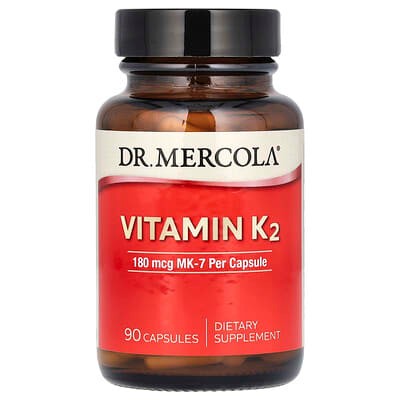
$76.18 $0.84 per serving
Product analysis
Dr. Mercola Vitamin K2 is a focused supplement for bone and mineral metabolism, with 180 mcg of MK-7 in one capsule. That is a useful form and amount for supporting the proteins involved in calcium use, and the formula offers good value for its vitamin K content.
AI assessment of the formula, label and price. How scoring works
Nutrient Quality100
Vitamin K2 is supplied as MK-7, a useful and clearly identified form. The label does not specify whether the MK-7 is all-trans.
Ingredient Transparency100
The label clearly states both the 180 mcg vitamin K amount and its MK-7 form. Shoppers can readily compare its active content with other K2 products.
Value For Money75
The formula offers good value for its vitamin K content. Its comparative cost per 80 mcg is around $0.35, below the comparable-product median.
Customer Satisfaction78
Customers report high satisfaction, with an average rating of 4.8 out of 5. The 358 ratings provide a useful base of feedback.
Product Focus78
The single vitamin K nutrient has a clear role in bone and mineral metabolism. Its potential benefit for arterial flexibility is more specific, with evidence mainly in postmenopausal women.
- Format
Capsule - Container
- 90 Capsule(s)
- Per serving
- $0.84
- Also available
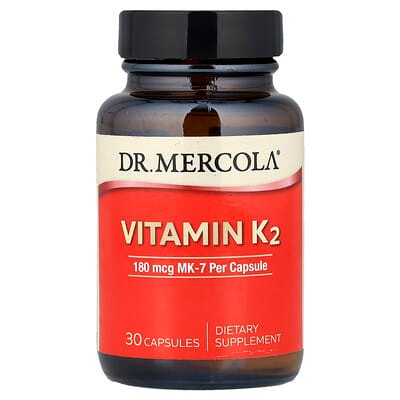 Vitamin K2$30.46
- Customer rating
- 4.8 · 358 ratings
Goals

Impact
High effect
Vitamin K · 180 mcg
Vitamin K2 180 mcg is a focused source of vitamin K for everyday nutrition when intake is low. Its 180 mcg serving contributes to bone and mineral metabolism. The K2 form does not receive an added benefit over other vitamin K forms in the supplied facts.

Impact
High effect
Vitamin K · 180 mcg
Vitamin K2 180 mcg offers a narrow heart-health fit through its explicitly identified MK-7 form. The 180 mcg MenaQ7 declaration matches the supplied exposure associated with selected arterial-stiffness improvements in postmenopausal women. That makes the form and amount relevant to vascular flexibility, with benefit dependent on the individual context.
Vitamin K Mixed

Impact
High effect
Vitamin K · 180 mcg
Vitamin K2 180 mcg is a focused option for limited arterial-flexibility support. It declares 180 mcg vitamin K2 as MenaQ7, an identified MK-7 preparation. That amount and form match the supplied findings on selected arterial-stiffness measures, mainly in postmenopausal women.
Vitamin K Supportive

Impact
Highest effect
Vitamin K · 180 mcg
Vitamin K2 180 mcg offers targeted support for bone-protein activation, with limited evidence for maintaining bone density in postmenopausal women. Its 180 mcg serving is explicitly identified as MK-7, the form relevant to that evidence.
Vitamin K Supportive

Impact
High effect
Vitamin K · 180 mcg
Vitamin K2 180 mcg has a focused fit for arterial flexibility in postmenopausal women. Its 180 mcg of identified MenaQ7 matches the preparation and daily amount associated with improvements in selected stiffness measures over three years. Benefits on other measures depended on higher stiffness at the outset.
Vitamin K Supportive
Ingredients
| Ingredient | Amount per serving | Score |
|---|---|---|
Vitamin K2 (Menaquinone-7) | 180 mcg |
Vitamin K (Menaquinone-7) · 180 mcg OverallScore88
Dr. Mercola Vitamin K2 180 mcg offers 180 mcg of vitamin K per serving, with a useful MK-7 form. It is good value at $0.35 per 80 mcg of vitamin K; $0.78 per serving. The MK-7 is not specified as trans or all-trans.
Alternative products
Report alternatives
Sources
Published studies used for the product analysis and the top-ranked studies for each ingredient and goal.
- Vitamin K and the prevention of fractures: systematic review and meta-analysis of randomized controlled trials.
- Three-year low-dose menaquinone-7 supplementation helps decrease bone loss in healthy postmenopausal women.
- Effect of combined administration of vitamin D3 and vitamin K2 on bone mineral density of the lumbar spine in postmenopausal women with osteoporosis.
- Efficacy and safety of vitamin K2 for postmenopausal women with osteoporosis at a long-term follow-up: meta-analysis and systematic review.
- Low-dose vitamin K2 (MK-4) supplementation for 12 months improves bone metabolism and prevents forearm bone loss in postmenopausal Japanese women.
- Vitamin K Intake and Atherosclerotic Cardiovascular Disease in the Danish Diet Cancer and Health Study.
- Menaquinone-7 supplementation improves arterial stiffness in healthy postmenopausal women. A double-blind randomised clinical trial.
- Effects of One-Year Menaquinone-7 Supplementation on Vascular Stiffness and Blood Pressure in Post-Menopausal Women.
- Dietary Vitamin K1 Intake and Incident Aortic Valve Stenosis.
- Association between vitamin K1 intake and mortality in the Danish Diet, Cancer, and Health cohort.
- Dietary vitamin K intake associates with reduced all-cause mortality in non-alcoholic fatty liver disease patients.
- Vitamin K status, cardiovascular disease, and all-cause mortality: a participant-level meta-analysis of 3 US cohorts.
- The Effect of Topical Vitamin K1 on the Treatment of Cetuximab-Induced Skin Rashes in Metastatic Colorectal Cancer Patients.
- Effect of vitamin K on improving post‑kidney transplant outcomes: a meta‑analysis.
- Vitamin K1 intake is associated with lower risk for all-cause and cardiovascular disease mortality in community-dwelling older Australian women.
- The effect of vitamin K1 on arterial calcification activity in subjects with diabetes mellitus: a post hoc analysis of a double-blind, randomized, placebo-controlled trial.
- Topical Menaquinone‑7 (Vitamin K2, MK-7) as a Mitochondrial Bioenergetic Activator for Skin Anti-Aging: Mechanistic Evidence in Skin Cells and a Randomized Split-Face/Neck Study.
- Vitamin K status and cognitive function in healthy older adults.
- High dephospho-uncarboxylated matrix Gla protein concentrations, a plasma biomarker of vitamin K, in relation to frailty: the Longitudinal Aging Study Amsterdam.
- Vitamin K Concentration and Cognitive Status in Elderly Patients on Anticoagulant Therapy: A Pilot Study.